
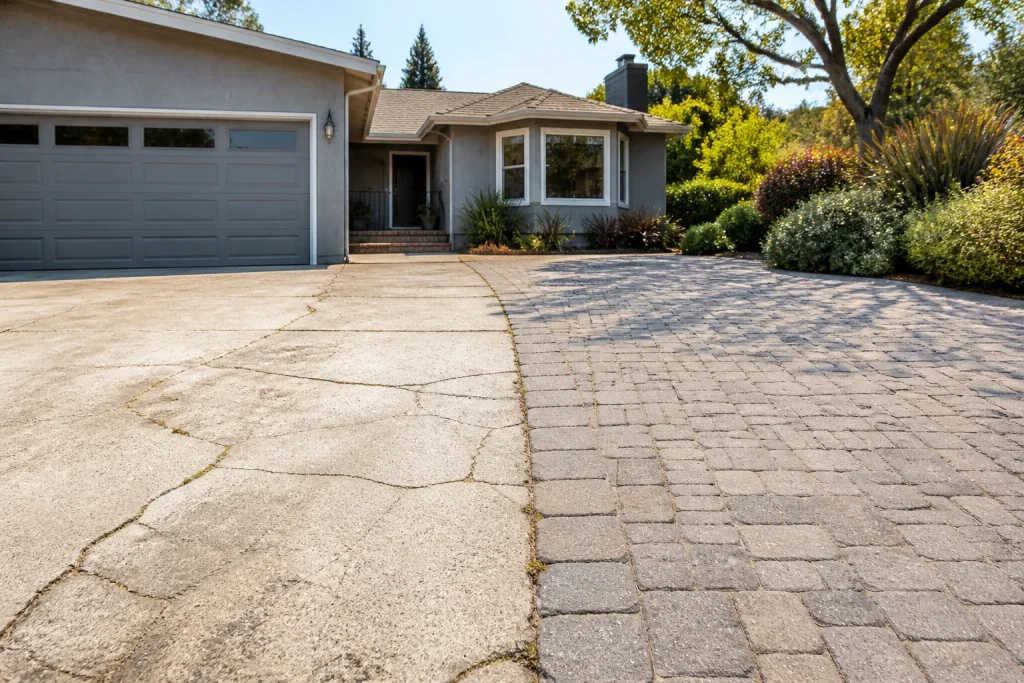
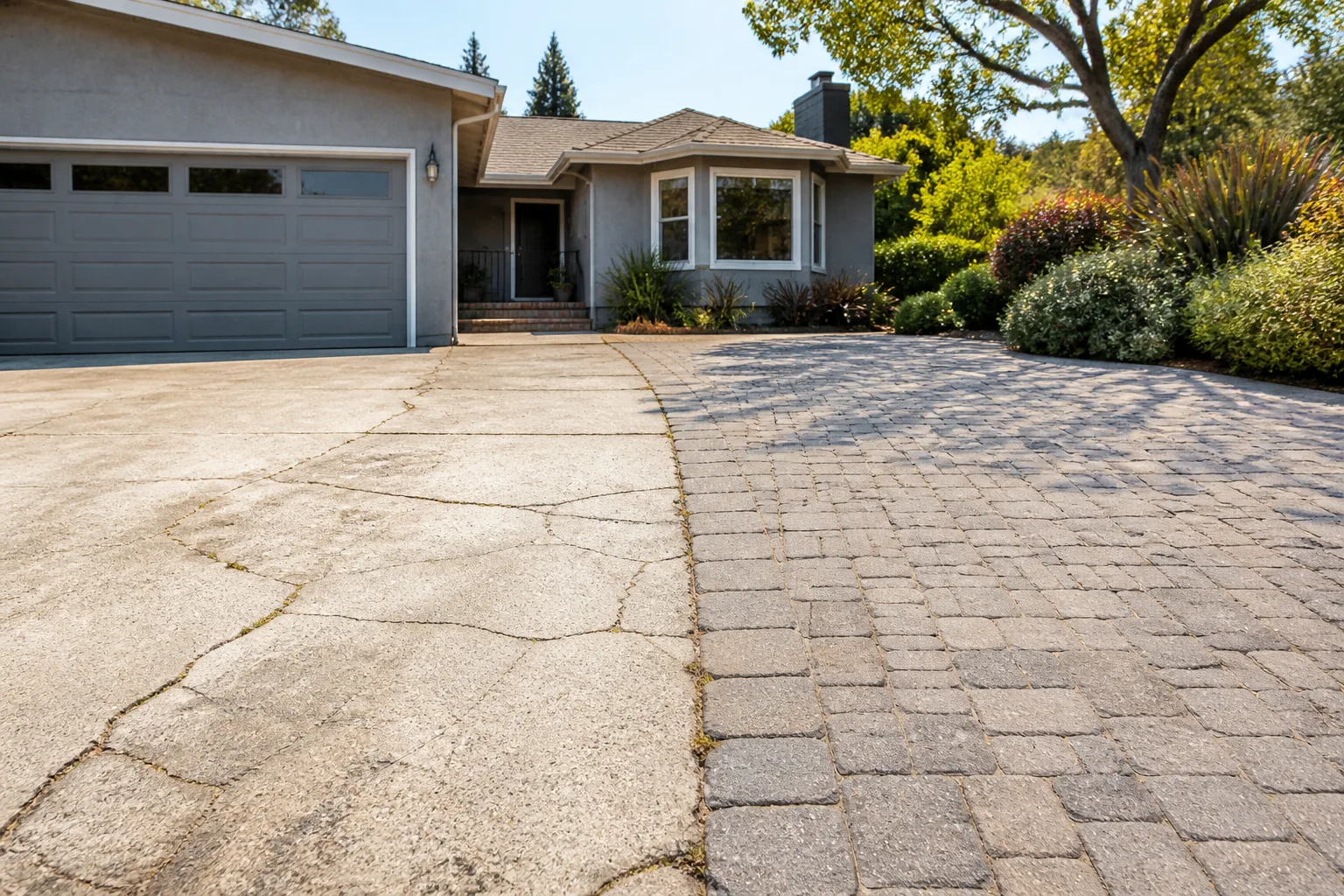
Driveway & Pavers: Repair or Replace? How Oakland Homeowners Decide
If a contractor quotes you a full driveway replacement without pulling at least one test section to inspect the base, they’re guessing, and they’re guessing in their favor. Replacement is the bigger ticket, so it’s the safer bet for the person writing the quote. The honest answer to repair-or-replace almost never lives on the surface of the pavers. It lives six inches down, in the base. This piece gives you the diagnostic framework to check that yourself before you sign anything, and it applies whether you’re off Fruitvale Ave or up in the Oakland Hills.
If you’d rather have a set of trained eyes on it, call (833) 997-7759. Estimates are free.
Key Takeaways
- Paver condition is the surface story; base condition is the real one.
- Three base failures make repair a losing investment: saturated subgrade, root intrusion, and settlement from failed compaction.
- Ask for a test section before you accept any quote. A pro who won’t pull one is telling you something.
- Repair wins on isolated damage. Replacement wins when the base is gone. A guaranteed replacement beats a speculative repair every time.
Why Is the Base More Important Than the Pavers?
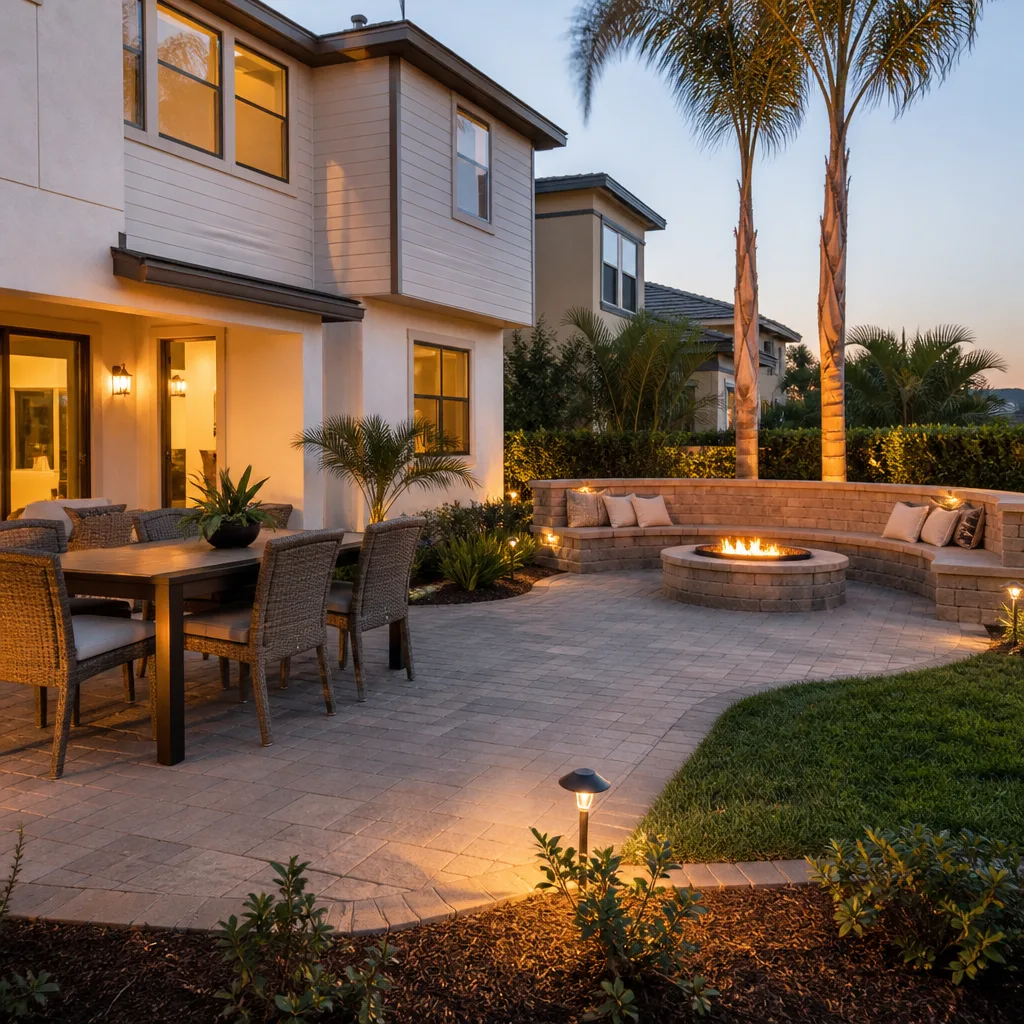
A paver driveway is a system: the pavers on top, a bedding layer of sand, a base of compacted aggregate, and the native soil underneath. The pavers are the least important part. When a driveway fails, it’s almost always because one of the layers below has stopped doing its job. That’s why two driveways with identical pavers can behave completely differently. One sits on well-compacted Class II base and looks the same in fifteen years. The other sits on clay that swells every wet season and starts heaving within three.
In Oakland, that native soil matters more than in most cities. Large parts of the flats – the Laurel, Dimond, and much of East Oakland – sit on expansive clay that swells when it’s wet and shrinks hard in summer. That cycle pushes on the base from below year after year. The pavers themselves don’t rot or wear out the way asphalt does. What fails is everything holding them up.
This is why a contractor can look at your driveway, see a few sunken spots, and confidently tell you it needs a full replacement or a simple re-level. Both answers can be wrong if nobody’s actually looked at what’s underneath. The surface tells you where the problem is showing up. It doesn’t tell you where it started.
What Are the Three Base Failures That Make Repair a Losing Bet?
There are three base conditions that turn repair into throwing good money after bad. Each one leaves visible clues on the surface if you know what you’re looking for. Here’s how to spot each one before anyone quotes you a number.
1. Saturated subgrade
Water is pooling under the driveway because drainage was never handled. On the surface you’ll see efflorescence – that white, chalky film that leaches up through the joints – plus pavers that stay damp longer than the rest of the yard, and soft, spongy spots after rain. In Oakland, this shows up on driveways that slope toward the house or sit below the street grade without a proper drain. Repairing individual pavers on top of a base that stays wet does nothing. The water finds a new low point and the same failure repeats.
2. Root intrusion
Street trees are one of the best things about Oakland, and one of the worst things for paver driveways. Coast live oaks, London planes, and the ficus trees common in the Laurel and Temescal push roots under driveways looking for moisture. The clue is a crack or lifted zone that traces a line from a nearby trunk, often with pavers pushed up in a low ridge rather than a bowl-shaped dip. Roots don’t stop growing because you re-laid the pavers over them.
3. Failed compaction and settlement
The base was never compacted to spec, or it was done in lifts that were too thick. Over years, it settles unevenly. The sign is broad, gradual dips – not one crater, but a slow wave across the whole surface, usually worst where the driveway meets the garage apron and the street. This is the failure that catches homeowners who bought a flipped house with a fresh-looking driveway laid over a base nobody checked.
We pulled a section out of a driveway in Maxwell Park last spring where the base was maybe three inches of un-compacted gravel over clay. The pavers were two years old. The homeowner had already paid once for a “repair” that re-set eight pavers over the same bad base. That’s the pattern these three conditions share: repair treats the symptom, the cause stays put, and the same spot fails again inside two years.
How Do You Inspect the Base Before Accepting a Quote?

Ask for a test section, and don’t be shy about it. A real base inspection means pulling a section of pavers – usually a couple square feet in the worst-looking area and one more in an area that looks fine, for comparison – then digging down to see the aggregate depth and the native soil. It takes a pro maybe twenty minutes. It’s the only way to know what you’re dealing with.
What to ask for
- A test section in the damaged area and one in an undamaged area. You want the comparison. A base that’s bad only where it’s failing is a very different repair than a base that’s bad everywhere.
- The base thickness measured, not estimated. A proper paver driveway in most Bay Area conditions wants a base in the range of four to six inches compacted, more over weak clay. Have them tell you what they measured, on the record.
- The native soil described. “Clay” or “sandy” or “mixed” – and whether it holds water. A pro who can’t tell you this didn’t dig.
- A drainage assessment. Where does water go? Is there a slope, a drain, a swale? If nobody can answer this, saturated subgrade is a real possibility.
- Photos of what came out. Any contractor who won’t photograph the test section is a contractor you should be suspicious of.
How to read the answer
If the base is thick, compacted, and dry, in both the failing and non-failing areas, you’re likely a repair candidate. Pull the damaged pavers, fix the local cause (a broken joint, a single root, a low spot that’s holding water), re-compact, re-set. That’s real work, but you’re not paying for a new system. If the base is thin, loose, wet, or sitting right on top of clay with no separation, repair is a bandage on top of a problem that will keep coming back.
And if a contractor won’t pull a test section, walk away. That’s not an inspection, that’s a sales call.
What Makes Oakland Driveways Different?
Oakland has a specific combination of forces working on paver driveways that most cities don’t share all at once. Knowing them helps you read your own driveway honestly.
Clay soil movement
The expansive clay in much of the flats is the biggest driver. It swells in the wet months and shrinks hard in the dry – the same shrink-swell cycle that cracks foundations and pops fence posts. A paver driveway on a base that wasn’t built to isolate from that movement will heave and settle in a slow wave, season after season. This is why a driveway that looks fine in October can look wrong by February.
Street trees and root intrusion
Oakland’s street tree canopy is a genuine asset for the city and a real problem for driveways on tree-lined blocks. Roots look for the moisture in a paver base, and once they find it, they spread under the whole driveway. Repairing a lifted zone without dealing with the root is a repair that has a date stamp on it.
Driveway age
Age matters less than what the base was built to in the first place. We’ve seen twenty-year-old driveways on good base that need nothing but a re-sand and a couple of replaced pavers. We’ve seen two-year-old driveways on bad base that need a full rebuild. The age of the pavers is not the number that matters. The age and condition of the base is.
If trees are the whole issue on your property, our team’s work on fence installation in Oakland deals with the same root problem from the other direction, and it’s worth thinking about together.
Repair Versus Replace: How Do the Costs Break Down in Oakland?
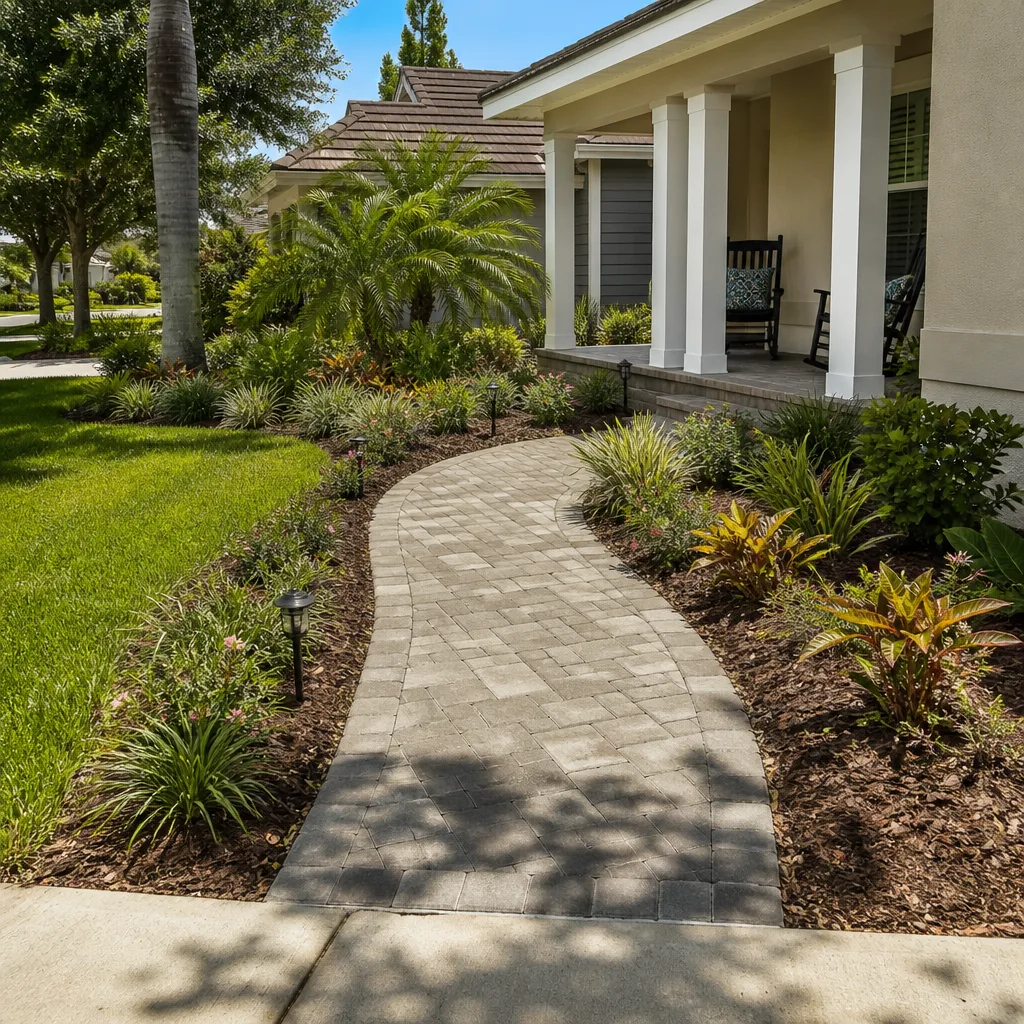
East Bay labor runs higher than most of the country, and paver work is labor-heavy. Here’s a rough framework for thinking about the numbers, without pretending to quote you an exact figure – every driveway is different, and the honest answer requires that test section.
| Scenario | Typical scope | Rough cost range (East Bay) |
|---|---|---|
| Small repair – isolated pavers, one low spot | Pull, re-set, re-sand, re-seal | $300 – $1,200 |
| Medium repair – a defined zone of damaged pavers | Pull a section, fix local cause, re-compact base, re-set | $1,200 – $3,500 |
| Large repair – multiple zones, some base work | Several sections, partial base replacement, drainage work | $3,500 – $7,500 |
| Full replacement – new base and pavers | Demo, haul, new compacted base, new pavers, drainage, edge restraint | $12,000 – $30,000+ |
The ranges are wide because the variables are wide – square footage, paver type, access for hauling, how much base actually has to come out. The point of putting them side by side is this: repair is cheaper when the base is sound. When the base is gone, repair costs add up to more than a replacement inside a few years, and you pay for the same problem twice.
That’s the framework. The decision rests on what’s under the pavers, not what the surface looks like. For the full picture of what a proper installation involves, our team covers it on the Driveway & Pavers in Oakland service page – including the base prep and drainage that most estimates skip over.
Financing matters here too. Our team offers 0% financing for 18 months, plus $1,000 off projects over $10,000, which turns a replacement that feels out of reach into something you can plan for. Upfront pricing, no surprises, and the number you see is the number you pay.
When Should You Call a Pro?
If you’ve got one or two pavers out of place and a base that reads healthy in a test section, you might handle a small re-set yourself. But if you’re seeing any of the following, call a pro who will pull a test section before quoting you anything:
- Water pooling on or next to the driveway after rain
- Broad, slow dips across the whole surface, not one isolated spot
- Lifted pavers that trace a line toward a street tree
- Efflorescence or pavers that stay damp for days after rain
- Any sign of damage spreading season to season
- A quote that arrives before anyone has dug into the base
Our team can do the base inspection, tell you straight whether repair or replacement is the honest answer, and back the work with the 730-Day Done Right Promise – if it’s not done right, we make it right. That’s built to last, backed in writing. It also changes the calculus on the biggest decision here: a guaranteed replacement beats a speculative repair from a contractor with no post-job accountability every time. If a repair fails in two years, you’re on the hook. If a replacement fails under our promise, that’s on us.
Calls are answered by a live person, 24/7 – no voicemail, no waiting until Monday. And our technicians bring up to 12 years of experience with them, background-checked and in uniform, working with brand partners like Belgard, CertainTeed, and Owens Corning so the materials are the right ones for an Oakland driveway, not just whatever’s on hand.
Related services in Oakland
If your driveway decision ties into other outdoor work, we also handle fence installation in Oakland, driveway and pavers in Oakland, and home additions and ADUs in Oakland. And if you want the full picture of what we do, start at our Groundwork Construction Co. of Oakland home page.
The Bottom Line
Repair or replace on an Oakland paver driveway is a base condition question, full stop. If the base is thick, compacted, and dry, repair the local problem and move on. If the base is thin, wet, or sitting on clay that’s moving, replacement is the honest answer – and repairing it is paying for the same failure twice. Get a test section pulled before you accept any quote. If a contractor won’t do it, you’ve learned what you needed to know about how they work.
If you’re in Oakland and need help, Groundwork Construction Co. of Oakland offers free estimates – call (833) 997-7759. We’ll pull a test section, tell you what we find, and give you a written line-item quote with upfront pricing so you can make the call with real information instead of a sales pitch. From foundation to finish line, on a paver driveway or anything else around the house.
Frequently Asked Questions
Small paver repairs in Oakland typically run $300 to $1,200, a defined zone of damage runs $1,200 to $3,500, and larger repairs with partial base work run $3,500 to $7,500. The range is wide because it depends entirely on what’s underneath – a repair on a sound base is cheap; a repair on a failing base costs more because the base has to be addressed. Call (833) 997-7759 for an exact quote on your driveway – estimates are free.
You can’t tell from the surface alone – that’s the whole point. The reliable test is pulling a section of pavers and inspecting the base. If the base is thin, loose, or wet, or if it sits directly on expansive clay with no separation, replacement is usually the better investment. If the base is thick and compacted in both failing and non-failing areas, repair is usually fine. The visible signs of a failing base are broad dips across the whole driveway, water pooling after rain, and lifted pavers that trace a line toward a street tree.
Because pulling a test section means they might find that repair is the honest answer, and replacement is the bigger job. A contractor who’s comfortable with either outcome has no reason to avoid the inspection. A contractor who won’t pull a test section is a contractor who’s guessing in their own favor. Ask for one, and if the answer is no, that’s your answer.
Yes. Every project our team completes is covered by the 730-Day Done Right Promise, which runs two full years – if it’s not done right, we make it right. That’s one of the longest workmanship guarantees in the residential construction space. It’s why a guaranteed replacement beats a speculative repair from a contractor with no post-job accountability. Call (833) 997-7759 to schedule your free estimate and ask how the promise applies to your specific driveway.
Written by the team at Groundwork Construction Co. of Oakland.
Need Construction Help?
Call Groundwork Construction Co. of Oakland - licensed & insured, here with fast after-hours help in Oakland.
(833) 997-7759