
5 Mistakes to Avoid With Fence Installation
Most fence projects in Oakland don’t fail because someone picked cedar over redwood. They fail because the homeowner skipped a legal, structural, or site-specific step that turns a weekend project into a dispute with a neighbor, a city inspector, or a contractor. Oakland has more fence-related property line conflicts than almost any Bay Area city, partly because hillside lot lines are genuinely ambiguous and partly because hardly anyone pulls a permit for fence work. Get these five things wrong and a simple fence can freeze a home sale for months.
If you’d rather not gamble on the details yourself, call (833) 997-7759 and we’ll walk you through it.
Mistake 1: Installing Without a Survey When Your Lot Line Is Assumed, Not Documented
The single most expensive fence mistake in Oakland is building to a line nobody verified. On flat suburban lots it’s usually obvious where your property ends. On hillside parcels in the Oakland Hills, Montclair, and around Joaquin Miller Park, it often isn’t. Retaining walls, mature oak trees, and decades of informal “gentleman’s agreements” between neighbors have blurred where the real line sits.
We’ve watched a Piedmont Pines homeowner build a beautiful redwood fence six inches onto a neighbor’s parcel. The neighbor noticed during a refinance appraisal. What should have been a finished project became a survey bill, a partial tear-out, and a very cold relationship across the driveway.
Before any post goes in the ground:
- Pull your plat map from Alameda County records to see the recorded lot line.
- Hire a licensed land surveyor if there’s any doubt, especially on sloped or irregular parcels. A survey runs a few hundred to roughly $1,500 depending on complexity, and it’s cheap insurance against a five-figure mistake.
- Mark the line clearly and photograph it before construction starts.
When the line is genuinely ambiguous, a survey is the only thing that settles it. Assumptions don’t hold up in a dispute.
Mistake 2: Skipping the Oakland Permit Process for Fences Over 3.5 Feet
This one surprises nearly every homeowner we talk to. In Oakland, a fence in your front yard over 3.5 feet tall, or a fence elsewhere on the lot over 6 feet, generally requires a building permit. Corner lots have stricter front-yard sight-line rules, and a fence that blocks visibility at a driveway or intersection can be flagged even if it’s under the height limit.
Most people skip the permit because “everyone does.” Then a neighbor complaint or a pre-sale inspection surfaces an unpermitted fence, and the fine structure looks like this: the city can issue citations, require you to either remove the fence or retroactively permit it, and charge plan-check and inspection fees on top. Those costs stack up fast, and an open permit issue on a property record can stall a home sale.
The permit path is unglamorous but short. You submit a site plan showing the fence location and height, pay the fee, and get an inspection once it’s built. In our experience, a straightforward Oakland fence permit is a matter of paperwork and a short review, not a months-long ordeal. Pull it. Your future buyer will thank you. For a fuller picture of how Groundwork handles projects across the city, see the Groundwork Construction Co. of Oakland home page.
Mistake 3: Setting Post Depth by Fence Height Instead of Soil Composition
Here’s where a lot of well-meaning fences fail. The common advice is “bury posts a third of their height,” so a 6-foot fence gets 2-foot posts. But that rule assumes uniform soil. Oakland soil isn’t uniform.
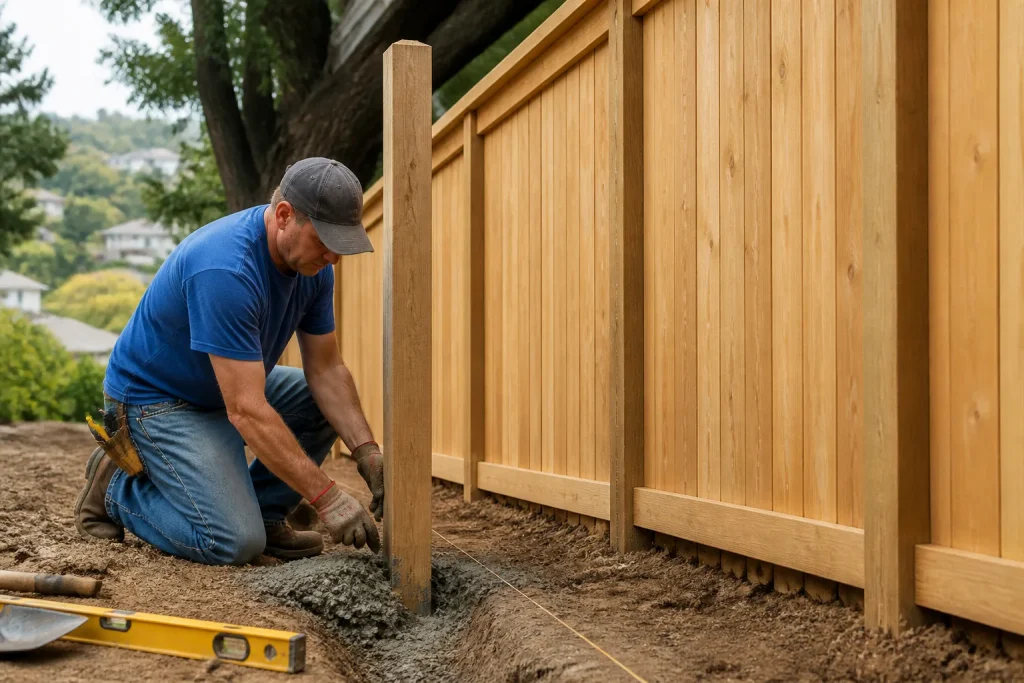
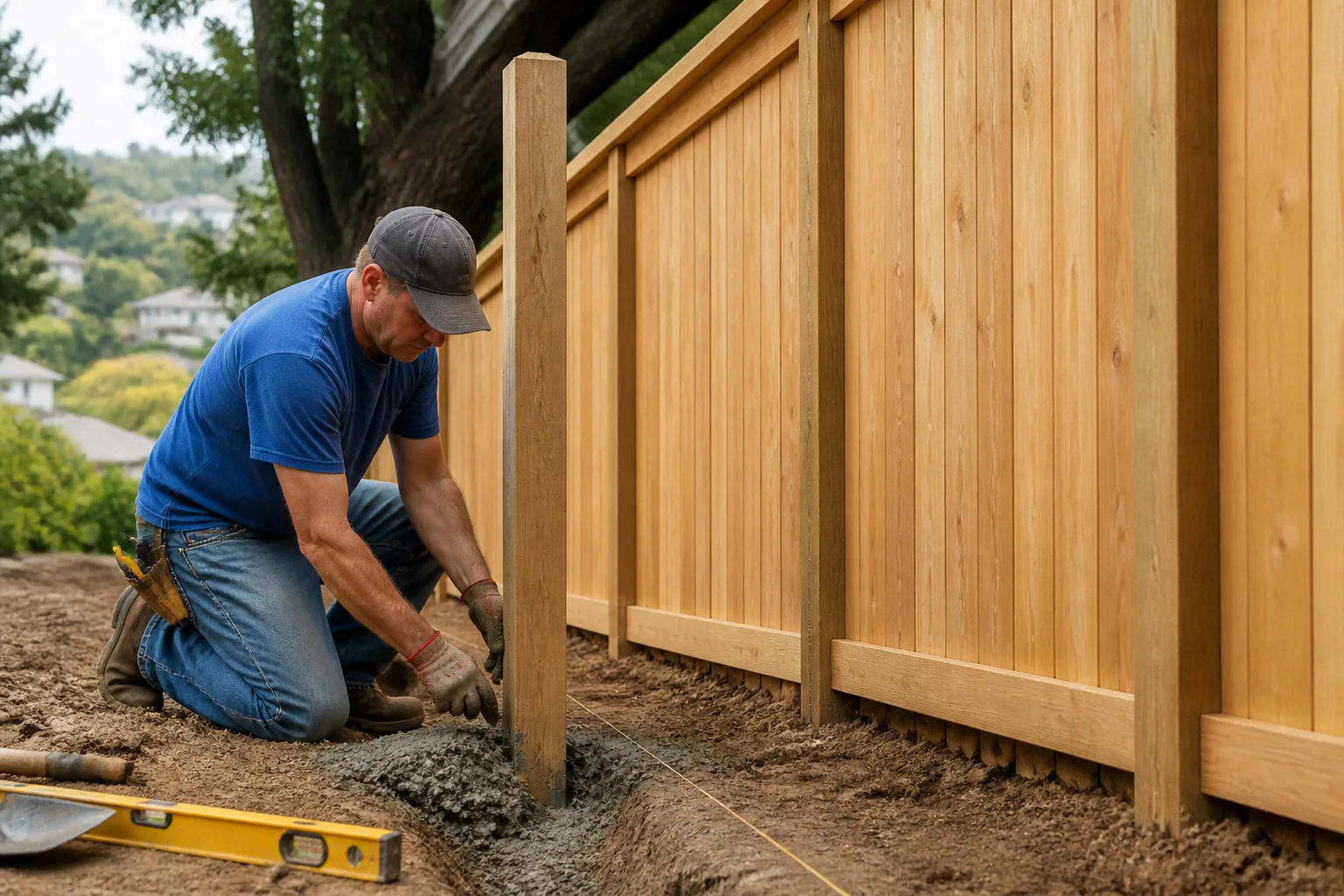
Much of Oakland sits on expansive clay. That clay swells when it’s wet, which is most of the winter, and shrinks in the dry months. A post set in clay with a shallow footing will heave, lean, and eventually walk out of plumb. Sandy or loam-heavy ground behaves differently again and can let a post settle unevenly.
What actually matters:
- Clay-heavy parcels need deeper footings and wider concrete collars to resist that seasonal swell-and-shrink. In our experience, 30 to 36 inches below grade is closer to right than 24.
- Sandy ground benefits from compacted gravel at the base so the post doesn’t sink.
- Hillside parcels need footings that account for drainage running downslope, or posts on the low side erode and tilt.
A post depth picked off a chart won’t tell you any of that. Get eyes on the soil before you dig.
Mistake 4: Using the Wrong Fastener Metal in Oakland’s Fog Belt
Oakland’s coastal fog influences the microclimate more than most homeowners realize, and it quietly eats cheap fasteners. Within a few miles of the bay, salt-laden moisture in the air speeds up corrosion. Zinc-plated or galvanized hardware that holds up fine inland can start to show rust within a couple of years near the water.
The corrosion rates are worth taking seriously. Standard electro-galvanized screws can pit in marine-influenced air, hot-dip galvanized lasts considerably longer, and stainless steel is the material that genuinely holds its own in coastal exposure. The hardware is a small fraction of your total fence cost, so upgrading from zinc to stainless is one of the cheapest durability decisions on the project.
Where it really bites: gate hinges, latch hardware, and the fasteners holding rail brackets. A gate is a moving part, so it takes more stress and moisture than a static fence panel. We’ve replaced gate hardware on a fence barely two winters old because somebody built it with electro-galvanized screws. Spend the money on stainless or quality hot-dip hardware and the fence stays sound far longer. Choose the right metal for your exposure and the whole build lasts longer, backed in writing.
Mistake 5: Starting Construction Before Your Neighbor Agrees in Writing
A fence on or near a shared line is only as solid as the relationship behind it. In Oakland, where lots are tight and many fences sit right on or just inside a property line, a verbal “go ahead” evaporates the moment a neighbor changes their mind. We’ve seen it turn a two-day job into a six-month dispute.
Before the first post goes in:
- Walk the line with your neighbor and confirm where you both believe it sits.
- Put the plan in writing: fence location, height, material, and who’s responsible for what. A short signed letter or email is enough.
- If the fence sits exactly on the shared line and the neighbor shares ownership, that written record protects both of you. California has rules around shared boundary fences and cost-sharing, and clarity up front avoids the fights later.
- Photograph the existing fence and the line before any work starts.
None of that takes long. It’s the difference between a finished fence and a phone call from a lawyer.
When to Call a Pro
If your project involves a survey, a permit you aren’t sure how to navigate, hillside footings, or a shared line with a neighbor who’s already nervous, that’s the point to bring in a crew. These are exactly the situations where experience saves money. Our technicians have up to 12 years of experience reading Oakland soil, permits, and property lines, and every job is covered by our 730-Day Done Right Promise: if it isn’t done right, we make it right. You can see how we handle the full scope on our Fence Installation in Oakland page.
And if your project grows beyond a fence, we handle the whole property from a single point of contact, from Driveway & Pavers in Oakland to full Home Additions & ADU in Oakland work. From foundation to finish line, one contractor instead of three.
Related services in Oakland
Fence work often pairs with a new driveway, a paver walkway, or an ADU in the backyard. If your fence is part of a bigger plan, we can quote the whole scope in one visit.
The Bottom Line
The five mistakes that cost Oakland homeowners the most aren’t material choices. They’re skipped surveys, missing permits, soil-blind post footings, the wrong fastener metal in the fog belt, and no written agreement with a neighbor. Get those right and a fence becomes one of the most straightforward projects on your property. Get them wrong and it becomes a legal, structural, or city headache that just keeps growing.
The good news: each one is fixable before you dig. Here’s the short version to keep in your back pocket:
- Survey it when the line is in doubt.
- Permit it when it’s over the height limit.
- Set footings to your actual soil, not a chart.
- Fasten with the right metal for your fog exposure.
- Get neighbor agreement in writing before day one.
If you’re in Oakland and need help, Groundwork Construction Co. of Oakland offers free estimates. Call (833) 997-7759 to schedule yours. You’ll get upfront pricing with no surprises, and a live person answers whether it’s a Tuesday morning or a Sunday night.
Frequently Asked Questions
Often, yes. In Oakland, a front-yard fence over 3.5 feet, or a fence anywhere else on the lot over 6 feet, generally needs a building permit. Corner lots also have sight-line rules that can trigger review. Check with the city before you build, or call us at (833) 997-7759 and we’ll help you figure out what applies to your lot.
Deeper than a height-based chart suggests. Oakland’s expansive clay swells and shrinks seasonally, so posts in clay-heavy ground usually need footings around 30 to 36 inches below grade with a wide concrete collar. Sandy or hillside parcels call for different anchoring. Getting this wrong is the most common reason fences lean within a few seasons.
Get it in writing before construction starts. Walk the line together, confirm where the fence will sit, put location, height, material, and cost-sharing in a short signed letter or email, and photograph the existing fence. It takes a few minutes and prevents the most common and costly Oakland fence disputes.
Cost depends heavily on length, material, soil, and whether a survey or permit is needed, so there’s no single number. What you should demand is a written, line-item quote before work begins. Groundwork gives you upfront pricing with no surprises: the number you see is the number you pay. Call (833) 997-7759 for a free estimate, and estimates are free.
Written by the team at Groundwork Construction Co. of Oakland.
Need Construction Help?
Call Groundwork Construction Co. of Oakland - licensed & insured, here with fast after-hours help in Oakland.
(833) 997-7759