
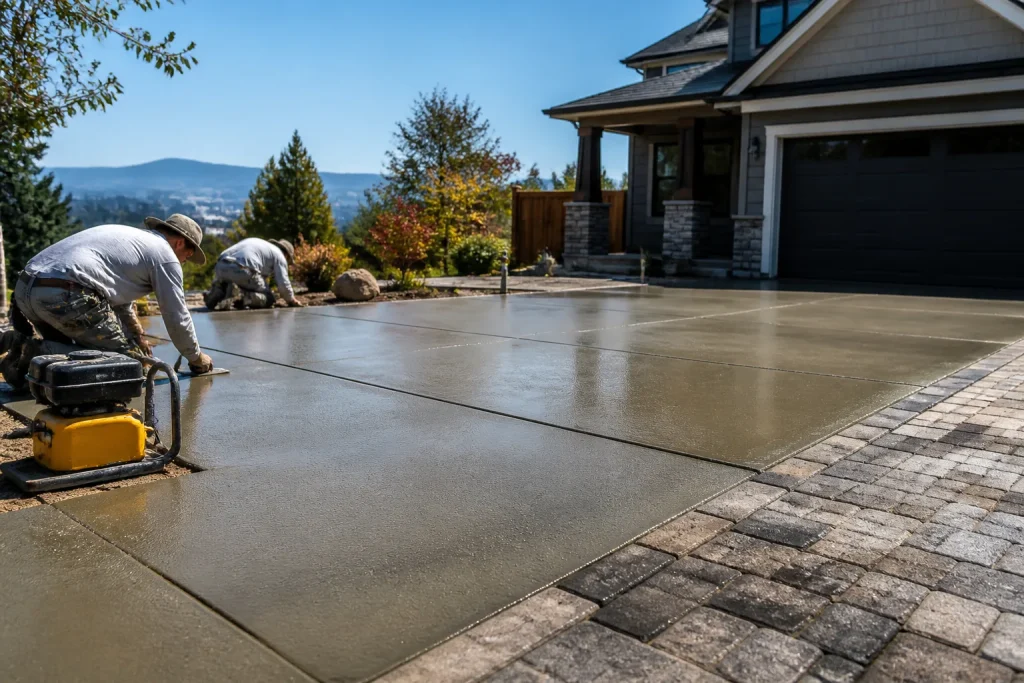
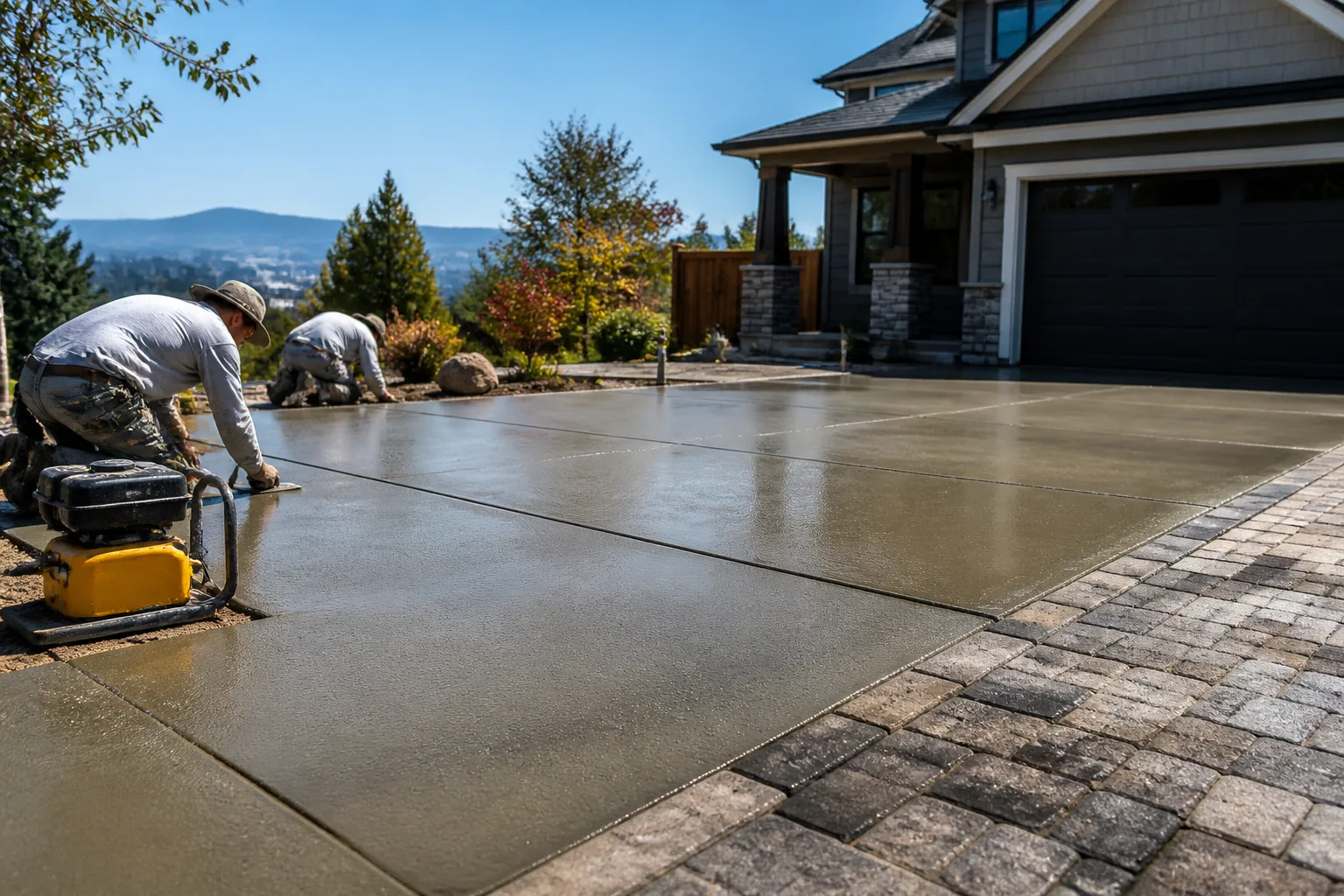
Quikrete Driveway & Pavers in Oakland: A Homeowner’s Guide
If a contractor quotes you a Quikrete paver driveway significantly below every other bid, ask which specific product line they’re spec’ing. Quikrete makes concrete repair products, border edging units, and a modest line of decorative pavers that are not interchangeable for load-bearing driveway applications, and low bids sometimes reflect that substitution. In Oakland, where a single wet winter can expose every shortcut in a base or a joint, that difference shows up fast. If you’d rather not sort through it alone, call (833) 997-7759 and we’ll walk you through what’s actually going into your driveway.
What Quikrete actually makes (and what it doesn’t)
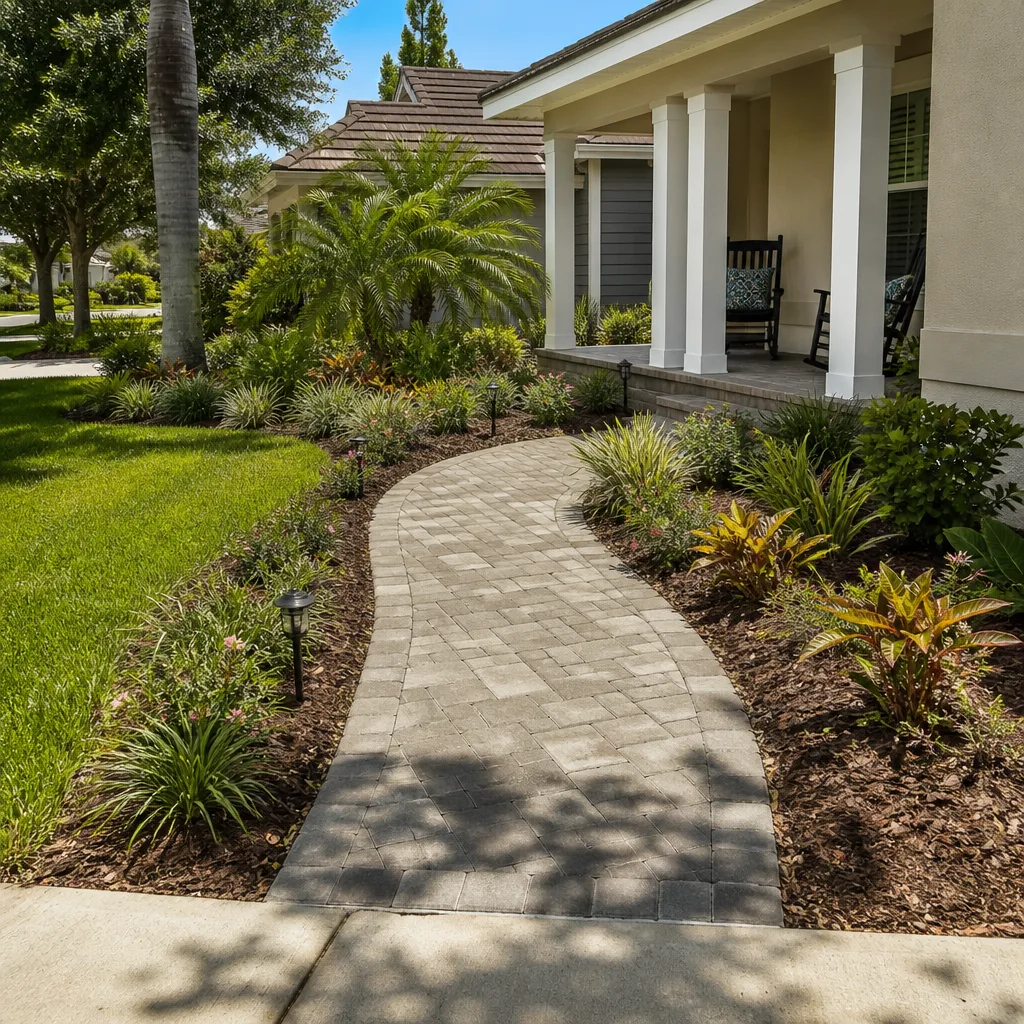
Most homeowners know Quikrete from the pallets stacked near the front door of the hardware store: fast-setting concrete mix, sand and gravel blends, mortar, jointing sand, and patch products. That’s the heart of the brand. It’s a concrete-materials company first, and a good one. Its bagged mixes are dependable for setting posts, patching spalled concrete, pouring small pads, and filling joints.
Quikrete does make a decorative paver line, including border and edging units and some patio-style stone. What it does not make is a premium, load-rated driveway paver engineered to the same tolerances as Belgard, or to the standards we look for when a two-and-a-half-ton SUV rolls across the same surface every day for fifteen years. That’s the gap homeowners miss.
Here’s the short version of what Quikrete fits in a driveway project, and where it doesn’t:
- Right fit: Joint sand, polymeric joint filler, base stabilization products, setting materials, and small concrete repairs around a driveway apron or apron transition.
- Right fit: Border and edging units where the load bearing is handled by a properly compacted base and the edging is restraint, not structure.
- Frequently the wrong fit: The main drive surface itself, especially over a subgrade that moves. This is where low-bid contractors substitute a decorative product for a structural one and call it a “Quikrete paver driveway.”
- Seldom a good fit: Full-thickness, high-traffic drive lanes where freeze-thaw aside, you still need compressive strength, tight dimensional tolerances, and a manufacturer who will back the product if it fails.
In Oakland, we’ve seen plenty of driveway bids where the product line isn’t named in writing. That’s the tell. A legitimate contractor will name every material, from base aggregate to joint sand.
Where Quikrete concrete products genuinely earn their place in an Oakland driveway
A good driveway is mostly what you can’t see. The pavers are the finish; the base is the work. Quikrete products are useful in several honest spots on a proper install, and we use them ourselves when they fit.
- Base stabilization. Where the subgrade is marginal – a common situation in the Oakland flats near Lake Merritt, where soils have been filled and reworked over time – a stabilizing mix can help lock the base layer together before compaction.
- Joint filling. Polymeric joint sand is one of the most important and most-skipped steps. Quikrete jointing products get called up here regularly, and correctly, because the joint sand is what keeps water out and pavers from shifting.
- Edging restraint. Quikrete border units can work on the perimeter of a driveway or as a landscape edging, provided the base compaction and edge restraint design hold the pavers from spreading outward.
- Repairs and transitions. The apron where the driveway meets the street, small concrete transitions, and localized patches are exactly where a bagged repair product belongs.
What we don’t do is plaster a low-grade decorative unit across a 20-foot drive lane and call it the product. That’s the substitution pattern to watch for. The surface is what fails first, and in Oakland that failure shows in the first rainy season.
Why Oakland’s climate changes the durability math
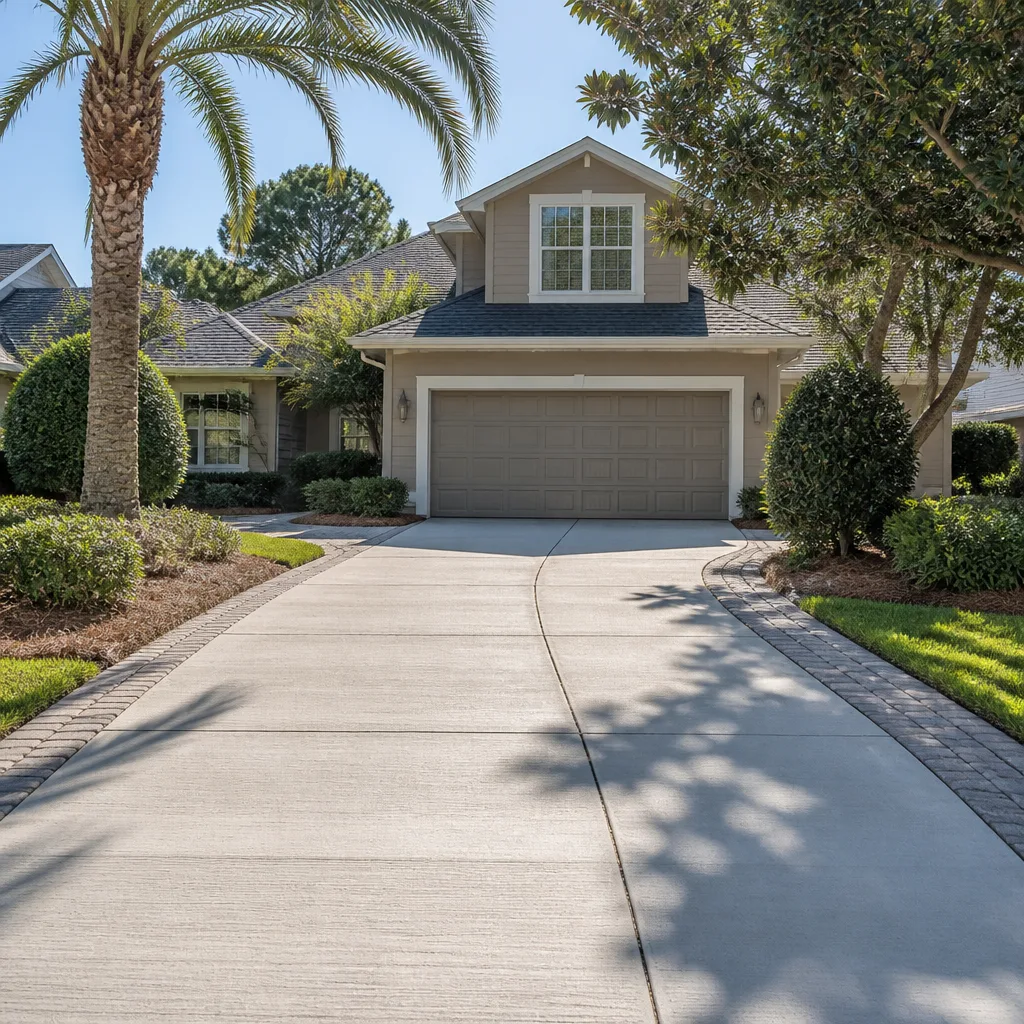
Here’s something Northern contractors miss when they quote Bay Area work: Oakland has no freeze-thaw cycle to speak of. That eliminates one of the biggest causes of paver failure in snowy states – the overnight freeze that lifts a paver a millimeter and drops it back, over and over until the joints open and the base fails.
So what actually degrades pavers in Oakland? Not frost. It’s water, soil movement, tree roots, and traffic.
- Winter rain saturation. Oakland’s wet season runs roughly November through April, and a driveway with poor drainage holds water in the joints and base for months. That’s the real enemy – long-duration saturation, not ice.
- Expansive clay soils. Parts of Oakland’s hills and older flatlands have clay that swells when wet and shrinks when dry. A driveway that’s been laid on an uncompacted clay base will heave and settle even with no frost involved. We pulled a paver drive off a job near Mills College last spring where the pavers themselves were fine; the base was the whole story.
- Tree roots. Oakland is a city of mature trees. A 60-year-old oak or liquidambar can move the subgrade under a driveway with root growth that never stops.
- Traffic and turning loads. A tight driveway on a steep Oakland hillside sees high point loads on the same corner every time you back out. That’s where a wrong product shows play first.
Bottom line: Oakland doesn’t punish pavers with cold. It punishes them with bad base, bad drainage, and bad product choices. A decent paver in a properly drained, well-compacted base holds up for decades here. A cheap unit in a rushed base will crack and shift by spring regardless of brand.
The questions to ask when a contractor proposes Quikrete materials
When a bid says “Quikrete” on the driveway surface, that’s your cue not to reject the bid but to ask for the exact product. A contractor with nothing to hide will answer every one of these without flinching.
- “Which specific Quikrete product line are you specifying for the drive surface?” If the answer is vague, that’s the answer.
- “What’s the compressive strength and load rating?” Ask for the product data sheet. A proper driveway paver will carry a published load rating and a manufacturer warranty on the product itself.
- “What’s the base depth and compaction spec?” If the bid doesn’t name inches of base and a compaction method, the base is probably an afterthought regardless of brand.
- “How are the joints filled and how is edge restraint detailed?” Polymeric sand and a mechanical edge restraint are non-negotiable in our book.
- “Is the surface product load-rated for a driveway, or is it a decorative patio product?” This one catches the substitute every time. Many decorative lines are perfectly good for a walkway or a light patio; they are not designed for wheel loads.
- “What does the warranty say, and who backs it – you or the manufacturer?” If the answer is only “the manufacturer,” you have no local recourse if it fails in year three.
If a contractor won’t put the product name on the contract line-by-line, that’s the biggest red flag in the estimate. You can’t hold anyone to a spec that isn’t written down.
What does a Quikrete-based driveway actually cost in Oakland?
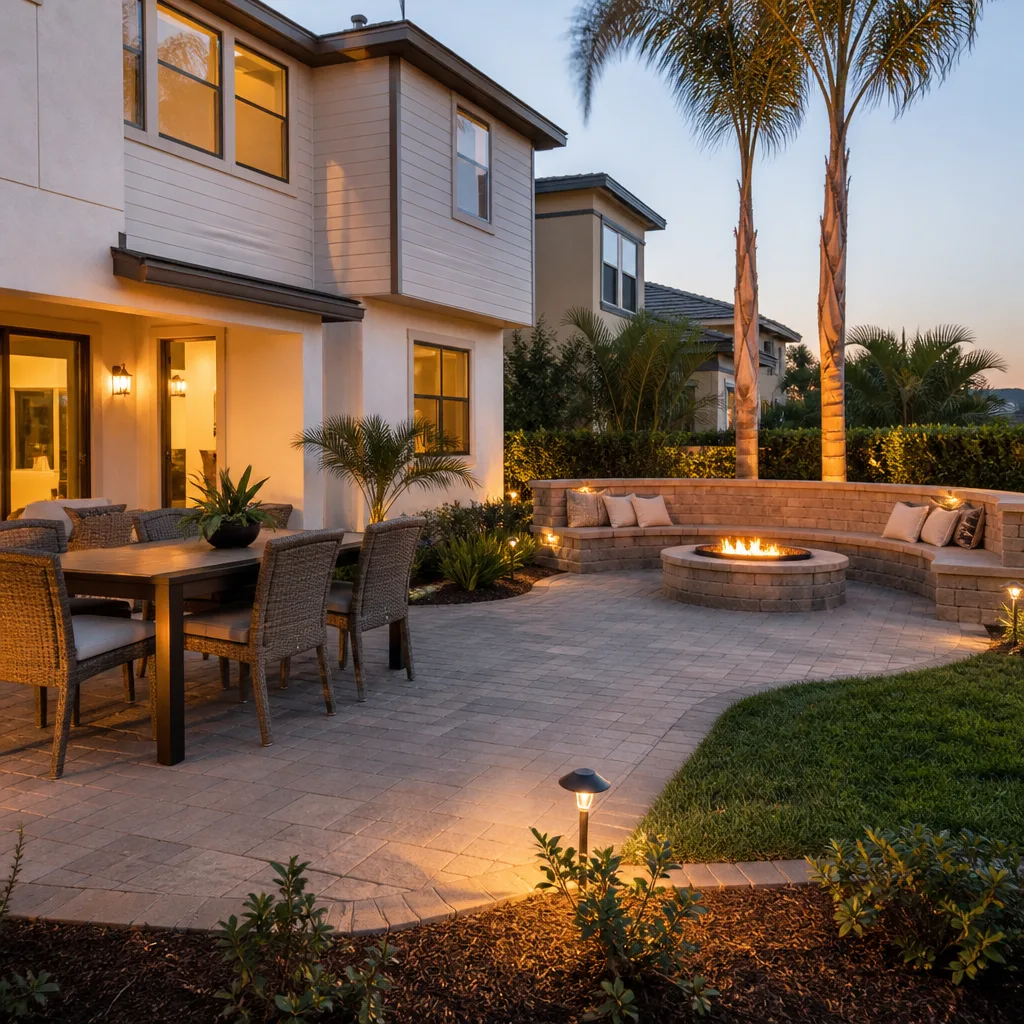
Here’s the honest version. Quikrete-approach driveways can save real money – or create the illusion of savings that disappears the first time you pay to tear out and re-lay the surface.
| Approach | Typical range | Where the savings go |
|---|---|---|
| Low-bid “Quikrete paver” surface over minimal base | $8-$12 per sq ft installed | Often evaporates in 2-4 years when the surface shifts or the base fails; tear-out and re-install can run 2-3x the original bid |
| Quikrete products used correctly (base stabilization, joint sand, edge restraint) with a load-rated surface paver | $14-$22 per sq ft installed | Real savings, because the cheap components are the invisible ones, not the surface |
| Fully premium system (Belgard or comparable surface, engineered base, polymeric joints, mechanical restraint) | $20-$30+ per sq ft installed | No savings here – but a surface system that holds its shape through decades of Oakland wet seasons |
| Standard 2-car driveway total, typical Oakland lot | $9,000-$22,000 installed | Dependent on square footage, base work, and access |
The trap is the first row. We’ve come behind plenty of those installs in Oakland, and the story is identical: it looked sharp for one dry summer, then the first wet season opened the joints and heaved the corner where the car turns. The savings were real on the invoice and gone by year three.
The genuine savings come from using Quikrete where it belongs – base products, joint sand, and restraint – and paying for a load-rated surface paver. That’s not a discount approach; it’s the correct approach. You’re saving on the parts that don’t show, not the part that takes the beating.
When to call a pro
A driveway install is not a weekend DIY project. Excavation, base compaction, drainage grading, and restraint are all on the wrong side of the “do it once and do it right” line. We’ve walked plenty of Oakland homeowners through a failed DIY pour, and the fix always costs more than doing it properly the first time.
You should call us if any of the following applies:
- A bid came in 20-30% below every other bid and you want to know why.
- Your existing driveway has shifted, heaved, or cracked along a joint and you’re not sure whether it’s surface or base.
- You’re weighing Quikrete concrete versus a full paver install and want a straight material comparison for your specific Oakland lot.
- You’re coordinating a driveway with a fence or an ADU addition on the same property and want one contractor to own the sequencing.
We’re licensed and insured, we pull permits, and every driveway we install comes with our 730-Day Done Right Promise – if it’s not done right, we make it right. Estimates are free, and they’re line-item, so you can see exactly what goes in the base and what goes on top.
Related services in Oakland: Driveway & Pavers in Oakland for full-scope installs and replacement; Fence Installation in Oakland when a driveway project pairs with new perimeter fencing; and Home Additions & ADU in Oakland if you’re timing a driveway rebuild around a new structure. You can see everything we do on our Groundwork Construction Co. of Oakland home page.
The Bottom Line
Quikrete is a strong brand – just not a premium driveway-paver brand, and a bid that pretends otherwise is a bid you should question line by line. The honest way to use Quikrete on an Oakland driveway is in the base, the joints, and the edge restraint, while a load-rated surface paver takes the traffic. Oakland’s wet winters and clay soils punish bad base and bad drainage far more than they punish any specific paver brand, but a decorative unit in the drive lane will fail anywhere the car turns first.
Ask for the product name in writing. Ask for the base depth and compaction spec. Ask for the load rating. A contractor who can answer those questions cleanly is the one you want.
If you’re in Oakland and you’d like a straight comparison for your specific driveway, Groundwork Construction Co. of Oakland offers free estimates – call (833) 997-7759. Our technicians have up to 12 years of experience, we don’t substitute products to win a bid, and every install is backed by our 730-Day Done Right Promise.
Frequently Asked Questions
Yes, but only with the correct product line and a properly engineered base. Quikrete’s border and decorative units work in driveway applications where the base is compacted to spec and edge restraint holds the system from spreading. They are not interchangeable with load-rated driveway pavers in the drive lane, and any contractor who specs a decorative unit for wheel-load traffic is substituting product to hit a lower bid. Ask for the published load rating and product data sheet before signing.
Because the cracks come from soil movement and water, not frost. Oakland’s expansive clay in the hills and older flatland neighborhoods swells and shrinks with the wet and dry seasons, and a driveway laid on an uncompacted or under-designed base moves with it. Poor drainage that traps water in the joints through the rainy season accelerates the failure. The pavers themselves are often fine – it’s the base underneath and the joint detail that give out. Call (833) 997-7759 if you want us to look at an existing install and tell you which layer failed.
On the invoice, yes – roughly $8-$12 per square foot installed for a low-bid Quikrete surface versus $20-$30+ per square foot for a fully premium system with an engineered base. But the low bid often needs tear-out and re-install within 2-4 years, which can run 2-3x the original price, so the “savings” are usually not real. A middle approach – Quikrete base and joint products paired with a load-rated surface paver – runs $14-$22 per square foot and is the honest sweet spot. Call (833) 997-7759 for a line-item quote on your Oakland lot.
Base stabilization mix, polymeric joint sand, and border/edging units, plus concrete repair product for the apron or local transitions. Those are the four spots where Quikrete earns its place in a proper install. The main drive surface should be a load-rated paver from a brand that publishes driveway load specs and backs the product with a real warranty – typically Belgard or a comparable tier. If a bid names Quikrete for the surface and refuses to name the specific product line, ask again. A contractor with nothing to hide will put it on the contract.
Written by the team at Groundwork Construction Co. of Oakland.
Need Construction Help?
Call Groundwork Construction Co. of Oakland - licensed & insured, here with fast after-hours help in Oakland.
(833) 997-7759