
Last updated November 17, 2026
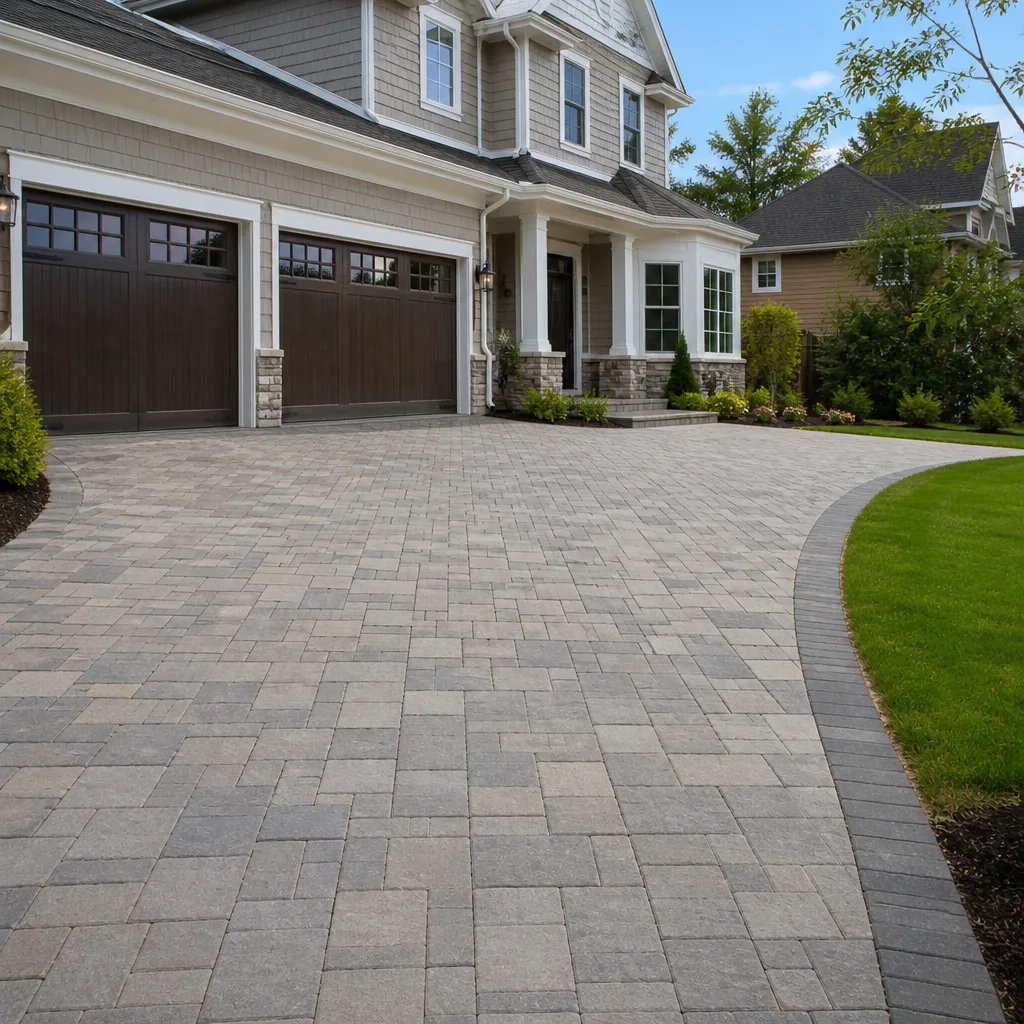 Driveway & pavers
 Kitchen remodeling
 Bathroom remodeling
 Home additions & ADU
 Roofing
 Windows & doors
 Fence
Free written scope consultation - allowances, timeline, and change-order rules on paper before a single trade is scheduled
Driveway & Pavers Troubleshooting: Common Problems and How to Fix Them
Replacing a sunken paver without fixing what caused it to sink is like painting over mold. It looks fine until it doesn’t, and the second repair always costs more than the first. In our experience across Oakland, most homeowners who call us about a wavy driveway are describing a symptom, not the problem. The real trouble lives eight inches down, in the base course nobody sees. This guide teaches you to read the symptoms, tell a five-minute fix from a five-thousand-dollar one, and know exactly when a quote should make you walk away. By the end you’ll diagnose your own pavers like a crew foreman.
Quick Answer
If pavers are sinking or heaving unevenly, the cause is almost always a failed or thin sub-base, not the pavers themselves, so resetting the top layer alone will look good for a season and fail again. Surface-level shift from grit, settling sand, or a single rocked unit is a genuine DIY fix. Anything that spans several stones, follows a line, or sits near a tree or the driveway edge means water is moving underneath and the base needs excavation. Diagnose the cause before you spend a dollar.
Styles & brands we work with
- Kitchen remodeling
- Bathroom remodeling
- Home additions & ADU
- Roofing
- Windows & doors
- Driveway & pavers
- Fence
Table of Contents
- How to Diagnose Paver Problems Before You Repair Anything
- Surface Shift vs. Sub-Base Failure: Telling Them Apart
- Why Pavers Sink and Heave Unevenly
- Efflorescence: Cosmetic or a Sign of Water in the Base?
- Edge Paver Rollout and Why It Accelerates
- Diagnosing Root Intrusion from Oakland Street Trees
- When a Repair Quote Should Raise a Red Flag
- Common Mistakes to Avoid
How to Diagnose Paver Problems Before You Repair Anything
Start with a walk. Barefoot or in thin-soled shoes, cross the whole driveway and note where the surface rocks, dips, or humps. Your feet feel a one-eighth-inch lip that your eyes miss. Mark each trouble spot with chalk, then step back and look at the pattern: do the marks cluster, follow a straight line, or circle a tree? That pattern is your first real clue.
Next, grab a four-foot level or a straight 2×4 and lay it across the trouble spot in two directions. A dip under the middle of the board means a depression. A gap under both ends means a hump. Measure the gap. Anything under a quarter inch is usually cosmetic. Anything over half an inch, or a dip that holds standing water after rain, points to a support problem below.
Then do the hose test. Run water on the low area for a minute and watch where it goes. If it ponds instead of draining, the base has lost its slope, and that’s a drainage problem no amount of new sand fixes. Finally, pull one loose paver and look at what’s underneath. Clean, uniform, compacted gravel with sharp edges is a healthy base. Soft mud, loose soil, or sand that pours out like sugar is a base that’s failed.
Jot down three things: how many pavers move, whether water drains, and what’s under the surface. Those three answers decide whether this is a Saturday project or a call to a crew. In our experience, homeowners who skip this step spend money twice. A proper diagnosis is the cheapest work you’ll ever do on a driveway.
Surface Shift vs. Sub-Base Failure: Telling Them Apart
This is the distinction that saves homeowners the most money, and most of them never learn it until after a failed patch job. Surface-level movement is a top-course issue. Sub-base failure is a foundation issue. They look similar from standing height and behave nothing alike.
Surface-level shift (fixable without excavation):
- One or two pavers rock slightly underfoot, but their neighbors sit flush.
- Joint sand has washed out between stones, leaving visible gaps.
- A single stone tilts because grit or a stray pebble worked under one edge.
- The trouble appeared after a heavy rain or a car parked on a hot day.
- The area drains and shows no ponding.
Sub-base failure (requires excavation to fix correctly):
- A whole section of five or more pavers dips together in a bowl shape.
- The dip reappears within weeks of any patch.
- Water ponds in the depression and sits for hours.
- Pavers near a tree, the driveway edge, or a downspout are the culprits.
- You can press a screwdriver into the joint sand and it sinks easily.
If two or more of the failure signs are true, stop patching. The base under that section has either settled, washed out, or was never compacted correctly to begin with. Every dollar spent resetting the top stones is a dollar thrown at a symptom. When we see a driveway in Oakland’s Temescal or Rockridge neighborhoods with a recurring bowl-shaped dip, the excavation almost always reveals a base that’s four inches instead of the six to eight inches a driveway needs.
One more tell: does the dip get worse over months, or stay the same size? A stable dip might be an original construction error you can live with. A growing one means water is actively moving soil underneath, and it will keep spreading until the base is rebuilt.
Why Pavers Sink and Heave Unevenly
Pavers don’t sink on their own. Something under or around them gives way. Here are the causes we find again and again in Oakland, in rough order of how often they show up.
1. Thin or poorly compacted base. This is the number one cause. Clay-heavy soils common in the Oakland hills expand when wet and shrink when dry, and a base that wasn’t compacted in lifts will move with them. A driveway needs six to eight inches of compacted aggregate, installed two to three inches at a time with a plate compactor between each lift.
2. Water getting in where it shouldn’t. A gutter that dumps onto the driveway, a downspout aimed at the pavers, or a driveway that slopes toward the house instead of away all drive water into the base. Once aggregate is saturated, fines wash down and out, and the surface drops.
3. Tree roots lifting sections. Covered in its own section below, but it deserves a mention here because roots cause heave more than sink.
4. Vehicle load and soil type. A driveway built for foot traffic will fail under a three-ton SUV. Drivers parking the same spot every day concentrate load, and the base under that spot settles first.
5. Organic material left in the subgrade. Roots, topsoil, and construction debris buried during an install decompose over years and leave voids. When we excavate a failing section, we sometimes find the original topsoil still sitting there, which explains why the surface never settled evenly.
Heaving (stones pushed up) is usually roots, frost in colder climates, or a base that swells when wet. Oakland rarely sees frost, so for us heaving is nearly always roots or clay expansion. Knowing which failure mode you have points straight to the fix: sink equals base loss or settling, heave equals something pushing up from below.
Efflorescence: Cosmetic or a Sign of Water in the Base?
That white, chalky haze on your pavers is efflorescence, and it’s one of the most misunderstood problems on a driveway. It comes from soluble salts inside the concrete or stone. Water carries those salts to the surface, the water evaporates, and the salts crystallize as a white bloom. The bloom itself is harmless. What it’s telling you is what matters.
Efflorescence appears when water is passing through the paver, which means water is also in the base. In a dry, well-drained install, efflorescence is a light dusting that comes and goes with weather and brushes away. On a driveway where the bloom keeps returning on the same few stones weeks later, that’s a recirculating water problem. The base is staying wet, and wet base is base that’s on its way to failing.
Here’s how to tell the two apart:
- Cosmetic efflorescence: Appears in a thin uniform film after rain, dries out, brushes off with a stiff broom, doesn’t come back for months. Common on new installs and not a concern.
- Water-infiltration efflorescence: Concentrated on a specific zone or toward one edge, returns within weeks, leaves a heavier crust, and often comes with damp joint sand or dark patches after rain. This signals trapped water in the base.
The fix for cosmetic bloom is a dry brush or a commercial efflorescence remover, followed by a sealer that’s rated for breathability. The fix for water-infiltration bloom is drainage. We look at how the driveway sheds water, whether downspouts are discharged too close, and whether the slope is holding. Sealing efflorescence without addressing the water just traps the problem longer. If the bloom keeps returning on the same stones in Oakland after a wet winter, we test the base moisture rather than reaching for another sealer.
Edge Paver Rollout and Why It Accelerates
Edge rollout is when the pavers along the outer boundary of the driveway start tipping outward, so the whole edge rolls away from the drive. It starts subtle, a slight lean on the outside course. Give it a couple of seasons and you have loose pavers spilling onto the lawn and a driveway that’s visibly narrower at the edge.
The cause is missing or inadequate edge restraint. A paver isn’t glued down. It’s held in place by interlock, joint sand, and a border that resists lateral movement. That border is typically a concrete curb, a spiked edge restraint, or a soldier course set in concrete. When the restraint is too shallow, installed without spikes, or undermined by water at the edge, the pavers have nothing holding them against the outward push of every car that drives over them.
Rollout accelerates for three reasons:
- Water erodes the shoulder. Rain runs off the driveway edge, scours the soil and sand away, and the restraint loses support.
- Load cycles push outward. Every trip over the edge pushes the pavers a little further out. Left alone, the movement compounds.
- Joint sand loss. Once sand washes out, the pavers lose friction against each other and shift more freely.
The repair is not resetting the leaning stones. The repair is removing the loose course, rebuilding a proper compacted base under the edge, and reinstalling a restraint set deep enough, with spikes or a concrete curb, to resist lateral push. We often extend the fix a few inches wider than the visible damage because the erosion always runs further than the eye can see.
In Oakland, edge rollout is common on driveways bordering street trees or planting strips. The edge sits where water and roots both work against it. If you catch it early, a shallow restraint and fresh compacted base handles it. Wait, and you’re rebuilding a wider section plus re-leveling the courses the rollout dragged out of line.
Diagnosing Root Intrusion from Oakland Street Trees
Oakland’s tree-lined streets are one of the things that make the city feel like the city. They’re also one of the biggest underappreciated causes of paver heave, and they’re why root diagnosis needs to happen before you quote a repair. Coast live oak, London plane, and the maturing street trees on blocks from Lake Merritt to the Dimond all send roots toward the water and oxygen hiding under paver joints.
Root intrusion usually shows in a signature pattern that’s different from base failure. Look for these signs:
- The heave traces a curve or arc, often starting from the base of a nearby tree or the parkway strip.
- Pavers are pushed up and tilt outward from a center point, rather than dipping into a bowl.
- Joint sand is displaced and one section sits visibly higher than its neighbor, with a sharp lip.
- The heaved area gets worse each year, and you can sometimes see a fine crack propagating toward the tree.
Base failure sinks. Roots lift. If you find a curved heave radiating from a street tree, you almost certainly have roots, and resetting the pavers without dealing with the roots means dealing with them again next spring.
Here’s where Oakland tree-protection rules matter. Mature street trees are often protected, and cutting structural roots without regard to the tree’s stability or the city’s rules can get a homeowner in real trouble. The repair has to thread the needle: a properly engineered root barrier between the tree and the driveway, sometimes a flexible edge detail, and a base that can accommodate minor root movement. We’ve rebuilt sections in Oakland where the answer was installing a deep root barrier and a slightly forgiving joint detail, not amputating the tree’s root system. Get an arborist’s read before you dig anywhere near a protected street tree. The driveway fix is cheaper than a permit problem plus a dead tree.
When a Repair Quote Should Raise a Red Flag
The most common reason a driveway repair fails is that the original repair only addressed the surface. A quote that only resets pavers, re-sands joints, and seals the top is telling you the contractor either doesn’t understand the cause or is hoping you won’t notice. Here are the red flags we’d want a homeowner to catch, and we’d rather you hear them from us than a bad experience.
- No diagnosis, just a price. A contractor who quotes before pulling a paver or checking base depth is guessing. Ask what they found underneath, and how they know it’s the cause.
- The quote doesn’t address water. No mention of drainage, slope correction, or downspout routing means the same water that failed the base is still in place. Expect the same failure within a few seasons.
- No excavation depth listed. A proper base repair tells you how deep they’ll dig, how many inches of compacted aggregate they’ll install, and in how many lifts. Two inches of gravel over the old failing clay isn’t a base repair; it’s a patch.
- No new edge restraint on an edge repair. Resetting edge pavers without a restraint means rollout returns with the first heavy rain.
- Sealing proposed as the main fix. Sealer protects pavers. It doesn’t fix an uneven base or a drainage failure. If a quote lists sealing first and base work nowhere, that’s surface treatment, not troubleshooting.
- No mention of tree roots on a tree-adjacent driveway. If there’s a street tree within 10 to 15 feet of the heave and the quote doesn’t mention roots or a barrier, the crew hasn’t looked.
- Numbers that don’t add up. A quote to rebuild a large failing section for a price that couldn’t possibly cover labor, base material, and disposal is either missing something or going to change once work starts. Upfront pricing that reflects the real scope is the only kind that holds.
The pattern across every red flag is the same: a repair that treats the surface is a repair that hasn’t diagnosed the cause. Before you sign anything, ask the contractor to name the failure mode (base settlement, water infiltration, edge rollout, root intrusion) and explain why. A good crew will answer in plain language and show you what they found. If they can’t, the quote isn’t ready.
Common Mistakes to Avoid
- Resetting a sunken paver without checking the base. Re-leveling the same stone in fresh sand is satisfying and lasts about one rainy season if the base under it is washed out. Pull a neighbor paver and look at what’s beneath before you invest a weekend.
- Power-washing efflorescence and calling it fixed. Blasting away the white bloom spreads salts into the joints and doesn’t address the water in the base. Treat the water source, then tackle the bloom.
- Burying the base problem with a layer of new sand. Sand added on top of a failing base is the driveway equivalent of a rug over a hole. It looks level until the first load drives over it. Proper base work means excavation and recompaction, not a top dressing.
- Ignoring edge erosion because the rest of the driveway is fine. Rollout is slow, then sudden. Once the restraint loses support, the whole edge course follows within a year or two in Oakland’s winter rain. Fix the edge when it’s a small job.
- Cutting street-tree roots before checking what Oakland requires. Several of the city’s mature street trees are protected, and structural root removal can make the tree unstable or trigger permit trouble. Get an arborist’s opinion before the sight of a root turns into a shoveling decision.
- Choosing the cheapest reset-and-seal quote. If the quote doesn’t mention the base or drainage, it’s not a repair. A cheap surface fix on a base problem guarantees you’ll pay twice.
- Sealing a driveway to hide a growing problem. A sealer is good protection for a healthy surface. Applied over a failing base, it traps moisture and accelerates joint sand loss. Address cause first, then seal.
See the difference
 Before
 After
 Before
 After
 Before
 After
When to Call a Professional
Some paver problems genuinely belong in the DIY column: a single rocking stone, washed-out joint sand, a light efflorescence bloom. The moment the trouble spans five or more pavers in a connected pattern, holds standing water, reappears after a patch, or runs alongside a protected street tree, the base is involved and excavation is the right answer. Excavation on a driveway means heavy material, a plate compactor, disposal, and re-setting the full course. That’s a crew job. If a quote you’ve received doesn’t name the underlying cause, get a second opinion before the first crew shows up.
Groundwork Construction Co. of Oakland offers free estimates in Oakland: call (833) 997-7759. We’ll pull a paver, read the base, and tell you whether it’s a surface fix or a foundation job, in writing, before anyone lifts a shovel. Our technicians bring up to 12 years of experience, and every project is covered by the 730-Day Done Right Promise, so if it isn’t done right, we make it right.
For surface detail work and full installations, see our Driveway & Pavers in Oakland page. If you’re planning the wider yard around the driveway, our Fence Installation in Oakland page covers how fences, gates, and drainage tie together, and our Home Additions & ADU in Oakland page explains how driveway access and grading affect rear additions. Start at the Groundwork Construction Co. of Oakland home page for the full scope of what we build.
Frequently Asked Questions
Yes, if it’s one or two loose stones with a clean, compacted base underneath. Lift the paver, clear the grit, re-set it on fresh bedding sand, and sweep new sand into the joints. No, if the dip spans several pavers, holds water, or reappears after you fix it, because that’s base failure and fixing it yourself means excavating and recompacting a section, which is a crew job. Call (833) 997-7759 for a free estimate if you’re unsure which one you have; a diagnosis takes minutes and saves the cost of a wrong repair.
That’s efflorescence, salt pushed to the surface by water moving through the pavers. It’s cosmetic when it appears lightly after rain and brushes off, but when the bloom keeps returning on the same stones, it’s telling you the base is staying wet. Address the drainage and water source before you seal, or the bloom comes back. Call (833) 997-7759 for an estimate if it keeps returning in the same spot.
That’s edge rollout, caused by missing or shallow edge restraint and water eroding the shoulder behind the edge. It accelerates because every trip over the edge pushes the pavers out further and lost joint sand removes their friction. The fix is rebuilding the compacted base at the edge and installing a proper restraint, not just resetting the leaning stones. Call (833) 997-7759 to get an edge repair quoted before it spreads inward.
Root heave lifts pavers in a curve radiating from the tree and pushes them up and outward, while base failure sinks them into a bowl. If the damage traces an arc toward a nearby street tree, you almost certainly have root intrusion. In Oakland, many mature street trees are protected, so get an arborist’s read and repair with a root barrier rather than cutting structural roots. Call (833) 997-7759 for an estimate that accounts for the tree, not just the pavers.
A repair that fixes the base, the drainage, and the restraint underneath should last a decade or more with normal use and occasional joint sand top-ups. A surface-only patch that leaves the base alone can fail within one or two winters in Oakland’s rain. That gap is why it’s worth paying for the correct diagnosis. Call (833) 997-7759 for an upfront estimate that names the cause and the fix.
It shouldn’t. A proper quote comes after a diagnosis, names the failure mode, lists excavation depth and materials, and prices the repair as a line item, so the number you see is the number you pay. If a contractor won’t name the cause or refuses to scope the base, the price will move. Call (833) 997-7759 for upfront pricing with no surprises and a written scope before anything begins.
The Bottom Line
Almost every paver problem that looks like a surface issue is a base, water, or root issue in disguise. Walk your driveway, test the drainage, pull one paver and look underneath before you spend a dollar. If the trouble is one or two stones with a sound base, fix it yourself. If it’s a connected dip, a recurring white bloom, a rolling edge, or a curved heave near a street tree, the answer is excavation and rebuilding the base correctly. Ask any contractor to name the cause before quoting. It’s the only way to spend your money once. Call (833) 997-7759 for your free estimate, and let’s diagnose it right the first time.
Written by the team at Groundwork Construction Co. of Oakland.