
Last updated November 17, 2026
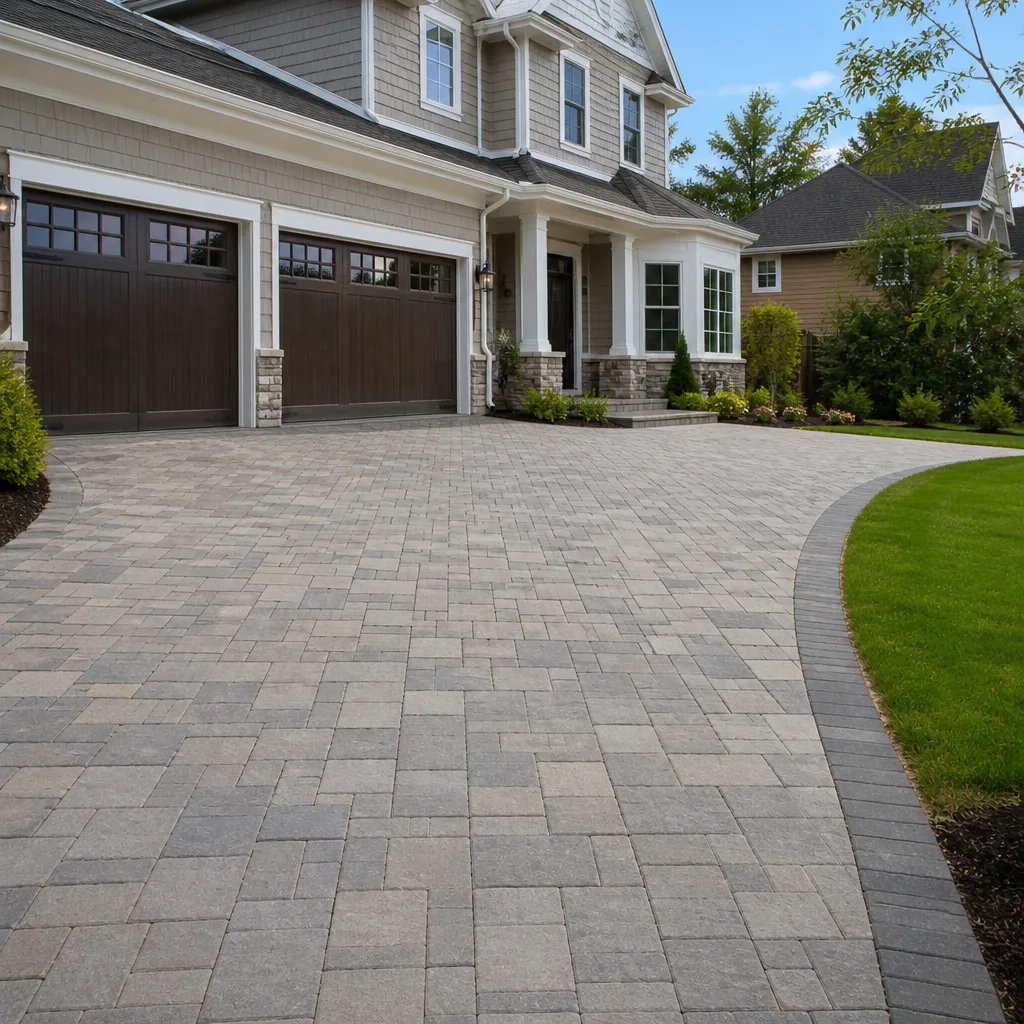 Driveway & pavers
 Kitchen remodeling
 Bathroom remodeling
 Home additions & ADU
 Roofing
 Windows & doors
 Fence
Free written scope consultation - allowances, timeline, and change-order rules on paper before a single trade is scheduled
The Complete Driveway & Pavers Guide for Oakland Homeowners
The number one reason Oakland driveway pavers fail within five years isn’t cheap materials. It’s a base layer designed for Sacramento’s flat, dry soil installed under East Bay conditions. We’ve pulled up pavers in Montclair and Crocker Highlands that looked perfect on the surface and were riding on four inches of aggregate over soil that swells every winter. This guide translates national paver advice into decisions that actually hold up here: the base depths Oakland clay demands, materials that survive our wet-dry swing, permit rules for driveways that meet the sidewalk, slope and drainage plans for flats versus hills, and the questions to ask any contractor before you sign.
Quick Answer
Driveway pavers in Oakland need a deeper aggregate base than most manufacturer specs call for because of the region’s expansive clay soils. Expect a properly built Oakland driveway to run $18 to $32 per square foot installed, and insist that the base depth specification appears in writing before work begins. Materials and slope design should match your specific lot, from the flat streets of the flats to the graded hillside lots above Fruitvale and Montclair.
Styles & brands we work with
- Kitchen remodeling
- Bathroom remodeling
- Home additions & ADU
- Roofing
- Windows & doors
- Driveway & pavers
- Fence
Table of Contents
- Why Oakland Soil Punishes Standard Paver Installations
- How Deep Should the Base Layer Be in Oakland?
- Which Paver Materials Hold Up to Oakland’s Wet-Dry Cycle?
- Slope and Drainage: Flat Lots vs. Hillside Lots
- Do You Need a Permit for a Driveway in Oakland?
- What Do Driveway Pavers Cost in Oakland?
- What to Ask Any Oakland Paver Contractor Before Signing
- How to Maintain an Oakland Paver Driveway
Why Oakland Soil Punishes Standard Paver Installations
Most national paver guidance assumes soil that drains freely and stays put. Oakland doesn’t cooperate. Much of the East Bay hills sits on expansive clay that swells noticeably after the first serious rains and shrinks back through our long dry season. That movement doesn’t stop politely at the edge of your driveway. It pushes up from underneath, and a base built to a generic spec has no room to absorb it.
We see the results in predictable patterns. In neighborhoods like Redwood Heights and Oakmore, driveways installed with a shallow base start showing ponding within two or three winters. The pavers settle unevenly, joints open, and in bad cases you get heaving aligned with the clay seams under the slab. Salt-and-pepper discoloration from poor drainage becomes a texture problem, not a cosmetic one.
The fix is straightforward even if it costs more upfront: excavate deeper, use a graded aggregate base, and compact in lifts rather than dumping the whole depth at once. A base that accounts for clay movement gives the pavers a stable platform and a path for water to leave. Skip that step and every layer above it is borrowed time.
- Expansive clay swells and shrinks with Oakland’s seasonal moisture swing, not just rainfall totals.
- Shallow bases fail first at the driveway edges, where water collects and clay movement is strongest.
- Compaction matters as much as depth. Loose aggregate under pavers settles into the gaps the clay creates.
How Deep Should the Base Layer Be in Oakland?
A paver base for an Oakland residential driveway should be at least 8 to 12 inches of compacted aggregate over expansive clay soil, and deeper on hillside lots with significant grade change. That’s above the typical 4 to 6 inch recommendation you’ll find on manufacturer packaging and most national guides. The difference is soil type, not caution.
Here’s how a properly built base goes down in sequence:
- Excavate to full depth. Measure from finished paver height down through bedding sand, base aggregate, and any geotextile layer. On clay, we’re talking a total excavation closer to 16 inches.
- Lay a separation geotextile. A fabric between native clay and the aggregate keeps fines from migrating up into the base and choking drainage.
- Install aggregate in lifts. Compact in 3 to 4 inch layers, not all at once. Each lift needs full compaction before the next goes down.
- Check grade and pitch continuously. Water has to leave the driveway. On a flat lot that means a designed slope of at least 1 to 2 percent.
- Set bedding sand and pavers. Only after the base passes compaction and grade checks. This is where good installs separate from rushed ones.
Ask any contractor to put the base depth number in your written estimate. If a bid doesn’t specify how deep the aggregate goes, you can’t compare it to another bid and you can’t hold anyone to it later. Our Driveway & Pavers in Oakland service writes the spec into every quote for exactly that reason.
Which Paver Materials Hold Up to Oakland’s Wet-Dry Cycle?
Concrete pavers handle Oakland’s wet-dry seasonal swing better than most homeowners expect, provided they’re a high-density interlocking type with a proper joint and a permeable or well-drained setting bed. Clay brick pavers work too, but quality varies widely. The material that struggles most is the cheap stamped-overlay or thin veneer product that looks like pavers in photos and cracks through a few winters of clay movement.
Color fade is a quieter problem. Our long dry summers bleach out low-grade colorants, and the winter rains expose any paver that wasn’t sealed or manufactured with through-body pigment. Here’s how the main options break down for Oakland conditions:
- High-density interlocking concrete pavers: The workhorse choice. Handles freeze-free but wet winters well, resists heaving when the base is right, and comes in permeable options that help with runoff into Oakland’s storm drains.
- Clay brick pavers: Classic East Bay look, excellent longevity, but require a stiffer base and careful edge restraint on hillside lots.
- Permeable pavers: Worth the premium where your lot can’t otherwise drain to the street, which is common on graded hillside properties. They pass water through open joints into the base rather than across the surface.
- Natural stone (travertine, bluestone): Beautiful, but on clay-heavy Oakland sites the base design has to carry more of the load, so costs climb.
Whatever material you choose, the finished driveway needs edge restraint. Pavers that aren’t held at the perimeter spread under a vehicle’s weight and the whole surface starts shifting. That detail shows up on a good bid and disappears on a sloppy one.
Slope and Drainage: Flat Lots vs. Hillside Lots
Oakland driveways are not one problem. A lot in the flatlands south of Lake Merritt has almost no grade and no natural place for water to go, while a lot off Joaquin Miller or in the Oakland hills can have a 12 percent pitch and a water-shedding job to do every storm. The design has to match the site.
On flat lots, drainage is the whole game. Since the ground won’t shed water on its own, the driveway surface needs a designed pitch, surface or French drains along the low edge, and a defined path to the street or a rain garden. Without that, water pools against the garage slab, works under the pavers, and the base turns into a sponge. If your flat-lot driveway also runs to a detached garage or an ADU, plan drainage to keep water moving away from both. Our Home Additions & ADU in Oakland work runs into this constantly.
On hillside lots, the challenge inverts. Water wants to run across the property, so the driveway needs to slow it down and direct it to the right place, not just the low corner. Expect deeper base, more compaction effort, and often a retaining detail at the uphill edge. Storm runoff has to be handled in a way that doesn’t push onto a neighbor’s property, which is both courteous and, in tight Oakland lots, sometimes a code matter.
One overlooked neighbor issue: driveway aprons. Where your new driveway meets the public sidewalk, the transition from private paver surface to public concrete has specific standards. Get the apron detail wrong and the sidewalk can pond or crack, and you may end up fixing public infrastructure on your own dime.
Do You Need a Permit for a Driveway in Oakland?
Any driveway work that changes or connects to the public sidewalk, curb, or street apron in Oakland generally requires a permit, and often an encroachment permit from the city in addition to a building permit. Resurfacing inside your own property lines, without touching the sidewalk or street, is usually exempt, but the rules depend on the scope and the site. Confirm with the City of Oakland before work starts; guessing is how remodels become violations.
What to have ready when you talk to the city:
- A site plan showing your property lines, the driveway, and how it meets the sidewalk and street.
- The proposed slope and pitch, especially if any water will shed toward the public right-of-way.
- Your contractor’s licensing and insurance information. The city wants to know who is doing the work.
- A plan for handling stormwater runoff that doesn’t send water onto neighboring lots.
The easiest way to get this wrong is to skip the permit step because a contractor says “we don’t need it for pavers.” That’s a shortcut, not a favor. On our driveway and paver projects, permits are pulled and inspections passed before the driveway is called done. If a bid doesn’t include permit handling, ask why.
What Do Driveway Pavers Cost in Oakland?
Driveway pavers in Oakland typically cost between $18 and $32 per square foot installed, all told. The wide range exists because Oakland is a city of very different lots: base depth, slope, drainage engineering, and sidewalk apron work all drive the price. A straightforward flat-lot driveway in Fruitvale sits near the bottom of that range; a steep Montclair hillside with a base running deeper than 12 inches pushes toward the top.
Here’s how a real line-item estimate breaks down:
| Line item | Oakland price range |
|---|---|
| Excavation and haul-away | $3 – $7 per sq ft |
| Aggregate base, installed and compacted | $4 – $8 per sq ft |
| Bedding sand and geotextile | $1 – $2 per sq ft |
| Pavers (material) | $3 – $9 per sq ft |
| Labor and paver setting | $4 – $7 per sq ft |
| Edge restraint, drains, and finishing | $2 – $5 per sq ft |
| Sidewalk apron and permit handling (if required) | $800 – $3,500 total |
A standard two-car driveway in Oakland is roughly 400 to 600 square feet. That puts most complete installations between $8,000 and $19,000 before any sidewalk work. If a quote comes in dramatically below that, the shortcut is almost always base depth. Stretch the budget by financing instead of by shaving the base: Groundwork Construction Co. of Oakland offers 0% financing for 18 months and $1,000 off projects over $10,000. The number you see on your written, line-item quote is the number you pay, with no change orders.
What to Ask Any Oakland Paver Contractor Before Signing
The single most revealing question to ask a paver contractor in Oakland is this: what is the base depth specification, and will you write it into the contract? A contractor who is confident in their method will put the number down. One who won’t is telling you the depth depends on how the day is going. That question alone filters out most of the risk.
Here’s the full set of questions worth asking, in the order that saves you the most trouble:
- Are you licensed and insured? In California, ask for the license number and verify it, along with general liability and workers’ comp coverage.
- What base depth do you use on expansive clay, and why? You want a specific number and a reason tied to your soil, not a generic one-size answer.
- How do you handle drainage and slope on my lot? Ask them to walk the site and describe the pitch and where water will go.
- Will you pull the permits for the sidewalk apron and street connection? If the answer is no, ask who is responsible.
- What’s the written workmanship warranty? Compare the length and what it actually covers. Ours is the 730-Day Done Right Promise: if it’s not done right, we make it right.
- Who is on the crew, and are they background-checked and uniformed? You’re letting people onto your property for days. Know who’s coming.
- Can you give me a written line-item quote? A lump-sum number hides where the money goes. You want line items.
Good companies answer these without flinching. And they don’t disappear once the check clears: our crews are background-checked and arrive in uniform, and you can reach a live person 24/7 if something needs attention after the job. That’s what “upfront pricing, no surprises” is supposed to mean.
How to Maintain an Oakland Paver Driveway
An Oakland paver driveway built on a proper base needs light maintenance, not rebuilding. Rinse off the winter’s leaf litter and soil so it doesn’t sit on the surface, and give the joints a check each spring. If joint sand has washed out, refill it. The joints hold the paving together and keep water where it belongs.
Watch for two things through the seasons. First, any new ponding after a storm means drainage has shifted and it’s worth having someone look before it works into the base. Second, edge movement: if pavers at the driveway’s border start spreading, the edge restraint has failed and the fix needs to happen before the whole surface loosens. Sealing is optional on high-quality concrete pavers, but it helps in Oakland’s wet winters by keeping organic staining off the surface and slowing color fade through the summer. If your driveway also borders a new fence line, coordinate the two projects so one crew doesn’t tear up the other’s edges; we see this on Fence Installation in Oakland projects more often than you’d think.
Common Mistakes to Avoid
- Accepting a generic base depth. A 4-inch aggregate base is a Sacramento spec. On Oakland’s expansive clay it fails within a few winters, no matter how nice the pavers look on day one.
- Skipping the permit for the sidewalk apron. Any driveway touching the public sidewalk needs city sign-off. Cutting that corner can mean tearing out finished work and paying to redo public infrastructure.
- Ignoring drainage on a flat lot. Water that can’t leave has to go somewhere, and in Oakland it usually goes under your garage slab.
- Choosing pavers on color alone. Low-density pavers look fine until the first wet-dry cycle lifts them. Match material to conditions, not to the brochure.
- Letting a crew skip compaction lifts. Base aggregate dumped and surface-compacted once will settle. Insist on layer-by-layer compaction and check the spec.
- Not confirming who’s on site. A crew that shows up in an unmarked van and disappears after the job leaves you with no warranty and no accountability. Ask about background checks and uniformed crews.
- Signing a lump-sum quote with no line items. Without line items you can’t see whether the money went into base prep or into the pavers. And you can’t compare bids fairly.
See the difference
 Before
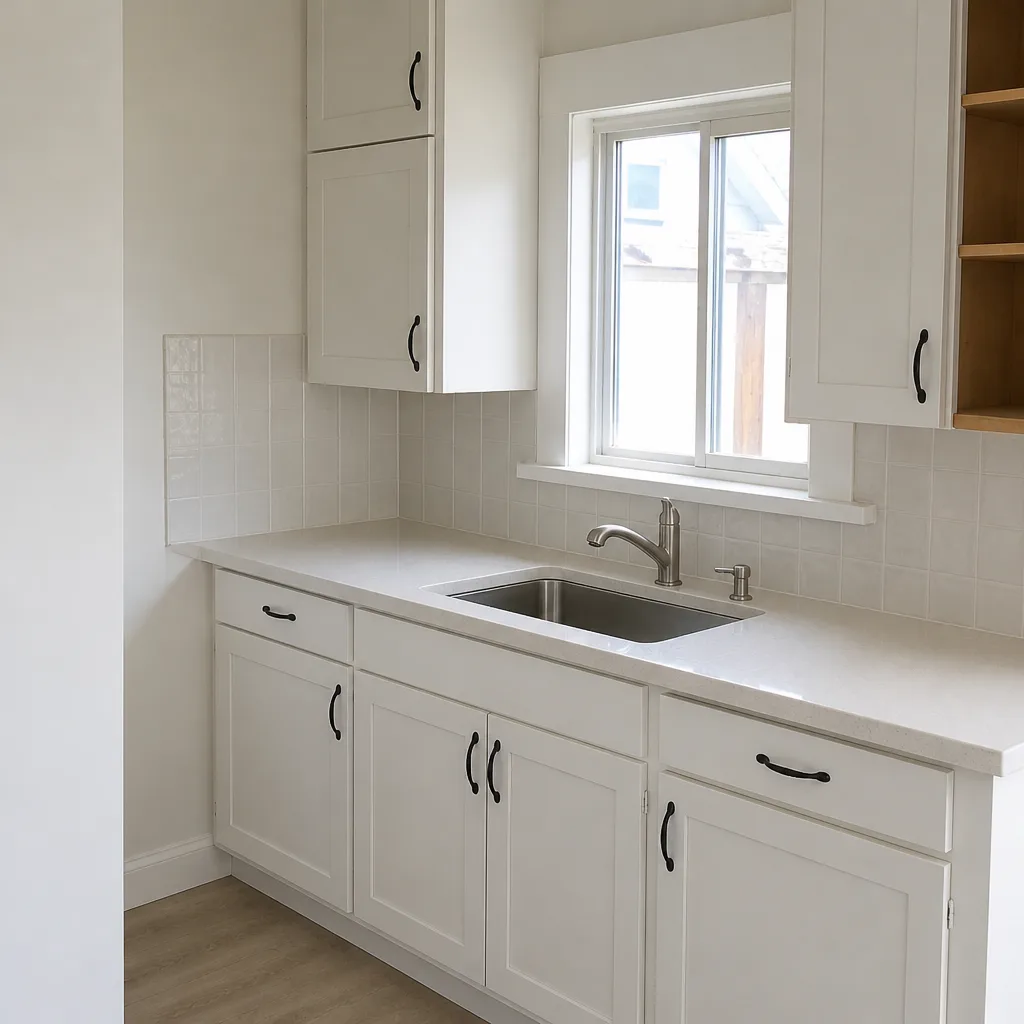 After
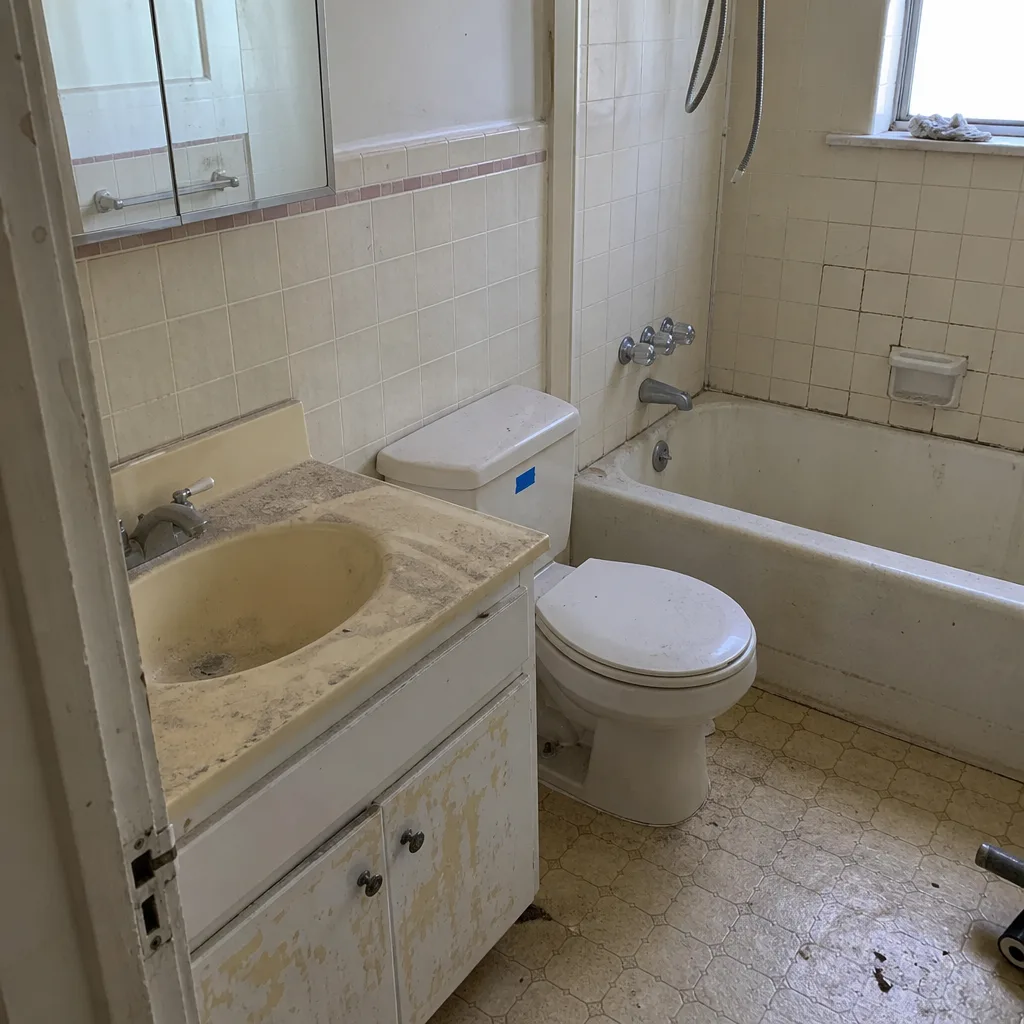 Before
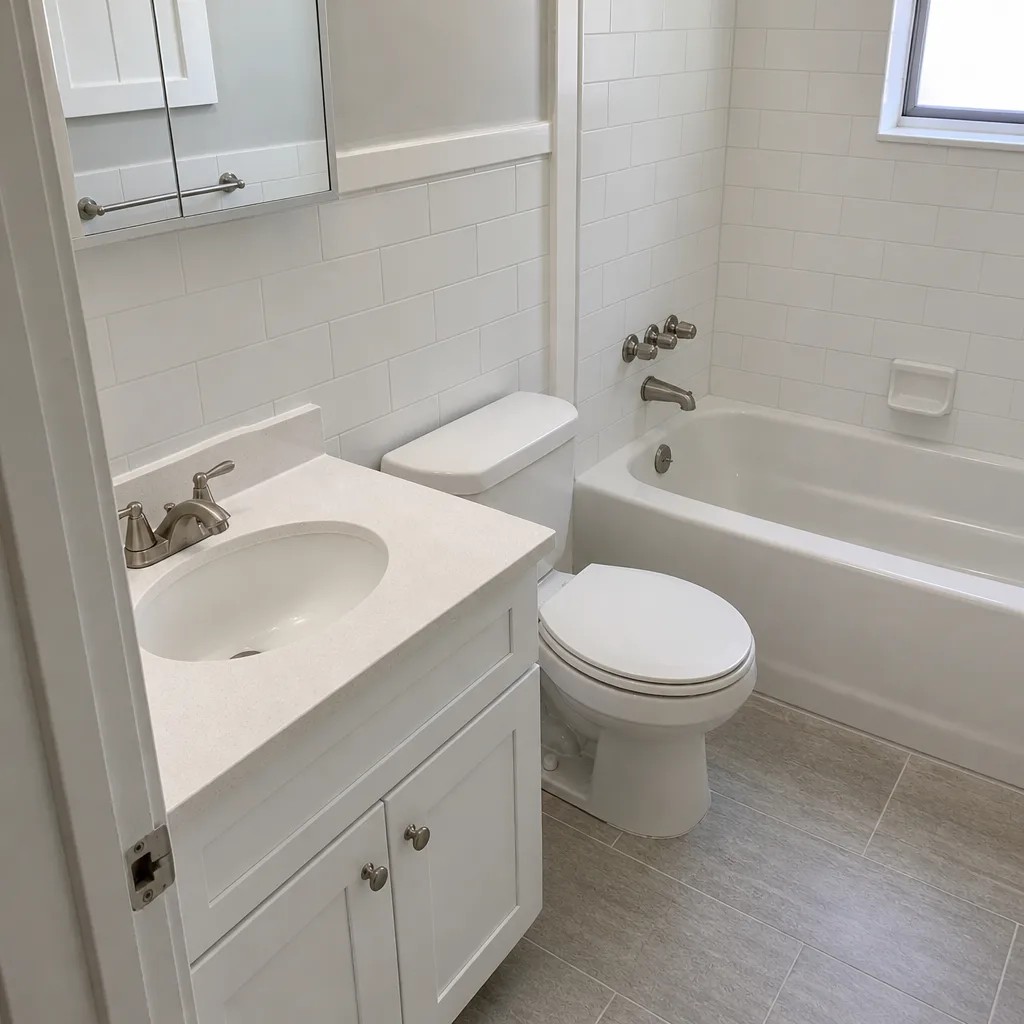 After
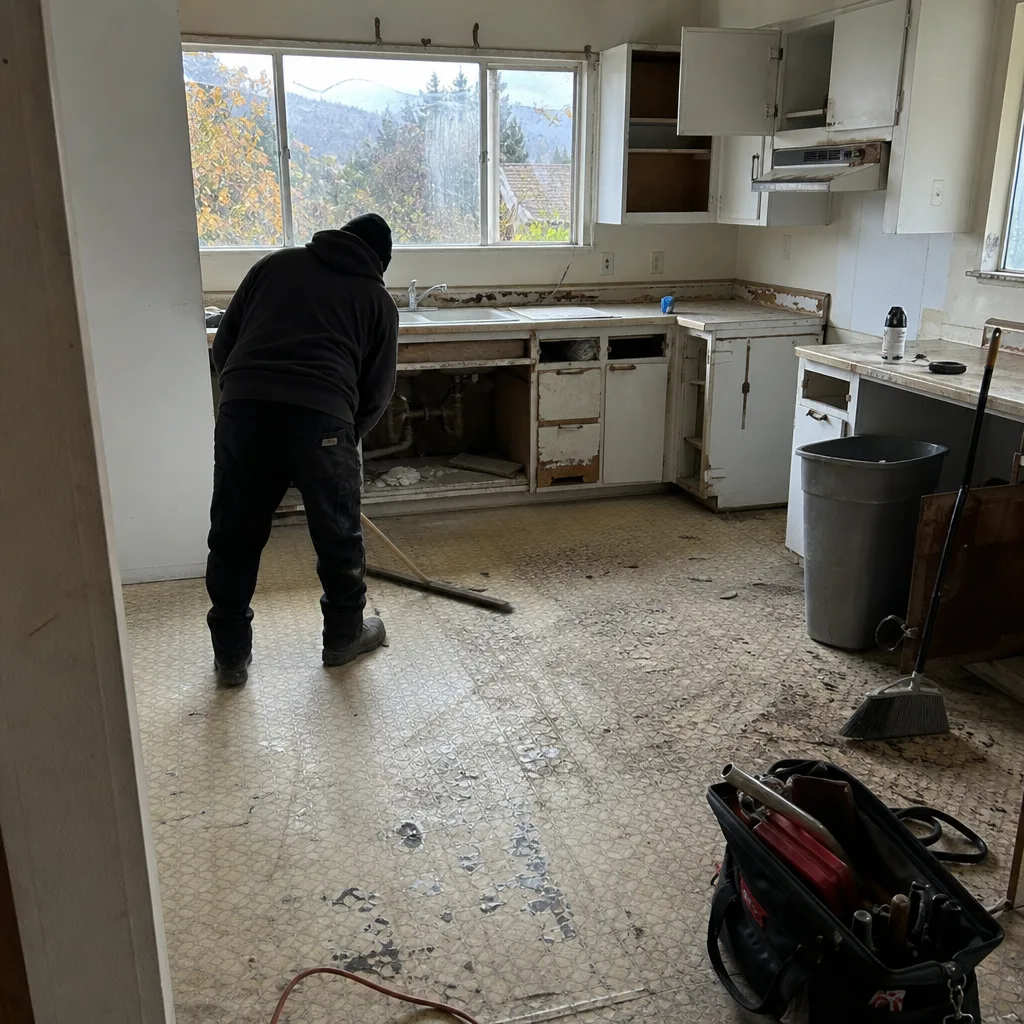 Before
 After
When to Call a Professional
Call a professional paver contractor in Oakland when your driveway shows water pooling in the same spot after every storm, when pavers start moving at the edges or lifting after a wet season, or when you’re planning a new installation that meets the sidewalk and needs a permit. Heaving and shifting usually mean the base has failed, and patching the surface won’t stop it. If your hillside driveway has started to slump or separate from the garage slab, that’s a slope and drainage problem that needs a real design, not sand and a weekend. Installing pavers over expansive clay requires excavation, compacted lifts, and compaction equipment that most homeowners don’t have on hand.
Groundwork Construction Co. of Oakland offers free estimates in Oakland. Our technicians have up to 12 years of experience, and every project is backed by the 730-Day Done Right Promise. Call (833) 997-7759 to schedule yours. You’ll reach a live person, day or night.
Frequently Asked Questions
Driveway pavers in Oakland typically cost $18 to $32 per square foot installed, which puts most two-car driveways between $8,000 and $19,000. The range depends mostly on base depth, slope, drainage design, and whether the driveway connects to the sidewalk. Call (833) 997-7759 for an exact quote on your lot; estimates are free.
At least 8 to 12 inches of compacted aggregate over Oakland’s expansive clay, and deeper on steep hillside lots. That’s significantly more than the 4 to 6 inches you’ll find in standard manufacturer specs, because clay movement in the East Bay has to be accounted for. Ask for the depth in writing on your estimate.
You generally need a permit if the driveway changes or connects to the public sidewalk, curb, or street apron, and often an encroachment permit as well. Work fully inside your own property lines is usually exempt, but confirm with the City of Oakland before starting. A contractor who pulls permits as standard practice saves you that headache.
Yes, and hillside lots are common in Oakland neighborhoods like Montclair and Joaquin Miller. A hillside installation needs a deeper base, more compaction, and a drainage plan that slows and directs water before it runs onto a neighbor’s property. The upfront design matters more on a slope, and so does the workmanship guarantee.
A paver driveway built on a properly sized and compacted base typically lasts decades in Oakland, while an installation on a shallow base can start failing within five years. The pavers themselves outlast the base almost every time, which is why the base specification is the most important decision in the project.
It shouldn’t. A written, line-item quote with the base depth and drainage plan spelled out is your protection against surprise costs. We work on upfront pricing: the number you see is the number you pay. Call (833) 997-7759 for a free estimate with no change-order games.
The Bottom Line
Oakland’s soil is the whole story with driveway pavers. Expansive clay needs a deeper base than the national specs call for, hillside lots need real slope and drainage engineering, and any driveway touching the sidewalk needs a permit handled properly. Cost runs $18 to $32 per square foot installed, and the number that matters most on any bid is the base depth. Get that spec in writing, ask the seven questions above, and the pavers on your Oakland driveway will still look right through many wet winters and dry summers. Get it wrong, and you’re back to square one in five years.
Thinking about your driveway, a new fence line, or a bigger addition to your Oakland property? Start at the Groundwork Construction Co. of Oakland home page to see how we handle the full scope from foundation to finish line.
Call (833) 997-7759 for a free estimate on your driveway and pavers project. Estimates are free, upfront pricing is the rule, and a live person answers whenever you call.
Written by the team at Groundwork Construction Co. of Oakland.