
Home Additions & ADU: Repair or Replace? How Oakland Homeowners Decide
Oakland’s planning department has processed more than 900 ADU applications in a single year, and a good share of them started with a phone call about a leaky garage roof or a cracked basement wall. That’s the tell. The repair-or-replace question for a home addition usually isn’t really about the structure. It’s about whether you’re about to spend $30,000 patching a building that could instead be earning rent. Here’s the decision logic we walk Oakland homeowners through before anyone picks up a hammer.
If you’d rather have a pro look at your specific structure than sort through this on your own, call (833) 997-7759 and we’ll schedule a free estimate.
What makes an existing garage, basement, or bonus room a real ADU candidate?
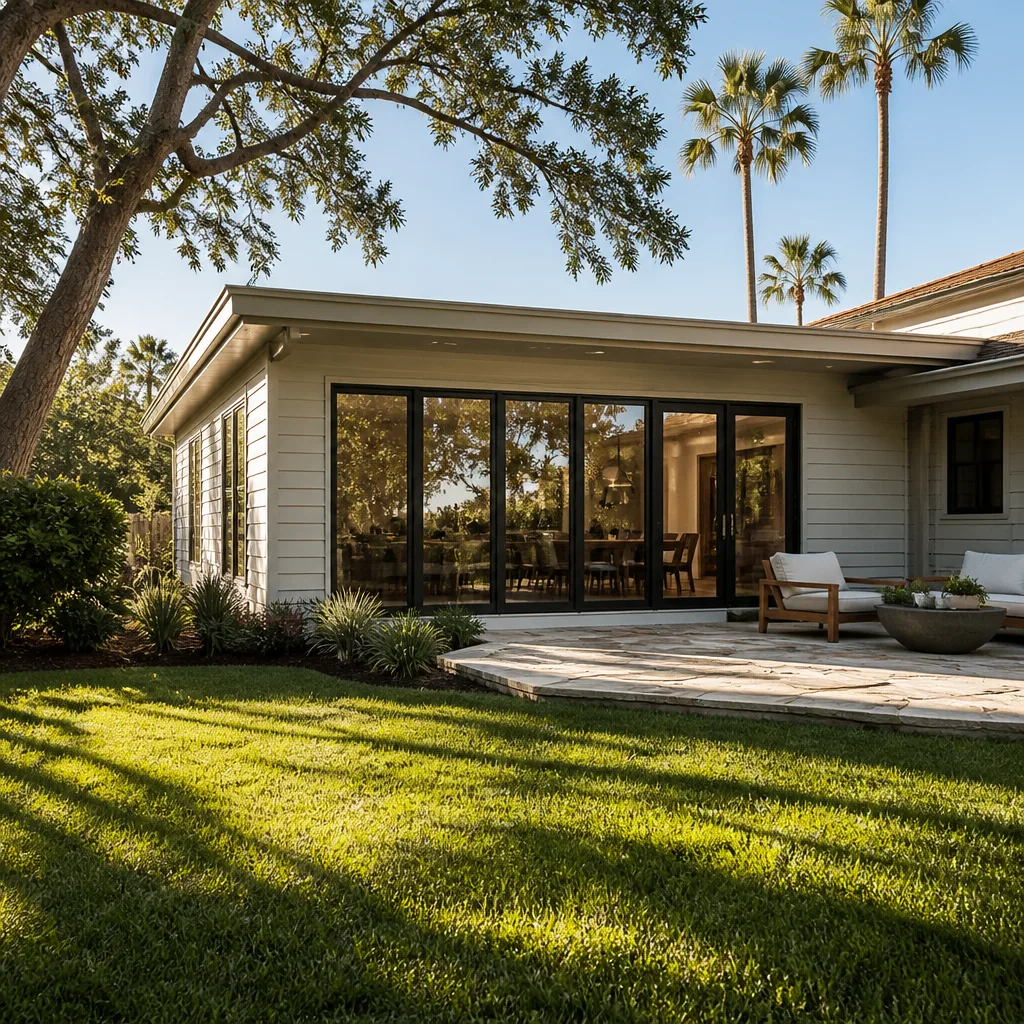
A structure qualifies for ADU conversion when four things hold up: the foundation can carry the load, the ceiling height clears code, the space can get a separate entrance, and utilities can reach it without trenching through your whole yard. Fail any one of those and you’re looking at a rebuild, not a conversion.
Here’s the checklist we run on every Oakland assessment:
- Foundation condition. A slab-on-grade garage from the 1950s is usually fine. A post-and-pier foundation with rot or settlement is a rebuild signal.
- Ceiling height. Habitable space needs roughly 7 feet of clear height. Garages often sit right at the line, which means raising the roof or digging down.
- Structural span. If you’re removing a wall to open up the space, you’ll need a beam. That’s a permit, an engineer’s stamp, and real money.
- Utility access. Water, sewer, gas, and electrical. A detached garage 60 feet from the house needs a trench and a new panel. An attached bonus room usually doesn’t.
- Moisture and drainage. Oakland’s winter rain finds every low spot. We’ve pulled basement framing out of a Rockridge home where the sill plate had been quietly rotting for a decade.
When three or more of those boxes are green, conversion is usually the smarter money. When two or more are red, the math starts pointing toward teardown and rebuild.
How do Oakland’s ADU rules change the repair-versus-replace calculation?
Oakland is one of the more ADU-friendly cities in California, but the rules still decide which path you can legally take. State law now lets you build a detached ADU up to 800 square feet and a conversion ADU up to 1,000 square feet in most single-family zones, and the city has trimmed its own local barriers on top of that. What catches homeowners is the non-conforming structure problem.
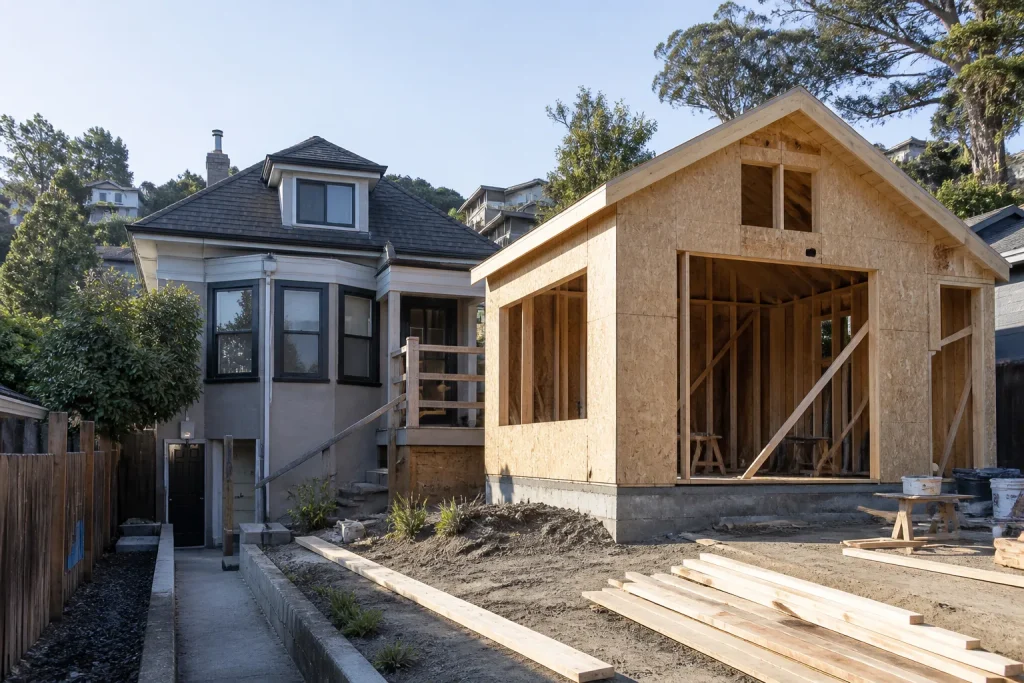
Say you have an old garage that sits closer to the property line than today’s setback rules allow. It’s legal because it was built before the rules changed – it’s “non-conforming,” grandfathered in. Patch that garage and you’re typically fine. But pull a major permit to substantially rebuild it, and you may trigger a review that forces the structure to meet current setbacks. That can mean moving walls, shrinking the footprint, or losing the conversion entirely.
There’s a real distinction between a repair permit and a conversion permit, and the order you pull them in matters. A repair that keeps the structure’s legal status intact is not the same as a repair that clears the way for a legal ADU. Oakland’s planning counter will tell you which one you’re looking at, but you need to know what to ask. This is the single most common place we see homeowners get surprised, and it’s why we tell people to bring a contractor and a plan reviewer into the same conversation before signing anything.
If you want to understand the full ADU pathway before you commit, our Home Additions & ADU in Oakland page walks through the permit sequence.
What does each path actually cost per square foot in Oakland right now?
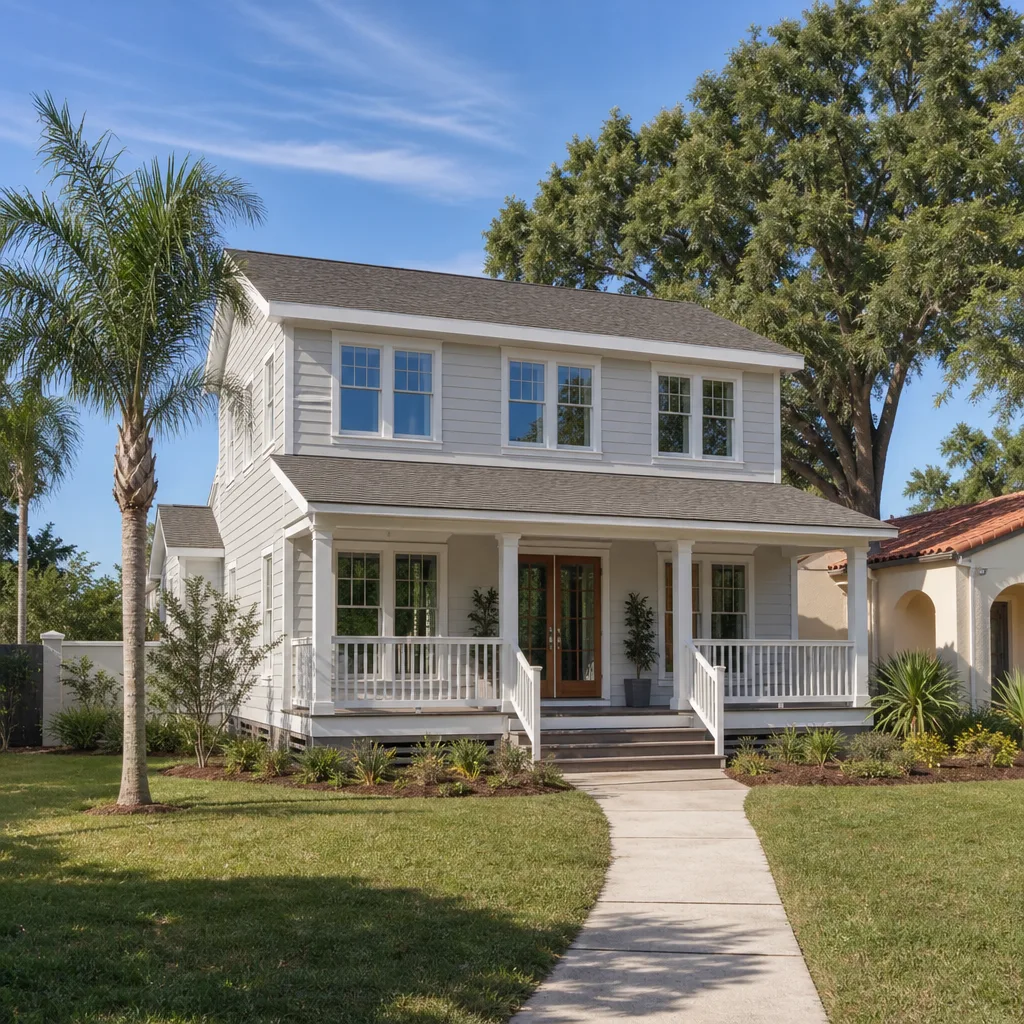
The numbers below are what we see in Oakland’s current construction market. They’re ranges, they move with material prices, and they assume permitted, inspected work – not a friend-of-a-friend cash build.
| Path | Typical cost per sq ft | What drives the number |
|---|---|---|
| Repair existing structure | $150 – $300 | Scope of the fix; no new livable space |
| Garage or basement conversion ADU | $250 – $400 | Utilities, egress, ceiling height |
| New detached ADU (up to 800 sq ft) | $350 – $500 | Foundation, full utility runs, new envelope |
| Bump-out addition (attached) | $400 – $600 | Tying into the existing structure, roof tie-in |
Look at that table for a second. A repair at $200 a square foot gets you a healthier garage that still isn’t habitable. A conversion at $325 a square foot gets you a permitted unit you can rent. The gap per square foot is real, but the gap in what you end up owning is enormous.
A conversion usually lands in the $80,000 to $160,000 range for a typical Oakland garage. A new detached ADU runs higher. A bump-out addition – a real fenced, permitted extension of your living space – is the most expensive per foot because you’re tying into an existing structure, matching the roofline, and extending the envelope. If you’re also reworking the exterior after the build, our Fence Installation in Oakland crew works with Master Halco, Ameristar, and Bufftech panels, and it’s worth pricing the fencing in alongside the ADU rather than as an afterthought.
Why can a cheap repair kill your future ADU?
This is the part that hurts to watch. A homeowner fixes a sagging garage roof with an unpermitted patch job, sells the home five years later, and the buyer’s inspector flags the work. Now the legal conversion is harder, not easier. The paper trail matters as much as the lumber.
Three specific traps we see in Oakland:
- The unpermitted repair. A previous owner or a cheap contractor does structural work without a permit. When you go to convert, the city discovers an unrecorded structure, and now you’re retroactively legalizing something you didn’t build.
- The “convenience” patch. Covering a foundation crack with stucco or skim-coating a basement wall hides the problem from the inspector and the eventual ADU. The water is still there; it just has a nicer façade.
- The teardown that wasn’t. A repair designed around a structure that can’t legally convert to habitable space wastes the entire spend. You paid for a fix that never had a path forward.
That’s the shape of the decision. A repair is worth it when the structure can convert later. A teardown-rebuild is worth it when the structure can’t, and you want the ADU income. Anything else is spending money on a building with no upside.
How does the rental income math frame the ROI conversation?
Oakland rent for a legal ADU studio or one-bedroom generally tracks well above what you’d earn from the same square footage as extra garage space. A permitted conversion ADU pays you back two ways: it adds to the home’s resale value, and it generates monthly income while you own it. Run a simple three-year look:
- Repair only: out $120,000, home value increases modestly, zero monthly income.
- Conversion ADU: out $130,000, home value increases with a legal rentable unit, plus ongoing rent.
- New detached ADU: out $200,000 or more, home value increases most, plus the largest rentable footprint.
The number that matters is the payback window. A conversion that costs $130,000 and rents at a strong Oakland rate can recover its cost over a decade or so while the property keeps appreciating. A repair never pays you back; it just stops the bleeding. We’ve watched this play out in Temescal and Fruitvale on three-block stretches where ADUs opened and the neighbors followed within a couple of years.
If cash flow is the hurdle, Groundwork offers 0% financing for 18 months on qualifying projects, plus $1,000 off projects over $10,000. That doesn’t change the underlying ROI, but it changes the timing on when you can start. Upfront pricing means the number we quote is the number you pay.
Repair vs. conversion: a quick decision framework
If you only take one thing from this piece, take this: repairing a structure that can legally convert is usually the right call. Repairing a structure that can’t convert is usually a wasted spend unless the building is dangerous to leave standing. Converting a structure that’s already sound is the highest-ROI move. Rebuilding over a structure that fails the four-part test is sometimes the only way to capture the ADU income.
We’ve seen this decision go right and wrong. The right ones start with an honest structural assessment and a plan reviewer in the room. The wrong ones start with a quote from someone who never mentioned permits. That comes back to the same principle that guides our Driveway & Pavers in Oakland work: know what’s under the surface before you commit to a finish. Built to last, backed in writing, on every project through our 730-Day Done Right Promise. Our technicians have up to 12 years of experience on ADU and addition work, and every one of them is background-checked and arrives in uniform.
Related services in Oakland: Groundwork Construction Co. of Oakland home | Home Additions & ADU in Oakland | Driveway & Pavers in Oakland | Fence Installation in Oakland
When to call a pro
Call a licensed contractor any time the question involves the foundation, a load-bearing wall, the roof structure, or a new electrical panel. Those are the pieces where a do-it-yourself repair can quietly void your conversion path. A structural engineer’s stamp costs a few hundred dollars and saves a six-figure mistake. If your project touches any of those, get a professional on site. Prefer to sort it out over the phone? We answer live, 24/7, so you’re not waiting until Monday morning.
The Bottom Line
For Oakland homeowners, the repair-or-replace decision has one real filter: can the structure legally convert to a habitable ADU, and if not, can it be rebuilt so it can? Answer that first, then talk budgets. A cheap repair on a structure with no future is the most expensive decision in the homeowner’s playbook. Our technicians have up to 12 years of experience and can assess a garage, basement, or bonus room quickly, with a free written estimate and a design consult so you know the number before you commit. If you’re in Oakland and need help, Groundwork Construction Co. of Oakland offers free estimates – call (833) 997-7759.
Frequently Asked Questions
Your garage can usually become an ADU if the foundation is sound, ceiling height clears 7 feet, there’s room for a separate entrance, and utilities can reach the space without a major trench. A licensed contractor and a plan reviewer should evaluate all four before you commit to anything. Call (833) 997-7759 for a free assessment; we’ll tell you which path the structure can support.
Converting an existing garage is almost always cheaper than building a new detached ADU. Conversion typically runs $250 to $400 per square foot against $350 to $500 for a new detached unit, because you skip the foundation, the full utility trench, and part of the envelope work. The gap widens when the garage is attached to the house and already has utilities nearby.
Not if the repair is permitted and documented. It hurts when a repair is done without a permit, hides a structural problem from inspection, or locks the structure into a configuration that can’t legally convert. A permitted repair preserves your future ADU pathway; an unpermitted patch can close it. Always pull the permit; the paper trail is the asset.
In most cases a permitted ADU adds to your assessed value, so expect some property tax increase upon completion. The increase typically trails the added rental income and the resale value gain, which is why the ROI conversation still holds. Ask your tax advisor for the specifics on your parcel before signing the contract.
Written by the team at Groundwork Construction Co. of Oakland.
Need Construction Help?
Call Groundwork Construction Co. of Oakland - licensed & insured, here with fast after-hours help in Oakland.
(833) 997-7759