

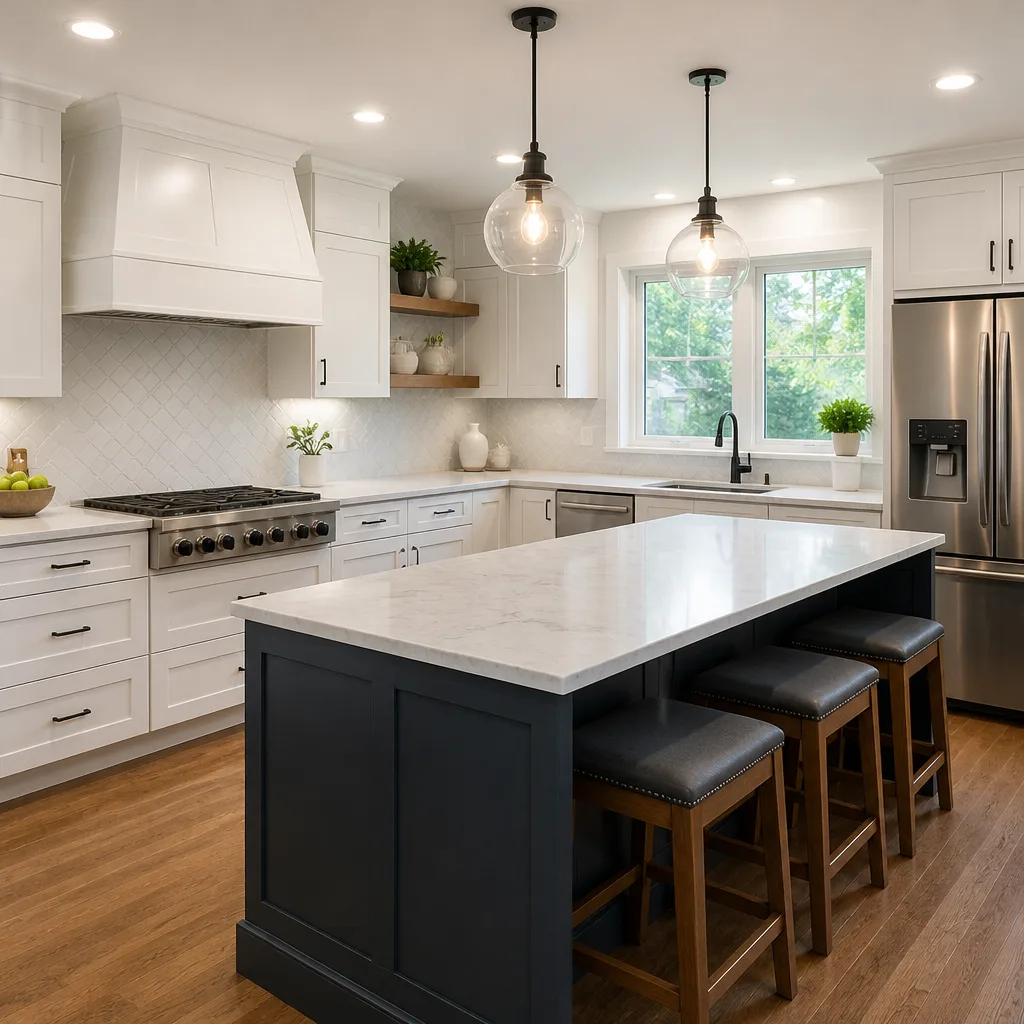
 Kitchen remodeling
 Bathroom remodeling
 Home additions & ADU
 Roofing
 Windows & doors
 Driveway & pavers
 Fence
Free written scope consultation - allowances, timeline, and change-order rules on paper before a single trade is scheduled
James Hardie Kitchen Remodeling: The Oakland Owner’s Guide
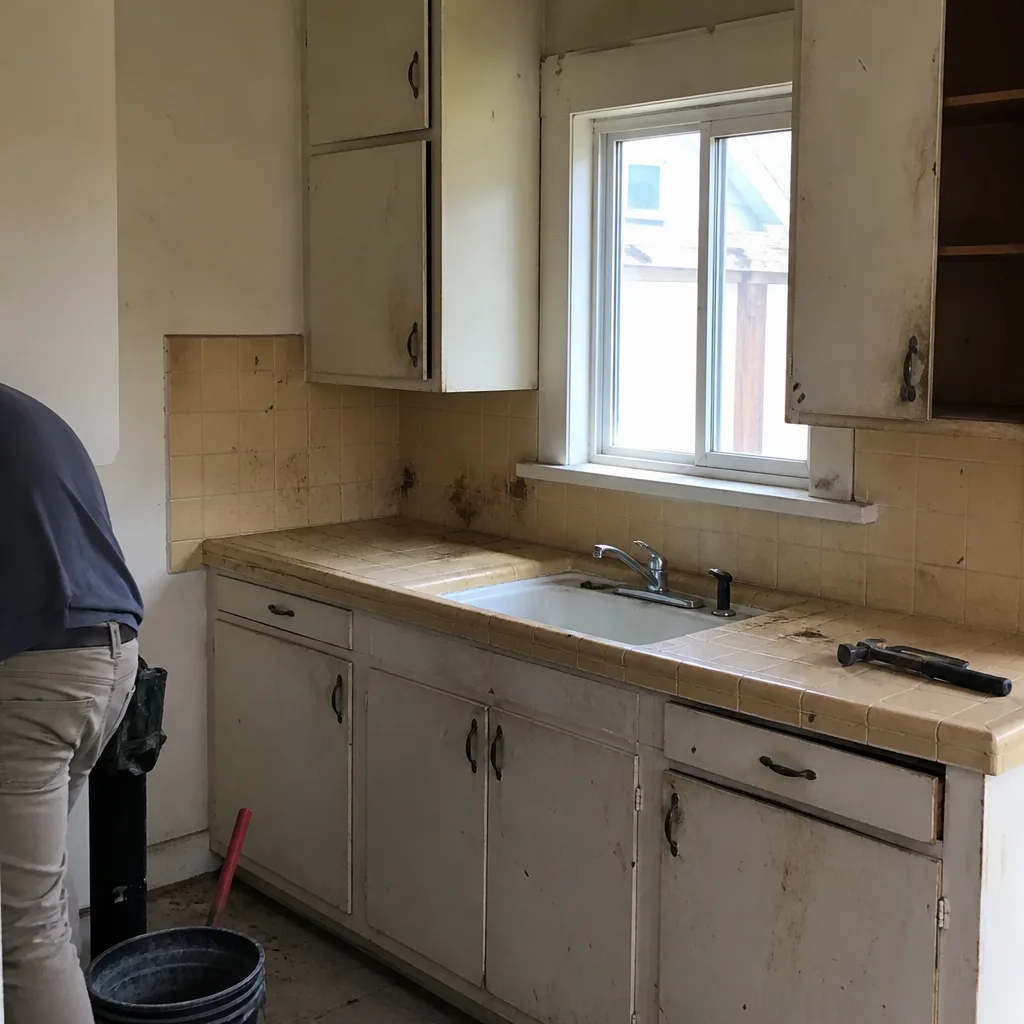
We install James Hardie-compatible kitchen remodeling systems in Oakland, and the honest starting number is $14,000 – $45,000 for a full kitchen, with smaller scopes landing in the $9,000 – $20,000 range. Most owners call us after they’ve pulled a cabinet to chase a leak and found the backer board dishing, soft, or swollen at the bottom edge. That moment is where the real conversation starts, because James Hardie backer in a kitchen is doing structural and moisture work, not decoration, and getting it wrong means the tile above it fails next.
You’ll want a crew that can read the label on the sheet, match the correct thickness, and set it with the right fastener schedule. We’re an independent service provider and not affiliated with James Hardie, which means we have nothing to gain by telling you the wrong product failed. Every kitchen we finish is covered by our 730-Day Done Right Promise.
Which James Hardie Kitchen Remodeling Products Apply to Your Oakland Kitchen
James Hardie’s kitchen-facing products fall into a few lines you’ll actually find behind cabinets and under tile: HardieBacker cement board in 1/4″ and 1/2″ thickness, and the exterior cladding lines (HardiePlank lap siding, HardiePanel vertical siding, HardieTrim) that come into play when a kitchen addition or bump-out touches the outside wall. That distinction matters. A 1/4″ sheet is for floor underlayment over a solid subfloor; 1/2″ is the one you want on walls and counter substrates. Using the thin sheet on a wall is a classic Oakland mistake, and it telegraphs through the tile within a year.
How to identify the right sheet
- Read the printed edge. Every genuine sheet carries the James Hardie name, thickness, and a product code stamped on the board. Faded or missing print is a red flag.
- Measure, don’t guess. A true 1/2″ HardieBacker is 0.42″ actual; a “1/2 inch” sheet miking at 0.31″ is the 1/4″ board mislabeled or swapped.
- Match the substrate. Wall applications want 1/2″; floor underlayment over plywood typically takes 1/4″.
OEM versus aftermarket
For cement backer board there’s no complex “OEM part” the way there is with an appliance. The decision is between genuine James Hardie sheets and a generic fiber-cement board. James Hardie’s formulation runs denser and holds a screw better, which is why we specify it for wet walls. Generic board can work on a dry wall, but we won’t put it behind a sink or a dishwasher in an Oakland kitchen where humidity swings all year. The same logic applies to the finish side of the kitchen, where we also work with KraftMaid cabinetry, Cambria quartz, and Silestone.
Styles & brands we work with
- Kitchen remodeling
- Bathroom remodeling
- Home additions & ADU
- Roofing
- Windows & doors
- Driveway & pavers
- Fence
Signs Your James Hardie Kitchen Remodeling Is Failing
Backer board doesn’t fail loudly. It gives you small warnings first, and most homeowners miss them until the tile above is already moving.
- Tile that sounds hollow when tapped. That’s a bond failure underneath, usually from thinset that dried before the sheet was properly bedded or from a board that was too dry when set.
- Grout cracking in a straight line above a seam. A crack that follows a sheet joint means the boards weren’t staggered or the seams weren’t taped and bedded with the correct mesh tape.
- Soft or crumbly board at the bottom of a cabinet run. Water from a slow supply-line drip or a dishwasher leak wicks into cement board edges and eats the paper face on generic board, but even HardieBacker will crumble if it stays wet against a trapping vapor barrier.
- Loose or backing-out fasteners. Over-driven screws or the wrong fastener type (drywall screws where backer screws belong) leave the sheet floating and the tile above it vulnerable.
- Bounce or deflection underfoot in front of the sink. That’s usually a subfloor or joist-span issue the board was never going to fix, and it’s the one we see most often in older Oakland homes with original framing.
See the difference
 Before
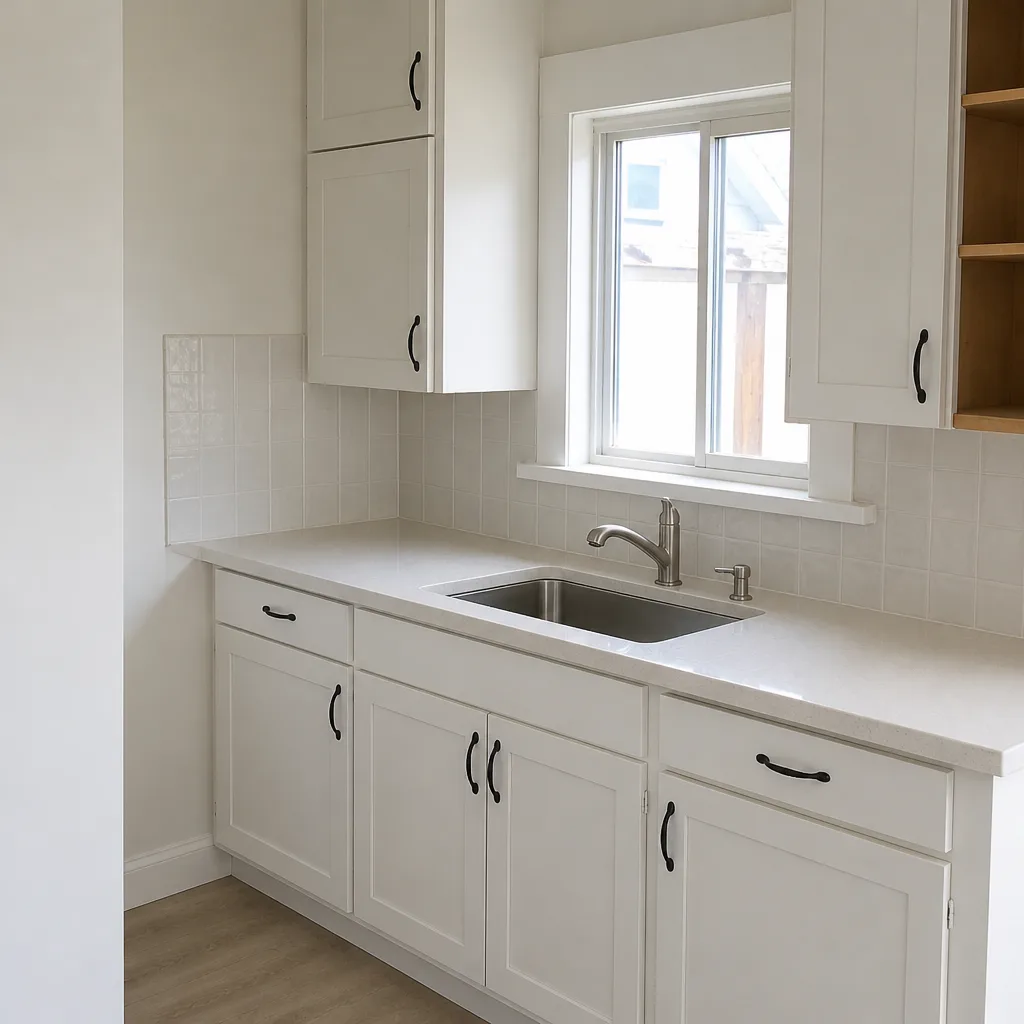 After
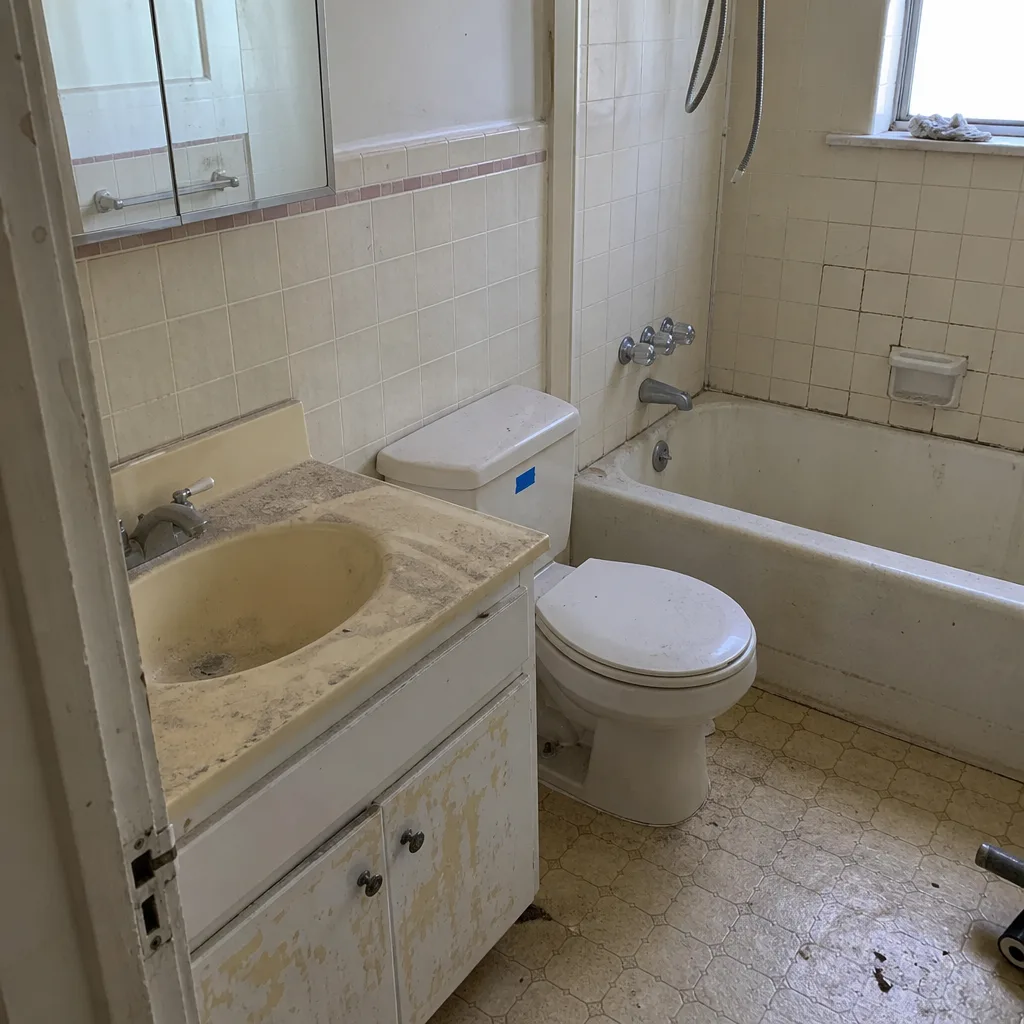 Before
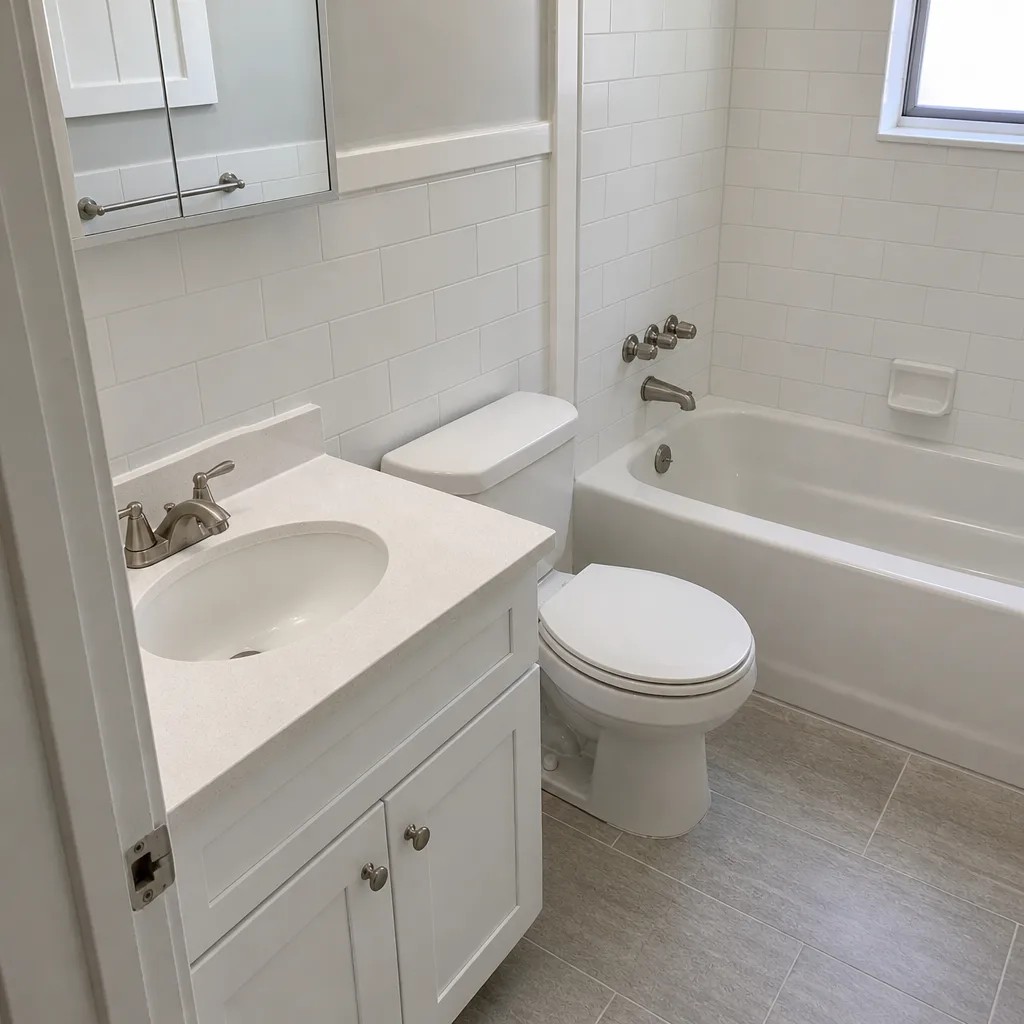 After
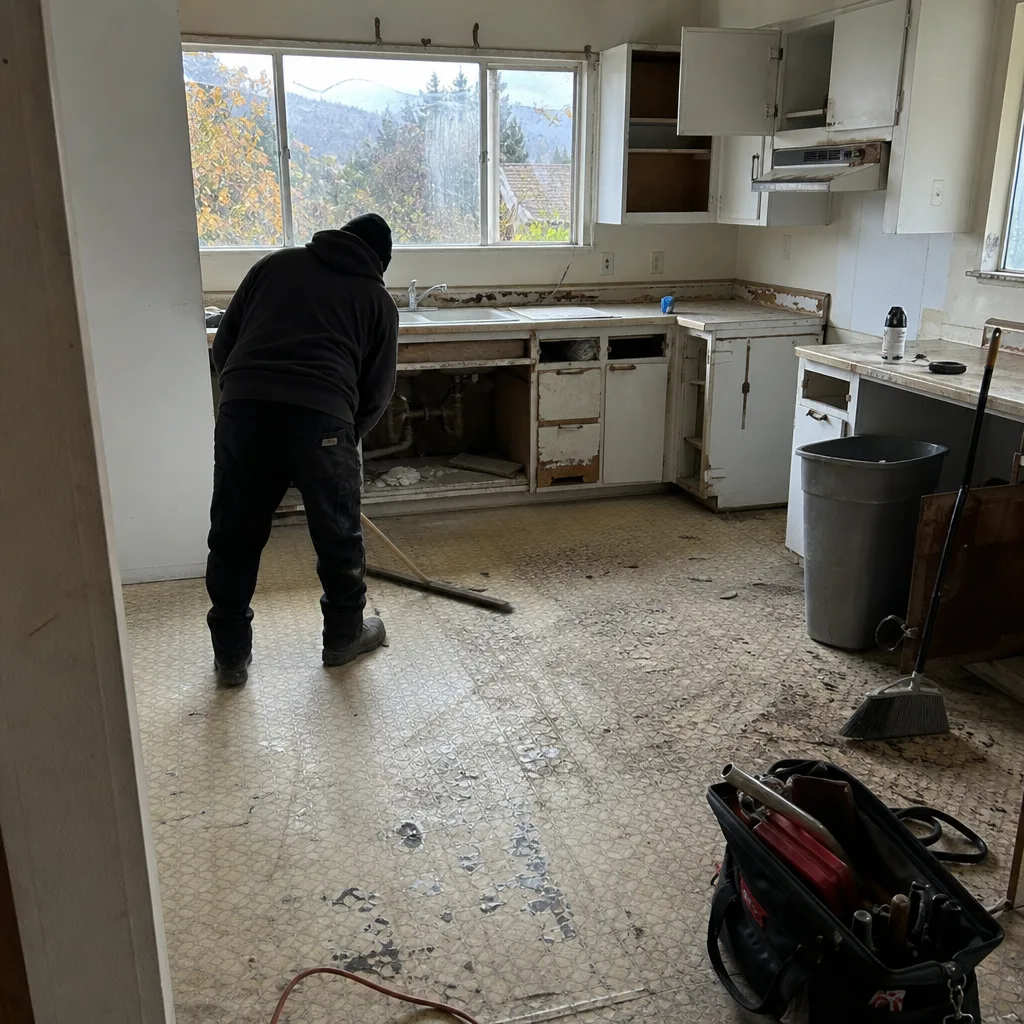 Before
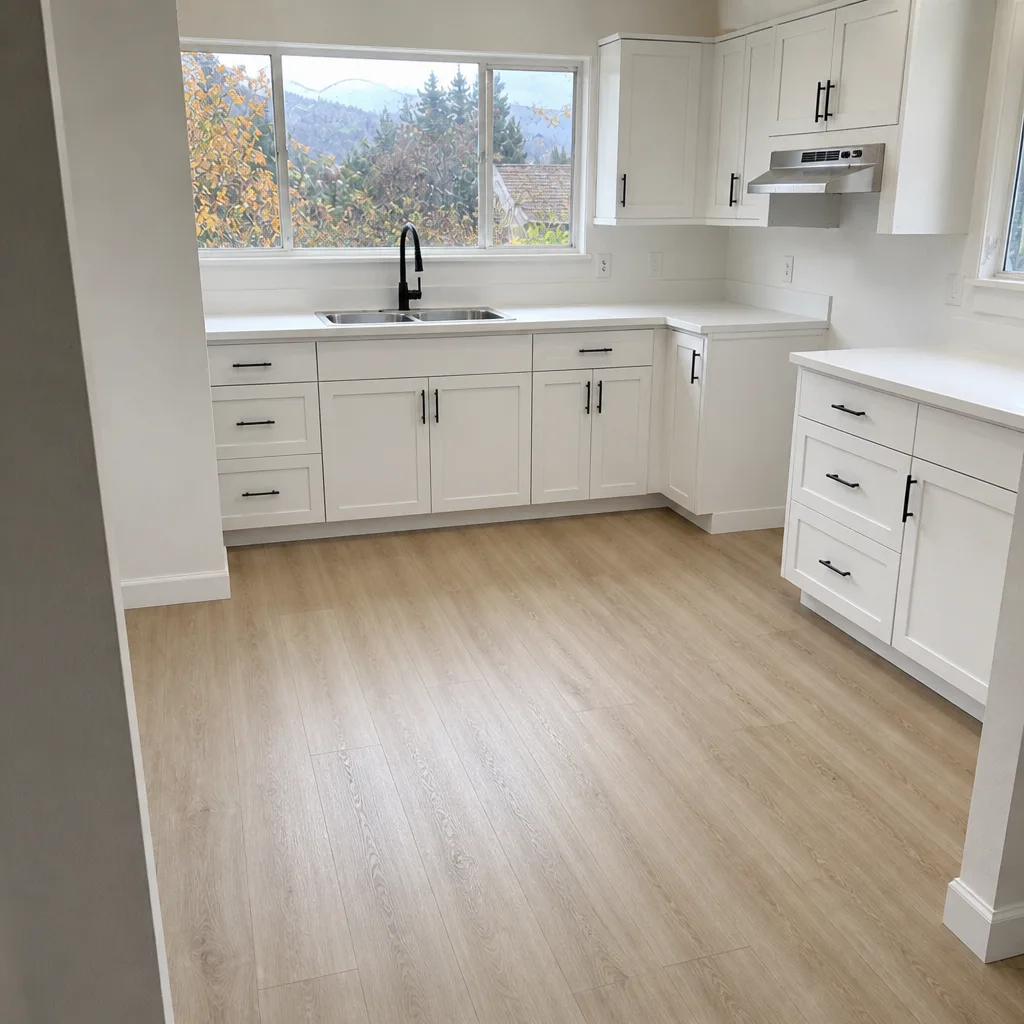 After
Replacement Cost in Oakland & What’s Included
Replacing failed backer and re-tiling the affected kitchen area typically runs $2,000 – $6,500 as an isolated repair, but most owners discover the failure while planning a broader kitchen update, so the real number is the remodel range. Here’s how the line items stack up in Oakland:
| Scope | Installed Range (Oakland) |
|---|---|
| Full kitchen remodel (James Hardie backer, tile, cabinets, counters) | $14,000 – $45,000 |
| Small kitchen remodel | $9,000 – $20,000 |
| Cabinet installation | $4,000 – $13,000 |
| Countertop installation (Cambria, Silestone) | $2,000 – $6,500 |
| Backsplash installation (over new backer) | $800 – $2,500 |
| Kitchen island installation | $3,000 – $10,000 |
What drives the range: square footage, whether the subfloor needs sistering or leveling, how much of the existing tile and cabinet run has to come out to reach sound framing, and whether you’re moving plumbing or gas. Our pricing is upfront, the number you see is the number you pay, with no change orders hiding a surprise. Parts and labor are itemized so you can see exactly what the backer line costs versus the finish tile. The work is backed in writing by our 730-Day Done Right Promise.
DIY or Call Us?
Here’s where we’re straight with you. You can safely check a few things yourself: tap-test the tile for hollow spots, look for a straight-line grout crack at a sheet seam, and pull a drawer to see whether the cabinet’s bottom edge is soft or stained. That’s diagnosis, not repair.
Where DIY goes wrong is the install itself. Cutting and setting cement board looks simple and isn’t. The sheet has to be bedded in thinset, seams taped with the correct mesh tape and mortar, fasteners set flush without overdriving, and the whole thing matched to a subfloor that actually meets deflection standards. Get any of that wrong and the tile fails again in a year, and now you’ve paid twice. We bring background-checked, uniformed technicians who read the product spec and follow it. And our line is answered by a live person 24/7, so a question on a Saturday isn’t stranded until Monday. If you want it done once, call us at (833) 997-7759 for a free estimate.
FAQs
Genuine James Hardie backer will outlast the tile above it, easily 25 to 30 years when it’s installed dry and correctly bedded. The failure mode isn’t the board aging out; it’s water getting behind it and staying there, or a bad install that never bonded. Oakland’s damp winters make that drying-out part the real variable, so venting and stopping supply-line drips matters as much as the sheet itself. Call (833) 997-7759 for a free assessment.
Sometimes. A single cracked seam with intact board underneath can often be re-taped and re-tiled without tearing out the whole run. Once the board is soft, crumbly, or moving under the tile, replacement is the honest call, because patching over a failed sheet just delays the same failure. We’ll tell you which situation you’re in after a look, not a sales pitch. Call (833) 997-7759 and we’ll quote it straight.
A focused backsplash replacement with new backer runs two to four working days for most Oakland kitchens, and a full kitchen remodel with new board, cabinets, and counter is a multi-week job that we schedule with a written timeline. Thinset and grout need cure time that no crew can rush without risking the tile. We’ll lay out the exact day count in your written quote. Call (833) 997-7759 to schedule your free estimate.
We buy directly from suppliers verified to carry genuine labeled James Hardie stock, and we match thickness and product code to your specific application, not just a generic “backer board” line on the bid. Every sheet gets checked for the printed stamp before it goes down. If your kitchen also needs cabinets or counters, we source those through our vetted brand partners like KraftMaid, Cambria, and Silestone so everything coordinates. Call (833) 997-7759 to start with a free design consult.
Written by the team at Groundwork Construction Co. of Oakland, serving Oakland and nearby areas.