
 Kitchen remodeling
 Bathroom remodeling
 Home additions & ADU
 Roofing
 Windows & doors
 Driveway & pavers
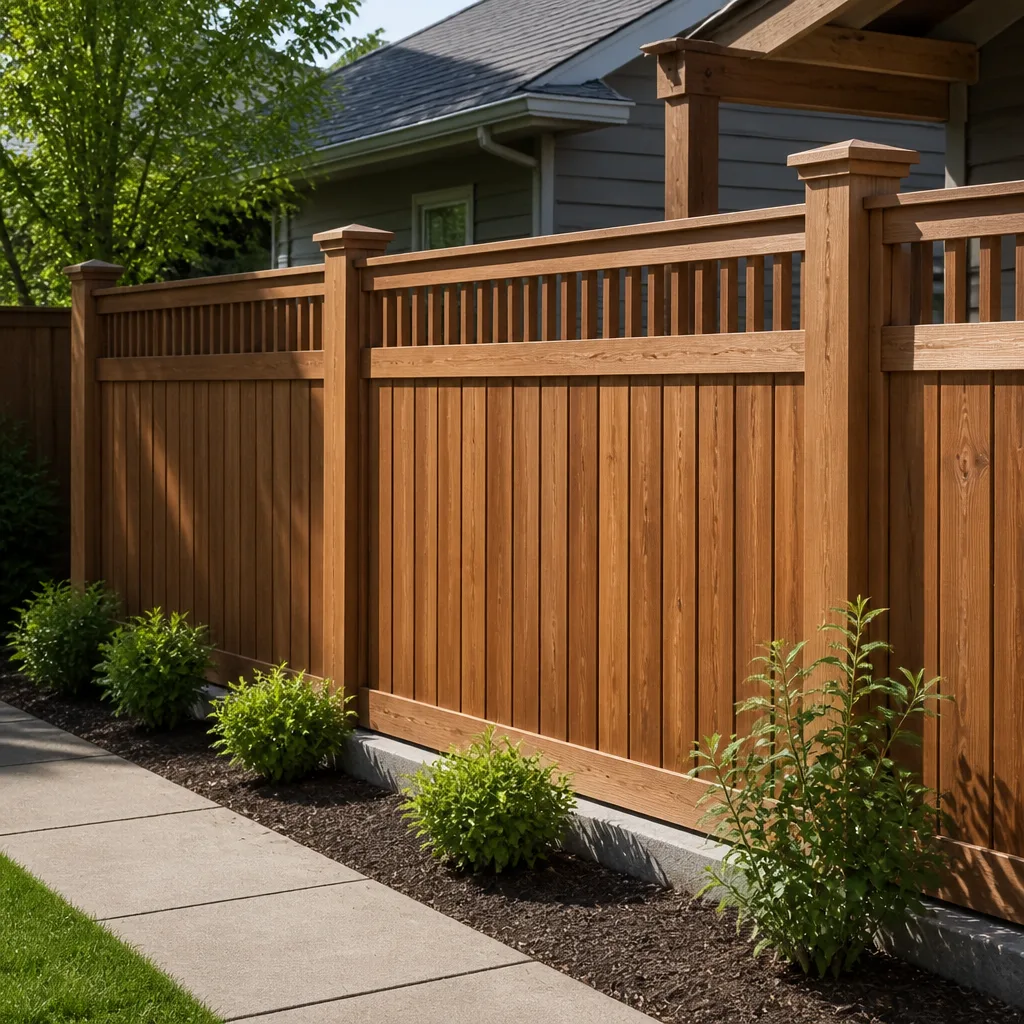 Fence
Free written scope consultation - allowances, timeline, and change-order rules on paper before a single trade is scheduled
Styles & brands we work with
- Kitchen remodeling
- Bathroom remodeling
- Home additions & ADU
- Roofing
- Windows & doors
- Driveway & pavers
- Fence
See the difference
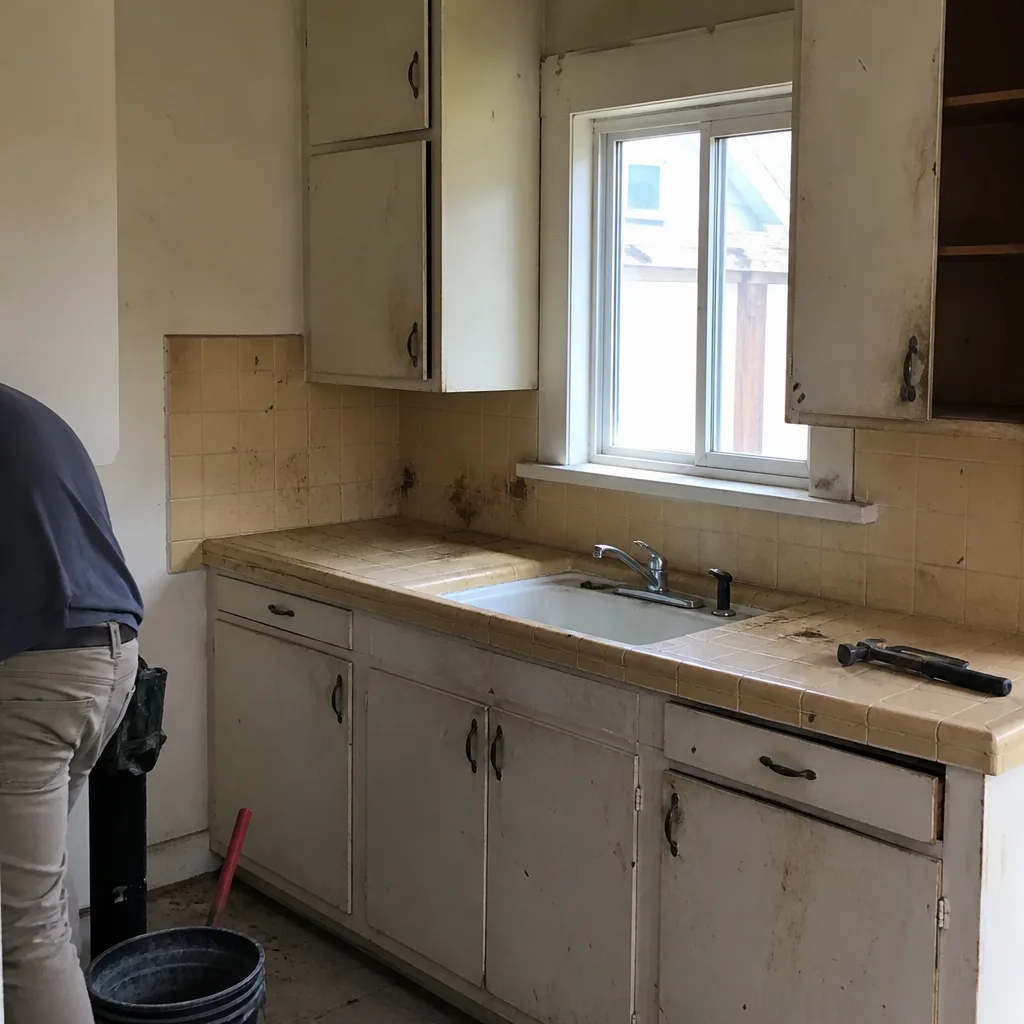 Before
 After
 Before
 After
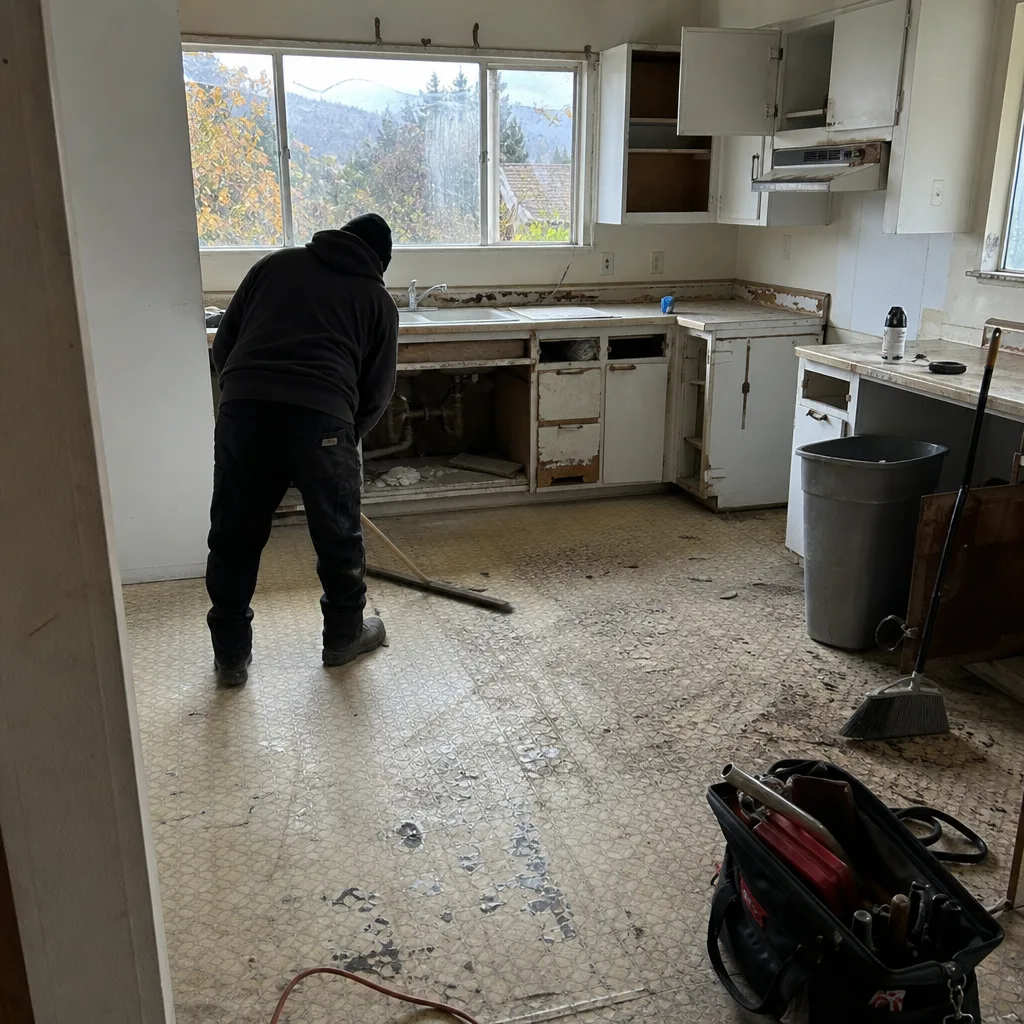 Before
 After
How to Find a Roof Leak in an Oakland Home: Start at the Penetrations, Not the Stain
The fastest way to find a roof leak in Oakland is to stop looking at the ceiling stain and start checking the chimney, plumbing vents, and HVAC flashing, because in pre-1940 homes water almost never enters directly above where it drips. Most Oakland bungalows were built with skip sheathing, boards nailed with gaps between them, and water travels sideways along those boards for several feet before it finds a seam and drops through. Find the entry point by tracing back from the top. If the path runs through a chimney or a wall you can’t safely open, call Groundwork Construction Co. of Oakland at (833) 997-7759 and we’ll send someone out.
Why “look straight up from the stain” fails on Oakland’s older housing
Modern roofs sit on solid plywood or OSB sheathing. A drop of water hits the panel and stays close to where it landed. Skip sheathing works the opposite way. Those 1x boards run horizontally with open gaps, giving water a free path to run sideways along the wood grain and the rafters before gravity finally wins. That’s why the water stain on a Rockridge bedroom ceiling can sit 8, 10, even 12 feet away from the actual hole. Look up from the stain and you’re staring at dry, intact plaster while the real leak sits over by the chimney.
Multiply that by a century of modifications. Oakland’s construction market is defined by its pre-1940 housing stock, in neighborhoods like Temescal and West Oakland, where Victorian and Craftsman bungalows have had additions, re-roofs, and roof-to-wall changes layered on over generations. Each one created a joint that may or may not have been flashed correctly. Water finds every one of those weak spots. Tracing it is part detective work and part understanding how these specific houses were framed.
The diagnostic sequence we use on century-old Oakland roofs
We don’t start at the field shingles, because on a hundred-year-old house they’re rarely the culprit. We work through the most likely failure points in order, from the top down:
- Penetrations first. The chimney is the single most common leak source on these homes. The flashing at the base of a brick chimney cracks and pulls away from the masonry over decades, and the joint between metal and brick is where water gets in. After the chimney, check plumbing vent boots and any HVAC or furnace flashing on the roof. These rubber and lead boots dry out and split long before the shingles fail.
- Original valley flashing next. Pre-1940 valleys were often formed from soldered metal or layered roll roofing. Solder joints crack. The valley is where two roof planes shed water into one channel, so a small failure there moves a lot of water fast.
- Ridge cap last. Wind-driven winter rain pushes under loose ridge caps and nails that have backed out. It’s a quieter leak than the chimney, but it shows up as a slow stain high on a ceiling.
Only after those three do we look at the field shingles. On a roof that was replaced 15 years ago, field failures matter more. On an original roof, the penetrations and valleys are where the water lives.
The attic problem in Oakland bungalows
Here’s where the standard playbook falls apart. Many Oakland bungalows have low-slope roofs with almost no attic, or an attic that was finished into living space decades ago. In those houses you can’t crawl up top and shine a light along the rafters. So we lean on other moisture indicators: dark rings on the ceiling drywall, water tracks on finished attic walls, and daylight checks from a safe vantage at the eave line where the roof meets the gutter. When the attic is sealed off, we read the exterior joints and the interior water pattern together and let them tell us where the entry point has to be.
The Oakland winter-rain trap that makes leaks look sudden when they aren’t
Oakland’s dry summers and wet winters mean most leaks surface on the first real storm of the season. It feels like the storm caused the leak. It almost never did. A slow failure, a cracked flashing, a gap in a valley seam, has been building for two or three dry seasons. The wood dried out, the sealant stiffened, the gap opened wider, and nothing leaked because there was no rain to test it. Then the first good storm overwhelms a threshold that was already past saving. What you’re seeing is years of quiet failure meeting its first hard test. That matters for how you diagnose it: don’t assume the leak is new or small just because it appeared overnight.
Those cool, damp coastal months also let dry rot and pest damage spread without a hard freeze to slow them down, so a leak that’s been quietly working for two winters may have rotted the sheathing underneath by the time you spot the stain.
When to stop tracing and call a professional
Some leaks trace back to places a homeowner shouldn’t be opening up. Stop and call if any of these come up:
- The path runs through the chimney. That’s a joint between roofing and masonry, and assessing it right takes both a roofer and a masonry eye. A roofer who only looks at the shingles will miss what the brick is doing.
- It leads to an unpermitted addition. Oakland’s older homes routinely have additions built without permits, and the junction where new roof meets old is where flashing usually wasn’t done to code. Opening that up is structural work.
- The sheathing feels soft underfoot. Soft decking means rot, and rot means the roof can’t safely carry a person. Don’t walk on it.
That’s also the point where the difference between a guess and a proper repair shows up in price. Small roof repairs in Oakland run $400 to $1,800 depending on access and how much decking has to be replaced. A full roof replacement runs $8,000 to $20,000, and tile work sits in its own range at $600 to $2,500 for a repair. Knowing which category you’re in before anyone climbs up saves real money. Our Roofing team works with GAF and CertainTeed systems, so a repair ties cleanly into a full replacement when the roof is past patching.
What to check yourself, safely, before we arrive
You can gather useful clues from the ground and from a window without ever getting on the roof. Note where the stain is and how big it’s grown since the last storm. Look for any ceiling sag, bubbling paint, or musty smell that points to a wet attic. From a safe spot at ground level, check whether the gutters are pulling away or overflowing, and whether the chimney flashing looks cracked or separated. Jot down when the leak shows up, whether it’s only in heavy wind-driven rain or every storm. All of that helps narrow the search before anyone opens anything up.
For homeowners who’d rather skip the ladder entirely, we offer a free estimate and design consult, and our technicians have up to 12 years of experience reading these older Oakland roofs. Every repair is covered by our 730-Day Done Right Promise, backed in writing. You can see the full range of what we handle across our Oakland service area, and because calls are answered by a live person 24 hours a day, a leak that shows up at 10 p.m. on a Sunday gets a real answer, not a voicemail.
FAQs
Because on skip-sheathed pre-1940 roofs, water travels horizontally along the boards before it drops, so the entry point can be several feet from the stain. Look at the chimney, vents, valleys, and ridge cap instead of straight up from the drip, and expect the real leak to sit off to one side. If you can’t find it from the ground, call (833) 997-7759 for an assessment.
Most roof repairs in Oakland land between $400 and $1,800, with the final number driven by access, how much flashing has to be rebuilt, and any rotted decking that needs replacing. Tile roof repairs run $600 to $2,500. Call (833) 997-7759 for a free, upfront estimate before any work starts.
In many cases yes, because our phones are answered by a live person 24/7 and we can get a technician out to trace the leak rather than leaving you to wait until Monday. Call (833) 997-7759 and we’ll give you a real timeline for an Oakland visit.
Repair is almost always cheaper when the leak traces to a single penetration or valley and the rest of the roof has life left, which is why a $400 to $1,800 repair beats an $8,000 to $20,000 replacement in that situation. Replacement makes more sense when the decking is rotted across a wide area or the roof is near the end of its service life. Call (833) 997-7759 and we’ll tell you honestly which one your roof needs.
Get the leak traced by someone who knows these houses
If you’d rather have it looked at than climb a ladder in the rain, Groundwork Construction Co. of Oakland offers a no-pressure assessment anywhere in Oakland. We trace the water back to where it’s actually entering, give you upfront pricing with no surprises, and back the work with our 730-Day Done Right Promise. Call (833) 997-7759. A live person picks up.
Written by the team at Groundwork Construction Co. of Oakland, serving Oakland, CA.