
Last updated November 17, 2026
 Bathroom remodeling
 Kitchen remodeling
 Home additions & ADU
 Roofing
 Windows & doors
 Driveway & pavers
 Fence
Free written scope consultation - allowances, timeline, and change-order rules on paper before a single trade is scheduled
Bathroom Remodeling Warning Signs Every Homeowner Should Know
That soft spot near the toilet base isn’t a flooring problem. It’s a subfloor and potentially a joist problem. Calling it a cosmetic fix and pricing it that way is how a $12,000 remodel becomes a $28,000 emergency. We’ve walked into Oakland bathrooms where a homeowner budgeted for new tile and a vanity, then watched the number double the moment we pulled the finish materials and found wet framing behind the shower wall. The bathroom was telling them the whole story for years. They just didn’t know how to read it. This guide teaches you to interpret those signals before you sign anything, so you walk into every contractor conversation with the full picture instead of a hope and a checkbook.
Quick Answer
The biggest bathroom remodeling warning signs are soft or spongy flooring near fixtures, grout cracks that keep returning in the same pattern, peeling paint or mildew on the ceiling above the shower, and a contractor who quotes a price before opening a wall or running a moisture meter. Those four signals tell you whether you have a cosmetic project or a structural one. Read them honestly and you’ll know which conversation you’re actually having.
Styles & brands we work with
- Kitchen remodeling
- Bathroom remodeling
- Home additions & ADU
- Roofing
- Windows & doors
- Driveway & pavers
- Fence
Table of Contents
- Cosmetic Damage or Waterproofing Failure? The Tap and Flex Tests
- Ventilation Warning Signs That Point to Mold Inside the Wall
- What Persistent Grout Cracks Reveal About Your Subfloor
- Contractor Walkthrough Red Flags That Signal Scope Underestimation
- Plumbing Warnings You Must Fix Before Cosmetic Work Starts
- Why Oakland Bathrooms Age Differently
- What Each Warning Sign Does to Your Budget
Cosmetic Damage or Waterproofing Failure? The Tap and Flex Tests
The distinction between a cosmetic problem and a waterproofing failure decides the entire budget, and you can often sort it out before a contractor ever shows up. Cosmetic tile damage is surface-level: a chip, a hairline crack in the glaze, a grout line stained beyond cleaning. Waterproofing failure is different. The tile may look fine while the layer behind it has been wet for years. Here’s how to read the difference.
The tap test. Tap the flat of your knuckle on a few tiles around the shower, tub surround, and floor. Solid, tight tile gives a sharp, consistent click. A dull, hollow thud means the thinset has let go from the substrate and there’s a gap behind the tile. Hollow sounds aren’t automatically a crisis, but a cluster of them near a wet zone, especially low on the wall or around the valve, usually means water has been working behind the tile.
The flex test. Press firmly on a floor tile with the heel of your hand. It should not move. Any give, any sponginess, any sense that the tile is riding on something soft underneath points to a failing substrate. In older Oakland homes, that substrate is often a mortar bed over wood framing that has absorbed decades of moisture. Once the wood is compromised, tile replacement alone won’t fix it.
What each result means:
- Sharp tap, no flex, stains only: likely cosmetic. Cleaning, re-grouting, or surface refinishing may buy you years.
- A few hollow tiles, no flex: localized failure. Plan for a section repair, not a full rebuild, but have it inspected.
- Widespread hollow sound plus flex: the waterproofing and substrate have failed. Cosmetic work over it is wasted money.
- Soft flooring near the toilet or tub: subfloor rot until proven otherwise. This is the scenario we open up first, every time.
When we quote a bathroom in Oakland, we test before we price. That’s part of Groundwork Construction Co. of Oakland home upfront pricing, and it’s why the number we give you doesn’t move once work begins.
Ventilation Warning Signs That Point to Mold Inside the Wall
Surface mildew on grout is normal in a humid room. Mold growing inside the wall cavity is a different animal, and the clues are subtler than most homeowners expect. Bathroom exhaust that doesn’t actually move air is the most common cause we find, and it’s easy to check.
The tissue test. Tape a single square of toilet paper to the exhaust fan grille and turn the fan on. If the tissue doesn’t stay pulled tight against the grille, the fan isn’t moving enough air. Folks in Oakland’s older Edwardian and Craftsman homes run into this constantly: the fan was sized for a smaller bathroom, the duct is undersized, or the duct runs up and ends in the attic instead of venting outside. That last one dumps warm, wet air into a cold attic, which is a mold and rot recipe.
Other ventilation warnings worth reading:
- Peeling paint or bubbling drywall on the ceiling above the shower. Moisture is getting into the assembly repeatedly. That’s not a paint problem.
- Mildew that returns within weeks of cleaning. A recurring pattern in the same spot means the source is still active, usually hidden.
- A musty smell that doesn’t clear after the fan runs 20 minutes. Odor is a reliable sensor. Trust it.
- Condensation on the mirror and walls that lingers well past a shower. The room is holding humidity it should be exhausting.
- Duct terminating in the attic or crawlspace. It has to vent to the exterior. If it doesn’t, that’s a fix-before-remodel item.
The fix during a remodel is straightforward: correctly sized fan, smooth rigid duct, exterior termination, ideally on a timer or humidity sensor. It’s a small line item that prevents a wall-cavity mold problem from becoming a much larger one. If you’re already planning a larger project, our team handles this as part of Home Additions & ADU in Oakland, where ventilation and moisture control get planned from the framing stage up.
What Persistent Grout Cracks Reveal About Your Subfloor
Grout cracks are the most misread signal in any bathroom. One crack in a heavily used shower floor can be normal settling. Cracks that keep coming back, or that form a pattern, are telling you something about what’s moving under the tile.
Read the pattern:
- Straight cracks following the seams between tile sheets. These often trace the joints in the subfloor panels or mortar bed beneath. The tile is fine; the floor beneath it is moving.
- Cracks radiating from a corner or around a floor drain. Racking or settlement concentrated at an opening. Common where the framing under the drain was never adequately supported.
- Stair-step or diagonal cracks across the field. Frequently a sign of deflection in the joist system. The floor is flexing under load more than tile can tolerate.
- Cracks that reappear within months of re-grouting. You’ve treated the symptom. The movement is still there.
- Grout that turns to powder or crumbles when you touch it. Moisture and substrate failure, not just age.
Every time you re-grout without addressing the movement, you buy a little time and lose a little more of the substrate. In our experience, a bathroom floor with recurring pattern cracks is nearly always a floor that needs to be opened up, joists checked for rot or deflection, and a proper backer board or screed installed. That’s an uncomfortable conversation to have after the tile is ordered. It’s a much easier one to have before. Backed in writing is the only way we do that correction: our 730-Day Done Right Promise means if the substrate work isn’t right, we make it right.
Contractor Walkthrough Red Flags That Signal Scope Underestimation
Some of the most important bathroom remodeling warning signs show up before the first demo hammer swings. They’re in the walkthrough, and they tell you whether the contractor sees the same project you do. Here are the red flags we’d want a homeowner to catch, whether they hire us or someone else.
They quote a number without opening or probing anything. A thorough bathroom assessment takes time. A contractor who walks in, looks around, and hands you a firm price in ten minutes is either pricing only what’s visible or planning to come back with change orders. Either way, you’re exposed.
No moisture meter, no probing, no attic or crawlspace look. The good ones carry a moisture meter as a matter of habit. They pop a cabinet open, check under the vanity, look at the shutoff valves, and peek at the subfloor from below if it’s accessible.
They dismiss the soft spot. If you point at flooring that moves and they wave it off as “normal,” walk away. That dismissiveness is the exact behavior that turns a modest remodel into a structural surprise.
- Vague scopes. “Tile work” without specifying prep, waterproofing method, and backer board is a scope problem waiting to happen.
- No allowance schedule. For a bathroom, allowances for tile, fixtures, and vanities should be spelled out. A single lump number hides decisions.
- They won’t put the guarantee in writing. Verbal promises are worthless. Ours is a written 730-Day Done Right Promise, and the number you see is the number you pay: no change orders once the scope is signed.
- They ask for a large deposit before any design work. A free estimate and design consult comes first, then a signed scope, then scheduling.
- They’re not licensed, not bonded, or can’t tell you their model. In Oakland, permits and inspections matter. A contractor who won’t pull them is a liability.
The right contractor walks you through the bathroom and narrates what they’re seeing the way a mechanic narrates an inspection. That’s the standard to hold every bid against. For the financial side, our current promos, 0% financing for 18 months and $1,000 off projects over $10,000, exist so a real scope doesn’t get cut to fit a fantasy number.
Plumbing Warnings You Must Fix Before Cosmetic Work Starts
Cosmetic work placed on top of a plumbing problem is the most expensive mistake in bathroom remodeling. Every warning sign below should be resolved, not covered, before a single tile goes down. The order matters: open, inspect, repair, then finish.
- Water stains under the vanity or on the cabinet floor. A slow drip has likely been active for a while. The cabinet may look fine from outside while the base is swelling.
- Corrosion or green crust on supply lines and shutoff valves. Older galvanized or failing compression fittings can let go without warning. Replace them during the remodel, not after the walls close.
- A toilet that rocks or has a soft base. The wax ring has likely failed repeatedly, or the flange is broken. Fix the flange and subfloor before the toilet goes back on.
- Slow drains even after a full clearing. Could be a partially collapsed drain line or a buildup of scale. Have it scoped before you bury it behind a new tub surround.
- Staining or sagging around the shower valve and mixing body. Water in the wall around the valve is a classic failure point, and the framing behind it is often soft.
- Any sign of previous DIY repair you can’t account for. Unpermitted or improvised work means you should open and inspect, not assume.
Most of these are visible in a proper walkthrough if someone is looking. That’s why we treat the assessment as its own step, run before the design is locked, and why permits and inspections are part of every job. If cosmetic finish goes over a live plumbing problem, you’ll be paying twice. Fix it once.
Why Oakland Bathrooms Age Differently
Oakland has a specific set of conditions that makes bathroom signal-reading more important, not less. The housing stock spans a remarkable range: 1900s Victorians in the Oakland flats, Edwardians and Craftsman bungalows in Rockridge and Temescal, mid-century homes in the hills, and newer construction in the waterfront and downtown corridors. Each one fails differently.
Older homes in Temescal and Rockridge often have original cast iron drain lines, galvanized supply, and mortar-bed showers with tile on wire lath. Forty, sixty, eighty years of use adds up: the mortar bed holds moisture, the cast iron scales on the inside, and the galvanized rusts from the inside out. The tile can look charming while the assembly behind it is failing. We’ve opened walls in these homes and found framing that looked solid until we probed it with a screwdriver.
Homes in the Oakland hills see more seasonal wetting and drying, which accelerates grout cracking and floor movement. Homes in the flats near the bay live in higher ambient humidity, which raises the stakes for ventilation and waterproofing. Neither is a reason to panic. Both are reasons to inspect honestly before the design is set.
Around the broader East Bay, homes near the water and homes in the hills bring the same basic failure modes with different timing. What matters is testing the assembly, not guessing at it. The climate doesn’t create the problem; it just changes the schedule.
What Each Warning Sign Does to Your Budget
Pricing is where warning signs actually matter to a homeowner. A cosmetic bathroom remodel and a structural one are different projects, and the numbers reflect that. Here’s what we typically see in the Oakland market. These are ranges, not quotes, and every bathroom gets its own line-item estimate, but the bands below help you sanity-check a bid.
- Cosmetic refresh (paint, fixture swap, re-grout, new vanity): often $3,000 – $9,000 depending on fixture quality and tile scope.
- Surface remodel with new tile over sound substrate: typically $12,000 – $24,000, the most common scope in Oakland.
- Full bath rebuild with new waterproofing and plumbing repairs: generally $24,000 – $45,000 once walls are opened and real repairs are made.
- Structural repair (subfloor, joist, framing around shower): commonly adds $4,000 – $15,000 on top of a surface remodel, depending on scope and how far the damage runs.
- Mold remediation inside the wall cavity: often $1,500 – $6,000 for the affected area, rolled into the overall project schedule.
If a bid comes in dramatically below these ranges for the same scope you’ve described, ask why. Either they haven’t seen the warning signs, or they’ve assumed they can cover them without cost, and that gap shows up later as a change order. Our free estimate and design consult walks through exactly these bands so the number on the contract is the number you pay, with 0% financing for 18 months and $1,000 off projects over $10,000 available to make the real scope reachable. Call (833) 997-7759 when you’re ready to talk through what you’re seeing.
Common Mistakes to Avoid
- Calling a soft floor a cosmetic problem. A spongy area near the toilet or tub is a subfloor and possibly a joist signal. Pricing it as a cosmetic fix is exactly how a mid-size remodel becomes an emergency repair.
- Re-grouting a floor that flexes. If the tile moves, the movement is still there after the grout goes down. You’ll be back in a year with the same cracks in a new place on the floor.
- Ignoring the exhaust fan. A fan that doesn’t pull tissue tight against the grille isn’t venting your bathroom. In Oakland homes with attic terminations, that means warm, wet air is cycling right back into the structure.
- Covering a plumbing leak with new cabinetry or tile. Corroded shutoffs, rocking toilets, and stained cabinet floors are all fix-first items. It costs less now than after the new finishes are in.
- Choosing a contractor from a single quick bid. Different scopes, different prices. If two bids are far apart, the scopes probably don’t match. Get line-item estimates you can actually compare.
- Skipping the permit. Oakland plumbing and electrical work in bathrooms is permitted and inspected for a reason. A contractor who suggests skipping permits is saving their own time and spending your future.
- Accepting an unwritten guarantee. “We stand behind our work” is not a guarantee. A written workmanship promise of real length, like our 730-Day Done Right Promise, is the only version that means something.
See the difference
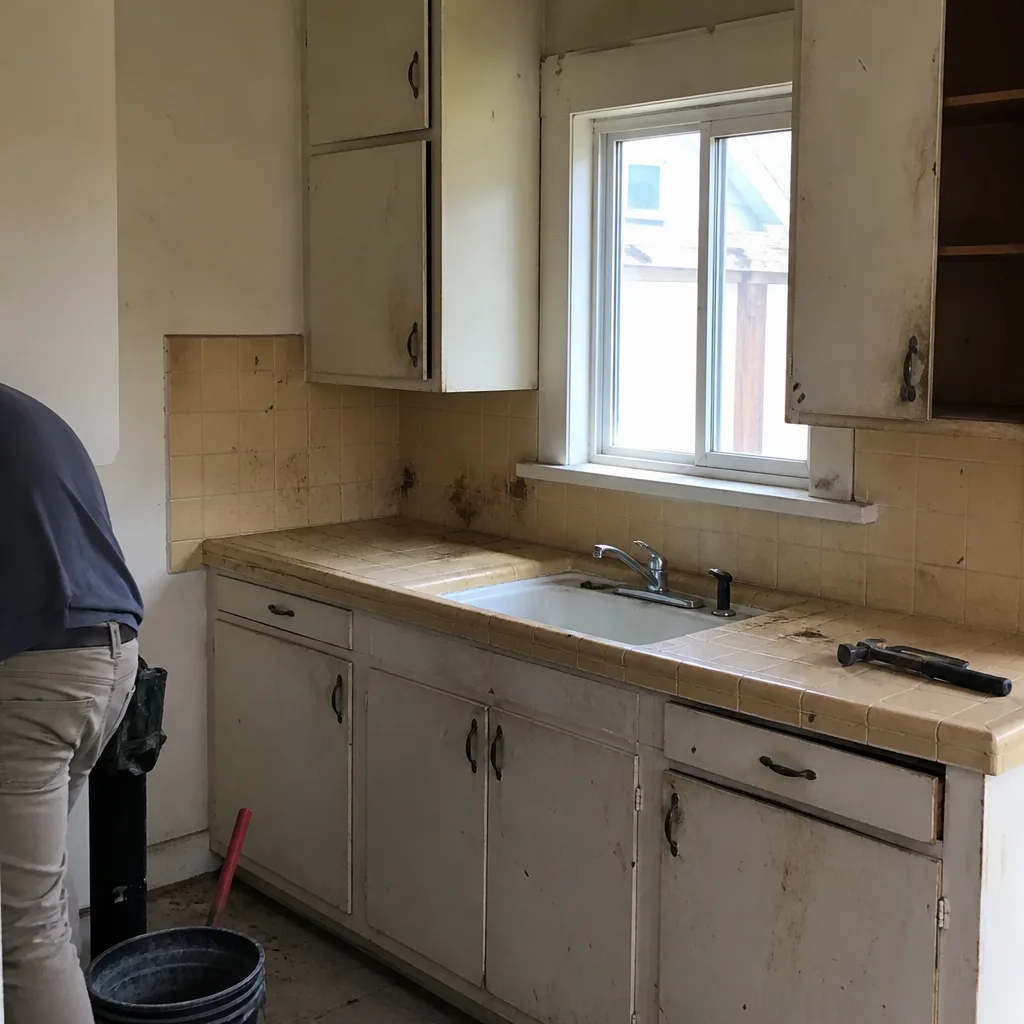 Before
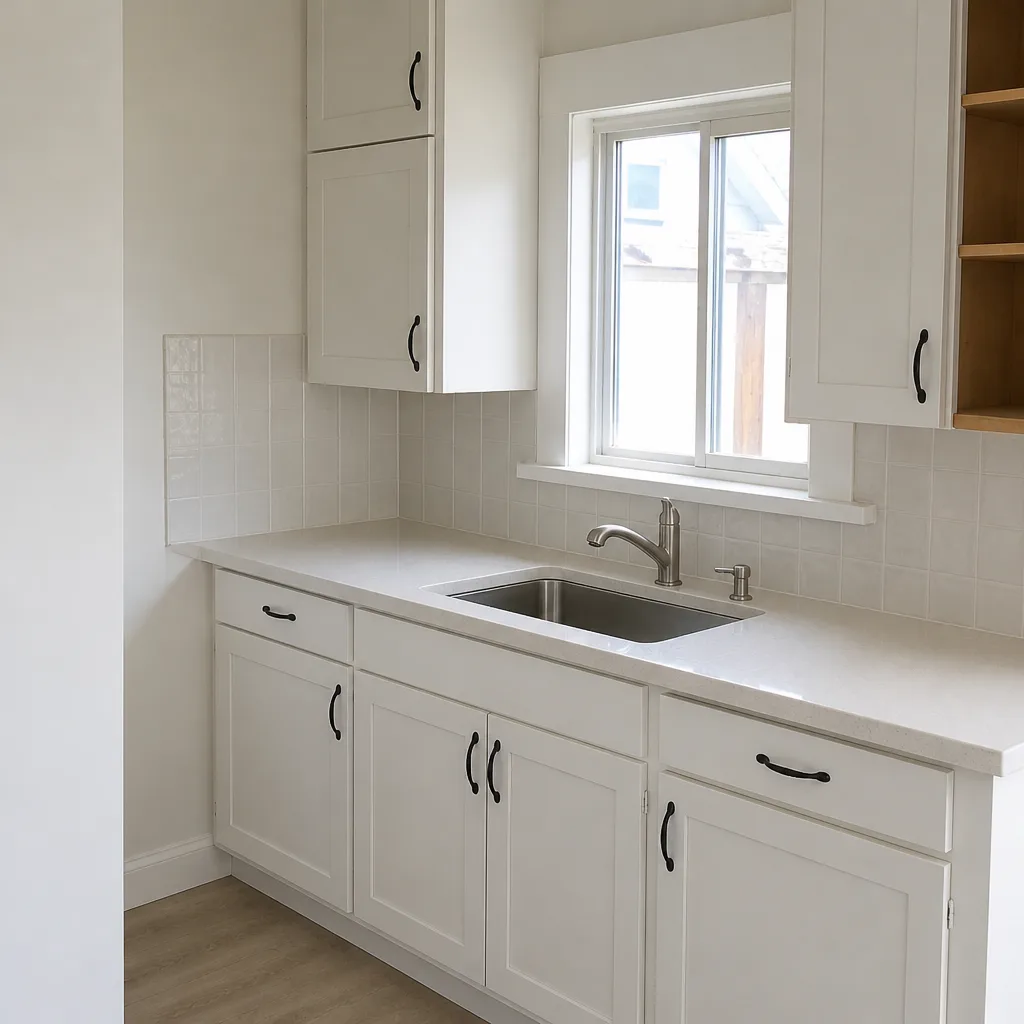 After
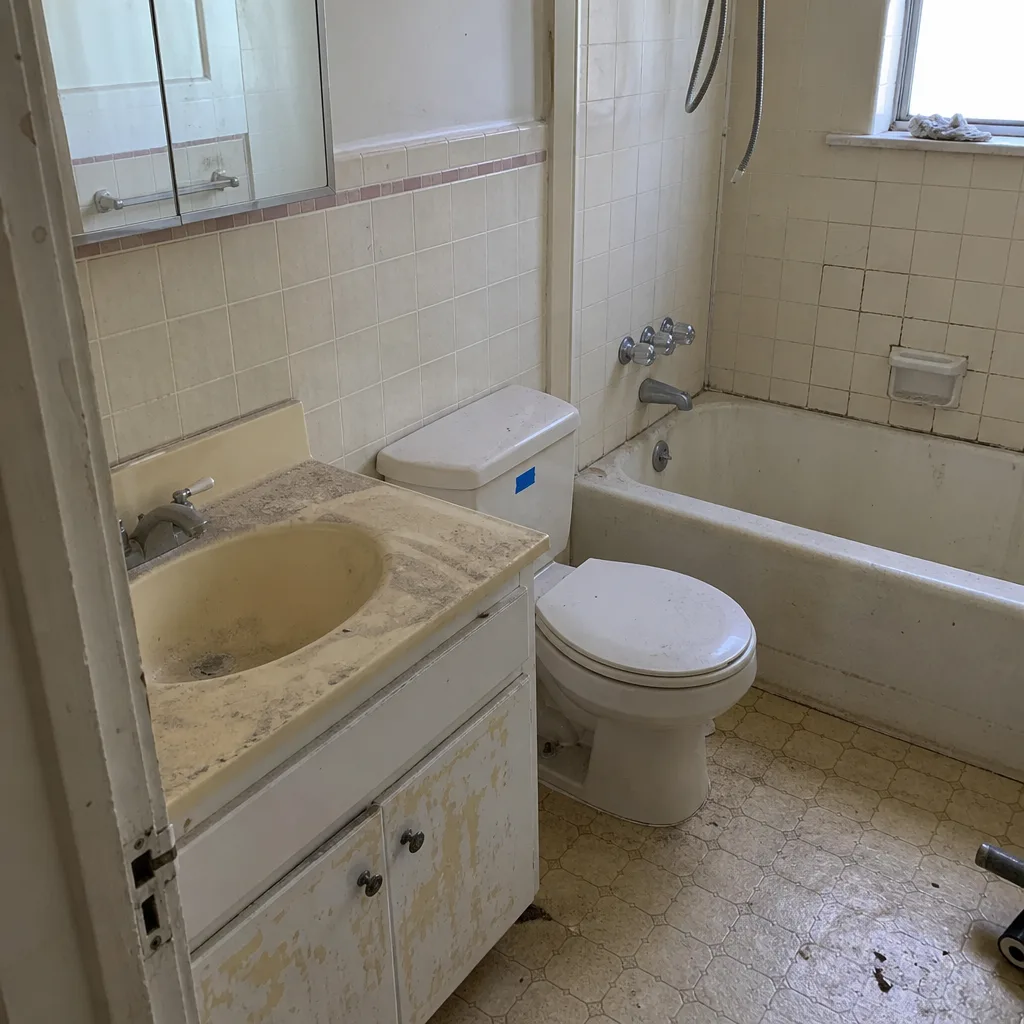 Before
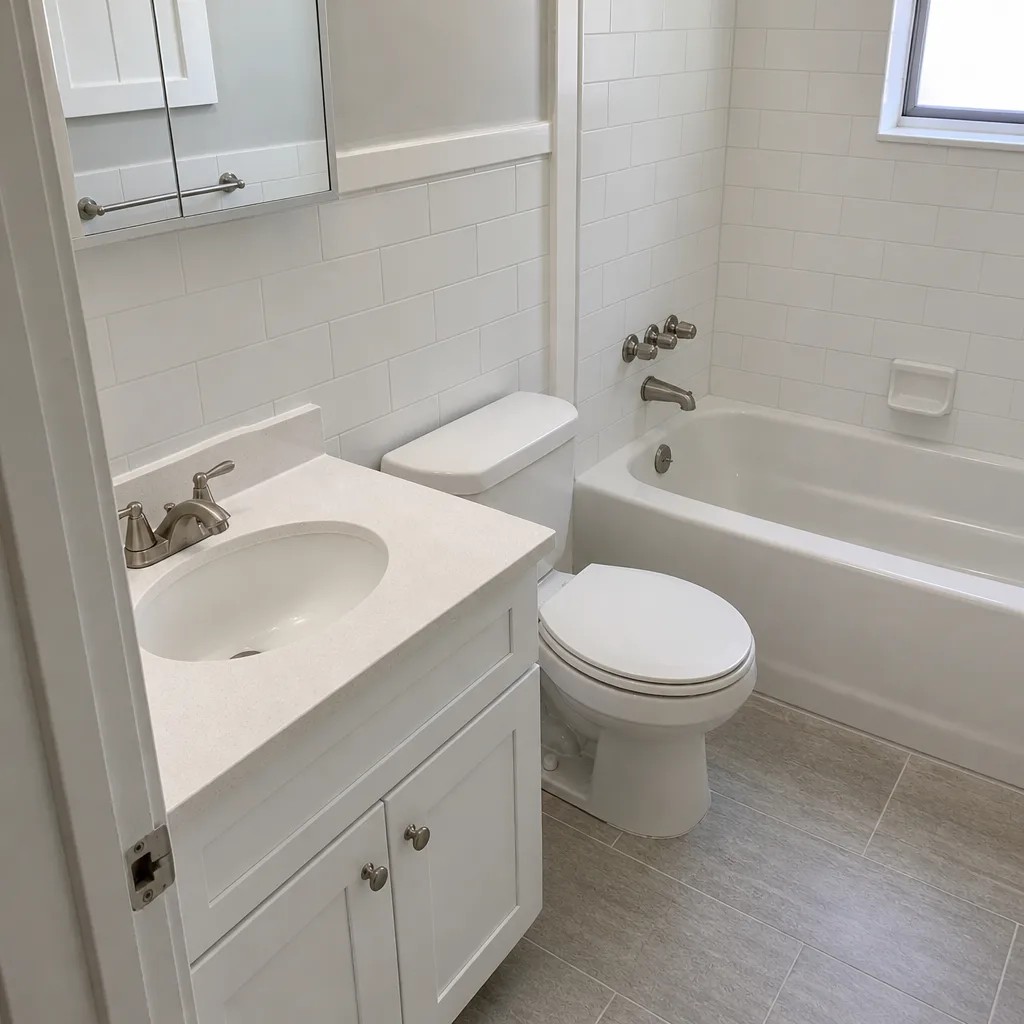 After
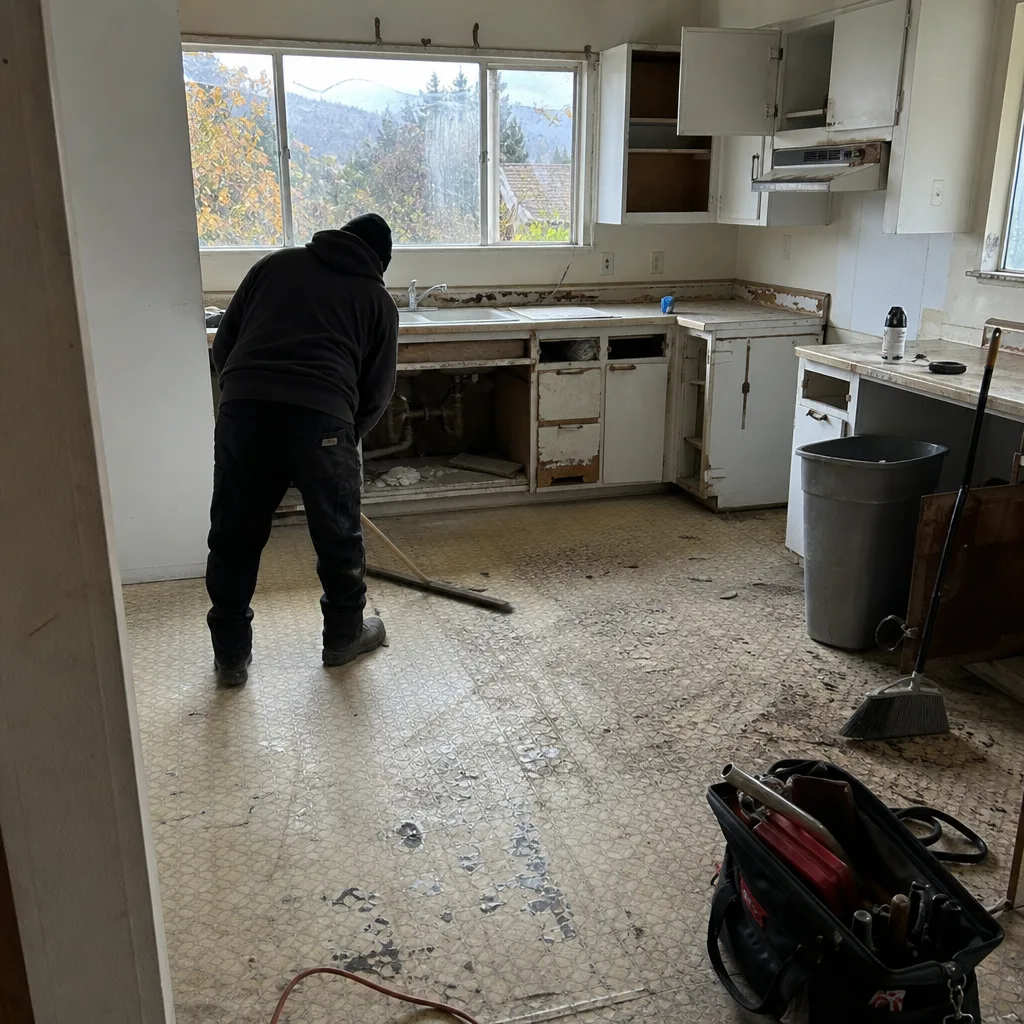 Before
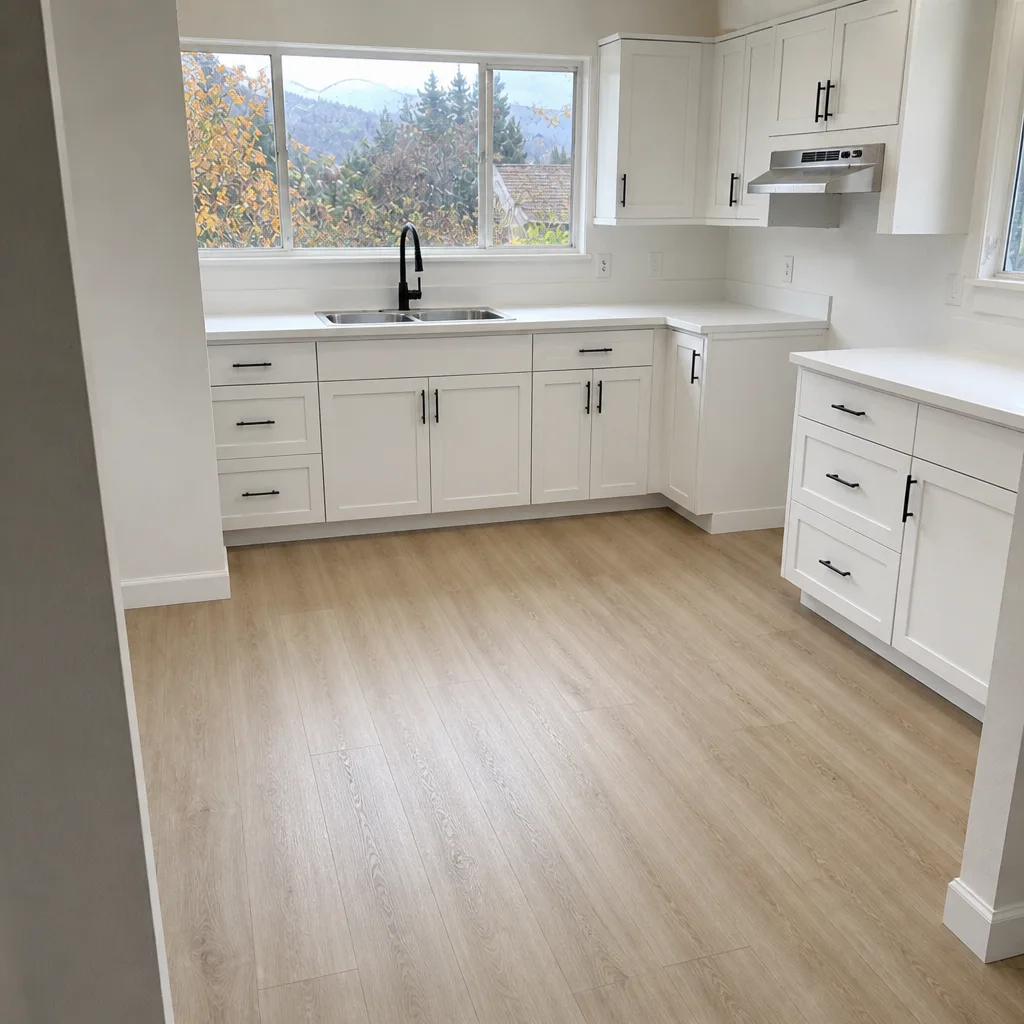 After
When to Call a Professional
Call a professional right away if you find any of the following: soft flooring within a foot of the toilet, tub, or shower; hollow tiles in a cluster around a wet zone; mold that returns within weeks of cleaning; a shower or tub surround that flexes; or recurring grout cracks in the same pattern. Each of these is a structural or waterproofing signal that a cosmetic fix won’t solve, and each gets more expensive the longer it sits. Groundwork Construction Co. of Oakland offers free estimates in Oakland: call (833) 997-7759 and we’ll walk your bathroom with you, run the tests, and put real numbers to what we find. Calls are answered by a live person, day or night, so you’re not stuck waiting until Monday. Background-checked, uniformed technicians handle every job, and every project is covered by the 730-Day Done Right Promise.
Frequently Asked Questions
Cosmetic damage is limited to the tile surface, grout, or paint. Severe water damage shows up as soft flooring, hollow-sounding tiles in clusters, peeling paint on the ceiling above the shower, or mold that returns after cleaning. When you see those signs, the moisture is in the wall or subfloor, not on the finish. Call (833) 997-7759 for an assessment; estimates are free.
A full bath rebuild with new waterproofing and plumbing repairs typically runs $24,000 – $45,000 in Oakland, while a surface remodel over a sound substrate is often $12,000 – $24,000. Structural repairs can add $4,000 – $15,000 on top depending on how far the damage runs. Call (833) 997-7759 for an exact quote; we put line items in writing before any work starts.
No. Once we’ve inspected the bathroom, run the moisture meter, and agreed to a written scope, the number you see is the number you pay. We build the realistic scope into the contract, including repairs we discover during inspection, so there are no surprise change orders mid-job. Call (833) 997-7759 to schedule your free estimate.
Yes. Plumbing and electrical work in Oakland bathrooms is permitted and inspected, and we pull those permits as part of the project scope. A contractor who suggests skipping permits is a warning sign on its own, since unpermitted work can complicate resale and leave you exposed. Call (833) 997-7759 to talk through the permit requirements for your project.
A surface remodel typically runs two to four weeks of active construction. A full rebuild with waterproofing, plumbing, and structural repairs usually runs four to eight weeks, depending on inspection timing and material lead times. Not a same-week project by nature, and we schedule realistically. Call (833) 997-7759 for a scheduling conversation.
Look for whether the contractor actually tests. A serious one carries a moisture meter, probes the soft spots, opens accessible cabinets, checks the exhaust fan, and narrates what they find. A contractor who hands you a firm price without probing anything is underpricing the scope, either through inexperience or on purpose. Call (833) 997-7759 and we’ll show you what a proper bathroom assessment looks like.
The Bottom Line
Your bathroom is already telling you what kind of project you have. Soft flooring near fixtures, hollow tiles around a wet zone, mold that won’t stay gone, and pattern grout cracks aren’t inconveniences; they’re the assembly reporting its condition. Learning to read them lets you walk into every contractor conversation with the full picture instead of a guess. The right scope priced once is always cheaper than the wrong scope fixed twice. If you’re in Oakland and want a second set of eyes on what you’re seeing, our team runs a real assessment, puts line-item pricing in writing, stands behind the work with our 730-Day Done Right Promise, and offers $1,000 off projects over $10,000 with 0% financing for 18 months. Call (833) 997-7759 for your free estimate and design consult. Our technicians bring up to 12 years of experience to every bathroom walkthrough, and our curated brand partners mean your finish materials are chosen for quality, not just availability. For larger scopes, you can also reach us through Driveway & Pavers in Oakland and Fence Installation in Oakland if you’re planning multiple improvements at once.
Written by the team at Groundwork Construction Co. of Oakland.