
Last updated November 17, 2026
 Home additions & ADU
 Kitchen remodeling
 Bathroom remodeling
 Roofing
 Windows & doors
 Driveway & pavers
 Fence
Free written scope consultation - allowances, timeline, and change-order rules on paper before a single trade is scheduled
Construction Warning Signs: An Oakland Homeowner’s Reference Guide
A horizontal crack in a foundation wall is a structural emergency. A vertical crack in the same wall might be nothing. Most homeowners can’t tell the difference, and that gap in knowledge is where five-figure repair bills get born. We’ve walked into Oakland homes where a “minor cosmetic crack” had been quietly widening for six years, and we’ve walked into others where a hairline fissure was just the stucco doing what stucco does. This guide teaches you to read your house the way a builder does: what each crack, slope, and separation is actually telling you, and when it’s time to stop rationalizing and start calling. By the end you’ll have a triage system: monitor, schedule, or call now.
Quick Answer
Construction warning signs in an Oakland home are structural, drainage, and hardscape clues that point to movement, water, or failing materials before they become expensive. The three you should never ignore are horizontal foundation cracks wider than a quarter inch, retaining walls leaning more than about an inch over eight feet, and any downspout that dumps water within three feet of the foundation. Everything else gets sorted into monitor, schedule, or call now using the triage framework below.
Styles & brands we work with
- Kitchen remodeling
- Bathroom remodeling
- Home additions & ADU
- Roofing
- Windows & doors
- Driveway & pavers
- Fence
Table of Contents
- Foundation Crack Identification: Orientation, Width, and Location
- Oakland-Specific Warning Signs: Hillside Creep, Bay Mud, and Post-Seismic Shifts
- Drainage Red Flags Around the Foundation
- Hardscape Warning Signs: Pavers, Concrete Joints, and Retaining Wall Lean
- How to Document and Prioritize What You Find
- The Seasonal Checklist for Oakland Homes
- Common Mistakes to Avoid
- When to Call a Professional
Foundation Crack Identification: Orientation, Width, and Location
Crack orientation is the single most useful diagnostic a builder has, and you can learn to read it in about five minutes. The direction a crack runs tells you which force is acting on the wall. Width tells you how fast it’s moving. Location tells you what’s pushing or pulling underneath.
Here’s how we sort them on a job site.
- Vertical cracks run up and down the wall and are the most common. They usually come from concrete curing shrinkage or minor settlement and are frequently harmless. Watch them, but don’t panic.
- Diagonal cracks that stair-step up through block or angle across a poured wall suggest differential settlement, meaning one corner of the foundation is sinking faster than the other. Width matters here. A hairline diagonal is a monitoring item. A widening one is a scheduling item.
- Horizontal cracks are the red flag. They indicate lateral pressure pushing the wall inward, usually from saturated soil or frost heave. If a horizontal crack is wider than a quarter inch, or the wall is bowing inward at all, that’s a call-now situation and a structural engineer should look at it.
- Hairline cracks under 1/16 inch anywhere are typically cosmetic. Measure them once a season and note whether the number changes.
Width thresholds we use: under 1/16 inch is monitor, 1/16 to 1/4 inch is schedule an inspection within 30 to 60 days, and anything over 1/4 inch or actively growing is call now. The cheapest tool in your kit is a $4 crack gauge and a pencil. Write the date and measurement next to the crack, check it again after the first big rain of the season, and compare. Movement is the story, not the crack itself.
Location does the rest of the work. Cracks radiating from a window or door corner are usually stress concentration, not foundation failure. Cracks near a downspout outlet are almost always water. Cracks at the junction where one section of foundation meets another are often cold-joint separations and are common in older Oakland homes built in phases.
Oakland-Specific Warning Signs: Hillside Creep, Bay Mud, and Post-Seismic Shifts
Oakland sits on some of the most interesting geology in the Bay Area, and the ground under your house is doing something right now. Three patterns show up here more than in most cities, and all three disguise themselves as cosmetic issues.
Hillside soil creep
If you live in the Oakland Hills above about Fruitvale or along the ridges near Joaquin Miller and Redwood Regional, the slope under your house is very slowly moving downhill. Soil creep is a millimeter-a-year phenomenon, but it accumulates. The tell is a pattern of small, consistent distortions: doors and windows on the downhill side of the house sticking while the uphill side stays free and easy, fence posts that tilt downhill in the same direction, retaining walls that develop a lean, and stucco cracks that open and close with the seasons. Any single one of those is nothing. All of them together, on the same side of the house, is a creep signature.
Bay mud settlement
Large parts of West and East Oakland, including the flatlands around the Port, sit on bay mud, which is soft, compressible, and settles unevenly over decades. In bay mud areas, the warning sign isn’t a dramatic crack, it’s a slow, whole-house sag that shows up as a floor that used to be level and now isn’t. Put a marble on your kitchen floor. If it rolls consistently toward one wall, that’s data. Combine that with doors that stick in summer and swing free in winter, and you’re watching a settlement pattern.
Post-seismic micro-shifts
After any moderate seismic event in the East Bay, houses that had a stable crack pattern for years will suddenly show new movement within 6 to 18 months. What looks like cosmetic stucco cracking after a quake can be the house re-seating on its foundation. The pattern to watch is any crack that changes width after a quake and stays changed. Photograph the same cracks before and after, with a ruler in frame, and you’ll have a record that a structural engineer can actually use.
The common thread across all three is that Oakland’s ground movement is slow and quiet. Nothing announces itself. You only catch it by measuring.
Drainage Red Flags Around the Foundation
Water does more damage to Oakland foundations than any other single force, and it almost always starts with grading and downspouts. The good news is that drainage problems are the cheapest warning signs to fix, which is why they’re the most expensive to ignore.
Here’s what to check, in order of importance.
- Walk the perimeter and look at the grading. The soil surface should slope away from the foundation at roughly a 6-inch drop over the first 10 feet. If the ground is flat or, worse, slopes toward the house, that’s a red flag. Grading migrates over years from settling, plant growth, and repaving, and it’s the most common cause of foundation moisture we see in Oakland.
- Trace every downspout. A downspout that terminates within three feet of the foundation is dumping roughly 12 gallons of water per minute into the soil at the wall during a moderate rain. Extend it to six feet minimum, ideally to a splash block that carries runoff toward the street.
- Check the French drain. A French drain that used to work and doesn’t is one of the hardest things to spot, because the failure is underground. Signs: standing water in the yard that drains slowly, soil that stays saturated near the drain line days after rain, gravel that looks clean on top but is clogged with fine sediment below, and water pooling on the footing side of the wall.
- Look for efflorescence. That white, chalky powder on a foundation wall is salt pushed through masonry by water. It’s not a crack, but it’s a water indicator and it tells you moisture is moving through the concrete.
- Look up. A gutter that’s overflowing at the corner is dumping water straight down the wall. Cheap fix, big effect.
One Oakland-specific note: the rainy season here delivers a few big storms and a long dry stretch, which means the soil swells and shrinks a lot. Foundation walls crack in the transition more often than in the middle of the wet season. Check your perimeter in October, right after the first real rain, and again in May.
Hardscape Warning Signs: Pavers, Concrete Joints, and Retaining Wall Lean
Your driveway, patio, and retaining walls are the only parts of your property sitting directly on the soil surface, which makes them the earliest indicators of what’s happening underneath. If you want to see what the ground under a house is doing, look at the pavers first.
Paver sink patterns
Pavers that settle in one area, form birdbaths that hold water after rain, or develop a wavy surface across a straight run of 10 feet or more are telling you the base under them has shifted. A single low paver is a re-level. A field of pavers all dipping toward the same corner is a base failure. The pattern is what matters. If you’re already in the market for a replacement, this is the moment to talk through Driveway & Pavers in Oakland with a builder, because the fix is in the sub-base, not the surface.
Concrete joint separation
Concrete is designed to crack at the control joints, which is why you see them scored every 8 to 10 feet. What you don’t want is separation at the joints, meaning the slab edges have pulled apart vertically or horizontally. A joint that’s opened 1/4 inch or more, or where one side is higher than the other by more than an eighth inch, is a settlement indicator. On a driveway that leads to a garage with a slab-on-grade foundation, that separation often mirrors what the house slab is doing.
Retaining wall lean thresholds
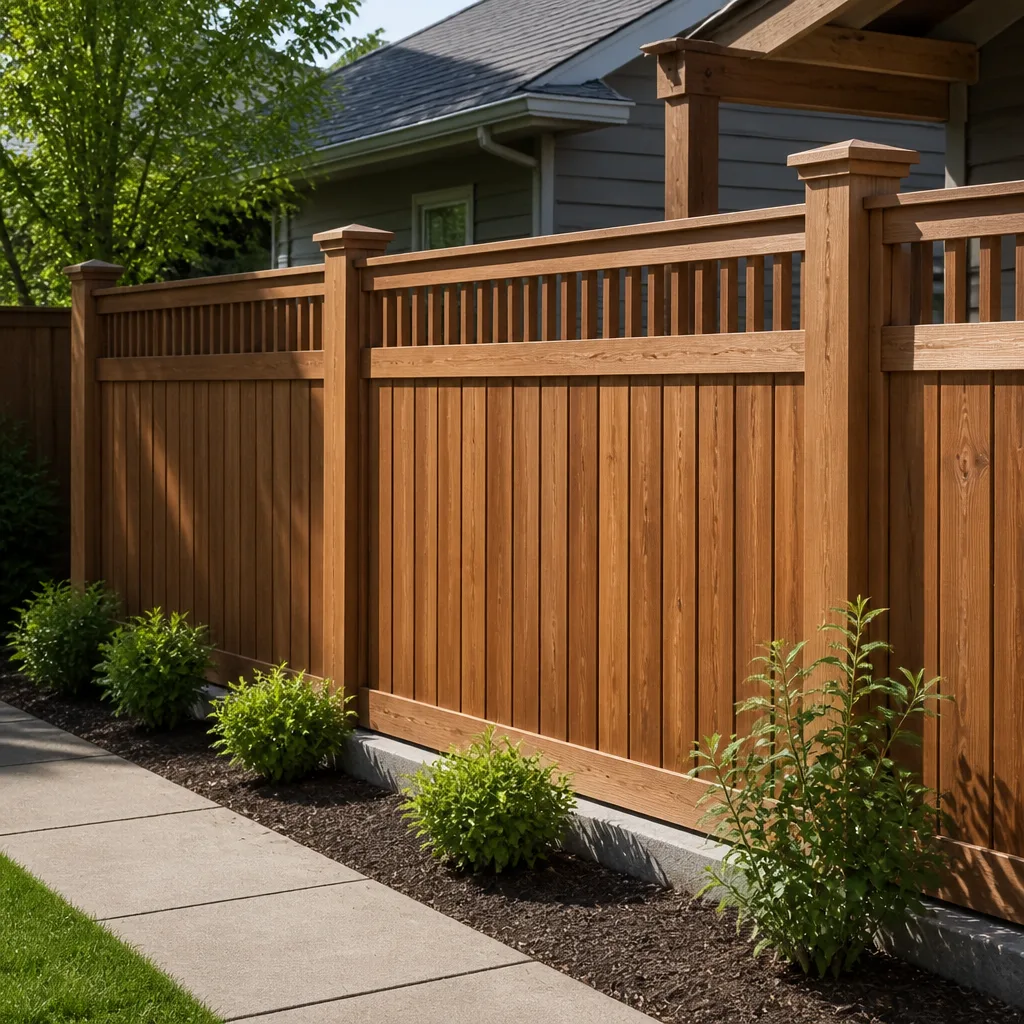
A retaining wall is holding back thousands of pounds of soil and it should stand dead straight. Here are the thresholds we use: up to 1 inch of lean over 8 feet is monitor; 1 to 2 inches over 8 feet is schedule a structural inspection; more than 2 inches, or any wall that has visibly rotated since last year, or any wall with a bulge or a horizontal crack, is call now. A leaning wall that fails takes soil with it, and in a hillside Oakland yard, that soil often slumps toward the house. If your wall is a boundary with a neighbor, check the fence line too. A fence leaning uniformly downhill is another creep signature, and if it needs replacing, Fence Installation in Oakland is the trade to call. Our crews use Barrette and Master Halco posts set with the right footing depth for Oakland’s soil, which is the part the fence actually depends on.
How to Document and Prioritize What You Find
Once you’ve walked the property, you’ll have a list of observations and no idea what to do with them. This is the triage framework. It sorts everything into three buckets and tells you what each bucket means.
Here’s the sequence we use.
- Photograph and measure everything on the same day. Every observation gets a photo with a ruler or a coin in frame for scale, and a note with the date, location, and measurement. This is the record a professional will actually need.
- Put each item in one of three buckets: Monitor, Schedule, or Call Now.
- Set a re-check date. Monitor items get re-measured at 6 months and after the first big rain of the season. Schedule items get a call within 30 to 60 days. Call Now items get a phone call the same week.
- Keep a single log. One notebook or one shared note, one location per line. The value of this framework comes from comparing today’s numbers to last year’s.
- Monitor: hairline cracks under 1/16 inch, pavers slightly settled but no birdbath, one door that’s tight in summer, a retaining wall with under an inch of lean over 8 feet. Re-check at 6 months.
- Schedule: cracks between 1/16 and 1/4 inch, a diagonal crack that’s widened since your last check, a floor that’s developed a consistent slope, a wall developing a bow, joint separation over 1/4 inch. Book an inspection within 30 to 60 days.
- Call Now: horizontal cracks of any width in a foundation wall, a wall bowing inward, a retaining wall leaning more than 2 inches over 8 feet, a crack that has grown more than 1/8 inch in 12 months, water entering the foundation, or any visible soil movement around a footing. Call the same week.
The most common triage mistake is bundling everything into “monitor” because it’s emotionally easier. The second most common is calling an emergency line for a hairline stucco crack. The framework exists to remove both of those temptations.
The Seasonal Checklist for Oakland Homes
Oakland’s weather pattern is a long dry season from roughly May through October and a wet season the rest of the year, and the soil does most of its moving in the transition months. That makes the calendar your best diagnostic tool. Two walk-throughs per year catch nearly every problem before it’s expensive.
In October, after the first real rain:
- Re-measure every crack you’ve been monitoring and log the change.
- Watch where water stands in the yard and where it drains slowly.
- Check the downspouts and gutters for the season. Overflow at a corner is a foundation problem waiting to happen.
- Look for new stucco cracks on the downhill side of hillside properties.
In May, at the end of the wet season:
- Walk the perimeter and check grading direction and soil against the foundation.
- Look for efflorescence on any foundation wall.
- Open and close every exterior door and window and note which ones have gotten harder to operate.
- If your house was built into a slope, note the fence line and any retaining wall lean.
That’s 45 minutes twice a year. In our experience, homeowners who keep this calendar catch drainage problems in the $500 to $2,000 range rather than foundation problems in the $15,000-plus range.
Common Mistakes to Avoid
- Caulking over a structural crack. Caulk hides the movement from your own eyes and prevents a professional from seeing what the crack has been doing. Fill the crack with caulk only after it’s been diagnosed, not before.
- Trusting a single inspection after a single storm. Cracks that appear in the first big rain sometimes close up by June. The pattern across 12 months is the real signal, not one snapshot.
- Assuming a horizontal crack is “just settling.” Horizontal cracks in a foundation wall are the most misread warning sign in the trade, and they’re the one that most often leads to a major repair.
- Extending a downspout to “the edge of the yard” without checking the slope. A downspout that dumps water three feet from the foundation on the uphill side of an Oakland hillside is still pushing water back toward the house via the slope.
- Painting over paver birdbaths. Re-leveling pavers is the fix; sealing or paint just defers the sub-base problem into next year.
- Calling an emergency line for a hairline crack. Save the urgency for horizontal cracks, bowing, and retaining walls leaning more than 2 inches over 8 feet.
- Relying on a contractor who “already looked at it” and never measured anything. If a contractor can’t put numbers on a crack, you don’t have a diagnosis yet.
When to Call a Professional
Call a professional now, this week, if you see any of the following: a horizontal crack in a foundation wall of any width, a wall that’s visibly bowing inward, a crack that’s grown more than 1/8 inch in the past year, a retaining wall leaning more than 2 inches over 8 feet, water entering the foundation or pooling against it, or a floor that’s developed a slope you can see with a marble. Call to schedule within 30 to 60 days for widening diagonal cracks, joint separation over 1/4 inch, and paver fields that have settled into a birdbath pattern. Anything on the Monitor list gets logged and re-checked at six months. Groundwork Construction Co. of Oakland offers free estimates in Oakland for grading, hardscape, retaining wall, and any repair that touches the foundation. Our technicians have up to 12 years of experience, they arrive in uniform, and every job is covered by the 730-Day Done Right Promise. Call (833) 997-7759 to schedule yours.
See the difference
 Before
 After
 Before
 After
 Before
 After
Frequently Asked Questions
Orientation and width. Vertical cracks under 1/16 inch are almost always cosmetic shrinkage cracks. Horizontal cracks of any width mean lateral pressure on the wall and are a structural concern. Diagonal cracks between 1/16 and 1/4 inch are a scheduling item; wider or growing diagonals are a call-now item. Measure at the widest point and log it with the date. If you’re not sure which side of the line you’re on, call (833) 997-7759 for a free estimate and we’ll look at the measurements with you.
Hillside soil creep in the Oakland Hills, uneven bay mud settlement in West and East Oakland flatlands, and post-seismic micro-shifts on older homes. All three show up as doors that stick on one side of the house, fence posts tilting downhill in the same direction, stucco cracks that open and close with the seasons, and floors that develop a consistent slope. The pattern across the whole property is what separates a real warning sign from ordinary settling.
Within three feet of the foundation is too close. During a moderate rain, a single downspout can dump around 12 gallons per minute at the wall. Extend it to six feet minimum and point it toward a splash block or away from the slope. If you’re on a hillside and the ground slopes toward the house, extend further and check that the outlet isn’t just redirecting water back to the uphill side.
More than 2 inches of lean over an 8-foot section, or any visible rotation since last year, or any horizontal crack or bulge. Between 1 and 2 inches over 8 feet is a schedule-an-inspection item. Under 1 inch is a monitor item and gets re-measured at the six-month mark. A failing retaining wall releases soil suddenly, which is why this one doesn’t get the benefit of the doubt.
You can fix a single low paver, but a pattern of pavers settling toward the same corner of the driveway means the sub-base has failed, and the surface fix will re-sink within a season. A driveway that sinks in a pattern needs the base re-compacted and graded to drain, which is a job that requires the right equipment. Our crews install with Belgard and other verified paver lines set to the base depths Oakland soil calls for. Call (833) 997-7759 for a free estimate rather than re-leveling the same spot twice.
Cosmetic crack repair usually doesn’t require a permit; structural repair, underpinning, and retaining wall work generally does, and the City of Oakland has its own requirements depending on scope. That’s one reason to work with a contractor who pulls permits and passes inspections instead of inviting you to handle the paperwork. Groundwork Construction Co. of Oakland pulls permits and passes inspections on every structural scope, so the record is on file with the city.
The Bottom Line
Most construction warning signs in an Oakland home are quiet. A vertical crack that’s been the same width for six years is nothing. A horizontal crack that’s grown since last summer is a call. The work on your side is to measure, log, and re-check, and the work on ours is to tell you which bucket each observation goes in without waiting to be asked. Start with a 45-minute walk, a crack gauge, a pencil, and the three thresholds in this guide. If anything lands in the call-now bucket, call (833) 997-7759 and we’ll come look at it as part of a free estimate. That’s how a builder reads a house. Now you can too.
For homeowners planning the larger conversation about repairs, additions, or a full remodel, the Groundwork Construction Co. of Oakland home page lays out how we handle full-scope projects from foundation to finish line. If your warning signs point toward more space rather than a repair, Home Additions & ADU in Oakland walks through what’s possible in Oakland and what the process looks like.
Contact Groundwork Construction Co. of Oakland
If your walk-around turned up something in the call-now bucket, or you’re ready to price a repair or a bigger project, call Groundwork Construction Co. of Oakland at (833) 997-7759 to schedule your free estimate. Every call is answered by a live person, 24/7, and the estimate is no-hassle, upfront, and free. We install with verified brand partners like KraftMaid, Cambria, GAF, Owens Corning, Andersen, and James Hardie, we pull permits and pass inspections, and every job is backed by the 730-Day Done Right Promise. Current offers include $1,000 off projects over $10,000, a free project estimate and design consult, and 0% financing for 18 months. The number you see is the number you pay.
Written by the team at Groundwork Construction Co. of Oakland.