
Last updated November 17, 2026
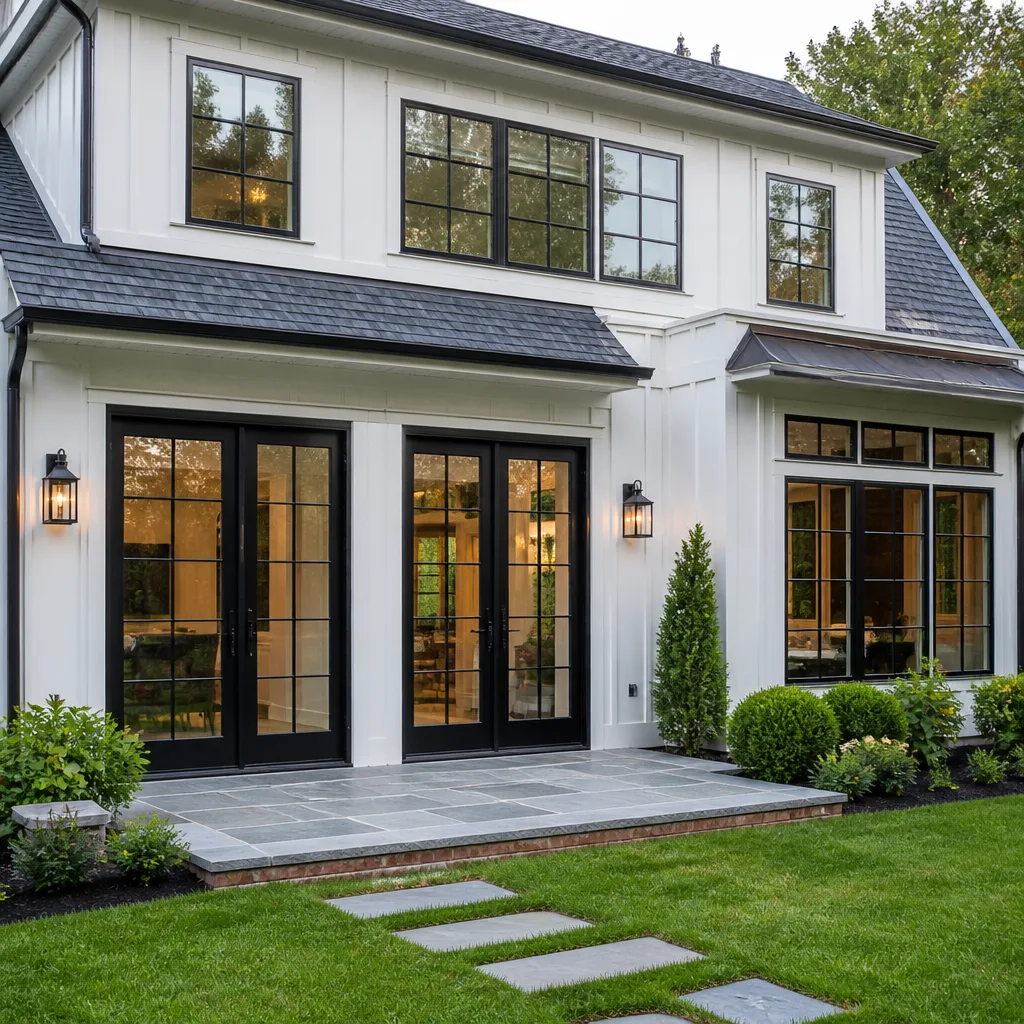 Windows & doors
 Kitchen remodeling
 Bathroom remodeling
 Home additions & ADU
 Roofing
 Driveway & pavers
 Fence
Free written scope consultation - allowances, timeline, and change-order rules on paper before a single trade is scheduled
The Complete Windows & Doors Guide for Oakland Homeowners
A window that performs perfectly in Walnut Creek can fail in the Oakland Hills within five years. Same window, same installer, different outcome. The difference comes down to fog exposure, temperature swings, and frame material choices that most installation crews never bring up at the kitchen table. Oakland sits in a peculiar spot: marine layer rolling over the hills, sun baking the flats, a fault system underneath all of it. This guide covers what actually performs in Oakland, what California code requires of your windows, what seismic movement does to door frames and thresholds, and what a legitimate bid includes that a cut-rate estimate quietly leaves out. By the end you’ll know how to read a window bid like a contractor does.
Quick Answer
For most Oakland homes, fiberglass or aluminum-clad wood frames outperform vinyl over a 20-year horizon because they tolerate the city’s fog-to-sun daily swings without warping or seal failure. Window replacement must meet California Title 24 energy requirements, and door frames in Oakland’s older stock need seismic-aware shimming and anchoring to stop the seasonal sticking that comes from soil movement. Expect to pay $650 to $1,400 per window installed depending on frame material, glass package, and how much rough-opening prep your 1920s-to-1960s home actually needs.
Styles & brands we work with
- Kitchen remodeling
- Bathroom remodeling
- Home additions & ADU
- Roofing
- Windows & doors
- Driveway & pavers
- Fence
Table of Contents
- Why Oakland’s Microclimates Break Generic Window Advice
- Title 24 and What It Actually Requires of Oakland Windows
- Earthquake Zone 4: Doors, Thresholds, and What Shifts
- The Real Condition of Oakland’s 1920s-1960s Housing Stock
- Frame Materials: How They Hold Up Here
- Glass Packages and What’s Worth Paying For
- How to Read a Bay Area Window and Door Bid
- What a Proper Installation Process Looks Like
Why Oakland’s Microclimates Break Generic Window Advice
Oakland isn’t one climate. It’s a stack of them, and they sit close enough together that a homeowner can drive from one to another in ten minutes. A house in Rockridge faces different conditions than a house two miles uphill in Montclair, and both differ again from a bungalow in the flatlands near Fruitvale.
The core problem is moisture cycling. Properties on the bay side and up in the hills spend much of the year under the marine layer. Fog forms on glass in the early morning, evaporates by mid-morning, then reforms at dusk. That cycle repeats hundreds of times a year. Frames that absorb and release moisture at a different rate than their seals will fail from the inside out. You won’t see it happening. You’ll notice it as fogging between panes, a door that won’t latch by August, or paint peeling off wood sashes years before the warranty is up.
Contrast that with the warmer inland pockets of Oakland – the flatlands, parts of East Oakland, the neighborhoods that sit above the fog line in summer. There the problem runs the other direction: UV and heat. Vinyl that performs fine on a shaded hillside can soften and bow on a west-facing elevation in a sunny pocket.
What this means practically:
- Hills and bay-facing properties: prioritize frame materials with low moisture absorption and hardware rated for prolonged damp. Fiberglass and clad wood handle this well. Cheap vinyl does not.
- Sun-exposed flats and inland pockets: prioritize UV stability and heat resistance. Aluminum-clad and fiberglass again lead. Dark-painted vinyl on a west wall is the wrong call.
- Mixed exposures (most Oakland houses): one material for the whole house usually means compromising somewhere. Ask your contractor to spec per elevation, not per project.
This is the first thing we look at when we walk an Oakland project. It’s almost never mentioned in a big-box store conversation or in a window brochure printed for a national market. If a salesperson can’t tell you which way your walls face and what the moisture regime is on each side, they’re selling catalogs, not windows.
Title 24 and What It Actually Requires of Oakland Windows
California’s Title 24 energy code applies to any window replacement in Oakland, including single-window swaps. It is enforced at permit. You don’t get to choose whether you participate; you get to choose how well you comply and who fills out the paperwork correctly.
For a window in the Bay Area climate zone that covers Oakland, the code looks at the whole-envelope performance: U-factor (how fast heat moves through), Solar Heat Gain Coefficient (SHGC – how much solar heat passes in), and air leakage. The exact numbers you must hit depend on your climate zone, your home’s existing envelope, and whether you’re replacing one window or the whole house. In practice, most Oakland replacements land in ranges like these:
- U-factor: typically 0.32 or lower for a standard replacement in our climate zone – double glazing with a low-E coating gets you there.
- SHGC: often 0.25 to 0.40 depending on orientation – south and west windows need lower numbers to avoid heat gain; north windows can accept higher.
- Whole-window U-factor vs. center-of-glass U-factor: code cares about the whole assembly, not just the glass. Frame spacing and thermal breaks matter.
Here’s what most bids won’t tell you: the “performance” number on a window sticker is measured for a specific size and configuration. Once you install it in a different rough opening, with different trim and flashing, the installed performance is what the code actually cares about. A reputable Oakland contractor provides an installation certificate with the actual installed values, not just a manufacturer’s spec sheet.
Two practical realities for Oakland:
- Permits are pulled before installation, not after. If your contractor offers to “handle it later,” that’s a red flag. Title 24 compliance is your responsibility as property owner, even if the contractor filled out the forms.
- Compliance paperwork stays with the house. When you sell, a buyer’s inspector will look for the permits and the compliance documentation. Missing paperwork is a negotiable item in a sale and sometimes a stop-work item during a remodel.
Andrésen and Marvin both publish Title 24 lookup tools that contractors should use to spec the exact glass package for your address and orientation. If a bidder can’t produce that spec page, ask why.
Earthquake Zone 4: Doors, Thresholds, and What Shifts
Oakland sits in a high seismic hazard zone, and the ground under the older housing stock moves not only during earthquakes but across seasons. Expansive clay soils in parts of the city swell and shrink with wet and dry cycles. That movement is small in absolute terms – fractions of an inch at the foundation – but over a 30-foot wall, those fractions add up to doors that stick, thresholds that pull away from the slab, and frames that rack enough to break the seal.
What actually shifts in a typical Oakland house:
- Door frames rack out of square. A 36-inch door that fit perfectly in June can bind by October because the wall above it moved. This is more common on exterior doors than interior ones because the loads differ end to end.
- Thresholds pull away from the slab or subfloor. Threshold movement is typically what lets water in, not the door panel.
- Sliding glass door tracks go out of level. You’ll feel it as a door that won’t glide and hear it as a scrape at one end.
- Window corners separate from the wall. Hairline cracks at interior corners of window trim are usually cosmetic, but they tell you where the movement is concentrated.
You can’t stop ground movement. You can spec against it:
- Anchor frames to the studs, not just to the sheathing. A lot of cut-rate installs use short fasteners that grab drywall and paper. Specify framing anchors.
- Use flexible sealant at the frame-to-wall joint, not rigid caulk. Rigid joints crack and let water in. Flexible joints take up movement.
- Spec adjustable strike plates and hinges on heavy exterior doors. These buy you the ability to re-square the door after seasonal movement without pulling the frame.
- Use a proper sill pan and back-dam at exterior door thresholds. Even a small threshold shift means water paths; the pan intercepts them.
- On sliders, spec a heavy-duty track with leveling shims and adjustable rollers. You’ll pay a small premium and save the cost of replacing the track in five years.
Any contractor who tells you seismic movement is “not really a window and door problem” hasn’t worked on an Oakland hillside. It absolutely is. Drawings and detailing belong in the bid, not in a conversation after the door won’t close.
The Real Condition of Oakland’s 1920s-1960s Housing Stock
Most of Oakland’s residential stock predates modern rough-opening standards. The 1920s bungalow in Maxwell Park, the 1940s stucco in Glenview, the 1950s tract house in the Laurel – each was built when rough openings were framed by eye and finished onsite. By the time you pull the old unit, you find surprises. Usually several of them, stacked.
What we routinely find on Oakland replacement jobs:
- Rough openings that were never square. Tolerances of three-quarters of an inch out of plumb are not unusual in older framing. New windows are built to a tolerance of a quarter inch. Somebody has to reconcile the difference, and it isn’t the manufacturer.
- Old horizontal wood sash with weight pockets. The cavity that held the sash weights needs to be addressed – either re-flashed and blocked, or the new unit spec’d to bridge it correctly.
- Stucco and brick veneer transitions. Many Oakland homes have a stucco exterior over a wood frame, or a brick veneer that stops at the second floor. Cutting into either requires careful flashing that most crews don’t do well.
- No sheathing in places. Some 1950s builds used diagonal board sheathing. That’s fine as structure but needs a proper air barrier and flashing detail around the new opening.
- Asbestos and lead paint on the interior and exterior. Not every 1950s house has had these addressed. In Oakland, we assume both until testing says otherwise.
- Replacement windows of dubious vintage. A lot of stock has a second-generation window from the 1980s or 1990s sitting inside the original frame. If you’re replacing again, the whole assembly comes out, including whatever bad detail was installed the first time.
The practical consequence: in most Oakland homes, the cost that surprises homeowners isn’t the window. It’s the rough opening prep. A window that runs $650 in a newer build can run $1,100 installed in a 1926 house because someone has to reframe, re-flash, and re-finish the opening before the new unit goes in.
That’s not a reason to avoid the project; it’s a reason to know what you’re buying before you sign. A bid that reflects real prep is a bid that finishes without change orders. A bid that ignores prep is the one that produces the phone call three weeks in.
Frame Materials: How They Hold Up Here
The material on the frame is where the Oakland climate wins or loses over 20 years. Here’s the honest rundown:
- Vinyl. Cheapest entry point, decent on the interior. On the exterior it absorbs heat, bows on dark colors, and breaks down under UV in sun-exposed Oakland elevations. In marine-layer yards it’s fine; on a west-facing wall in a sun pocket, it’s a five-to-twelve year window. Many Oaklanders buy vinyl because the brochure says it’s maintenance-free. They spend the saved money on replacing it prematurely.
- Fiberglass. The sweet spot for Oakland in our experience. Fiberglass moves at nearly the same rate as the glass it holds, so temperature swings don’t stress the seals. It doesn’t absorb moisture, it doesn’t warp, and it takes paint well. The premium over vinyl is real but modest, and the performance gap in a foggy hillside neighborhood is wide. Fiberglass handles seismic movement gracefully because it flexes slightly before it cracks.
- Aluminum-clad wood. Best of both worlds – wood on the interior for the look and feel that Oakland’s character homes deserve, aluminum on the exterior for weather resistance. Andersen and Marvin both make excellent products in this category; they show up in a lot of our Oakland hillside work because the aesthetics matter to the neighborhood. The trade-off is cost. Clad wood runs a meaningful premium over fiberglass and needs paint touch-ups on the interior wood at intervals.
- Wood (unclad). Period-appropriate for a lot of Oakland craftsman and Tudor houses, and looks best on the interior. Exterior unclad wood is a maintenance commitment in our climate – you’re painting every few years to keep the marine layer from working into the wood. Most homeowners who love the look spend the cost delta on interior wood and clad the exterior.
- Aluminum (unbroken). Rare in residential replacements now because the thermal performance is poor. If you find it on a 1960s Oakland build, it’s a candidate for replacement.
Brand matters less than specification. A well-spec’d mid-tier fiberglass window will outperform a poorly-spec’d premium one every time. What matters in the bid: the exact model number, the glass package, the spacer, the hardware, and the installation detail. If the bid says “fiberglass, double-pane, one of the top brands,” that’s not a bid. That’s a placeholder.
Glass Packages and What’s Worth Paying For
Glass is where the pricing ladder gets steep, and where a lot of Bay Area bidders inflate the package to raise the ticket. Here’s how to think about it in Oakland’s climate:
- Double-pane with low-E coating: the base requirement. It’s what Title 24 needs and what makes the biggest performance difference. Don’t let anyone talk you out of this.
- Argon or krypton gas fill: adds insulating value, cheap upgrade, worth it. Krypton is a real premium for thin frames; argon is fine in most Oakland applications.
- Warm-edge spacers (stainless steel or non-metal): reduces condensation on the interior edge of the glass. In fog-heavy neighborhoods, this is the upgrade you’ll actually notice – no more water beading on the frame on winter mornings.
- Triple-pane: rarely worth it in Oakland. Our climate doesn’t have the temperature differential that drives the ROI, and the extra weight can strain older frames. If a bidder is pushing triple-pane hard, ask why. If the answer is “energy efficiency,” they’re selling, not spec’ing.
- Laminated glass on the ground floor: worth considering if the house faces a busy street or an area with higher break-in history. Laminated glass doesn’t shatter the way standard glass does. It’s a security and sound upgrade more than a thermal one.
- Tempered glass: required by code within 18 inches of a floor and in doors. Don’t let a bidder skip this to save a few dollars; the inspector will catch it and you’ll pay double to reorder.
For doors, glass packages matter too. A front door with a full-lite (a large glass panel) loses substantial thermal performance compared to a solid or half-lite design. If the entry faces west, think about what that glass does in summer. A fiberglass door with a well-insulated half-lite is often the right answer for Oakland’s climate.
How to Read a Bay Area Window and Door Bid
Window and door bids are where most of the disappointment in this industry happens, because the numbers look comparable and the scopes don’t. Here’s what actually separates a legitimate bid from a cut-rate one:
A legitimate bid includes:
- Exact manufacturer, model number, and glass package for every unit
- Title 24 compliance documentation with installed U-factor and SHGC values for your address and orientation
- Permit fees listed as a line item (or clearly noted as included)
- Rough opening prep as a line item, including a fixed allowance for framing repairs
- Flashing detail at the head, sill, and jambs, with the sealant specification named
- Interior and exterior trim scope, and what happens to the interior finishes (drywall repair, paint, stain)
- Disposal of old units and debris, listed
- Final inspection as a deliverable, not an afterthought
- The workmanship warranty in writing, with its term and what it covers
- Payment schedule tied to milestones, not “half down, half on delivery”
A cut-rate bid typically omits:
- The model number (so they can substitute cheaper units on the day)
- Glass package details (so low-E becomes clear glass)
- Rough opening prep (so change orders appear in week two)
- Flashing detail (so leaks show up in year two)
- Permit pull (so you find out at inspection)
- Disposal (so you’re stuck with a stack of old units in the yard)
- Written warranty (so “our work is guaranteed” means nothing when the crew is off the job)
Three questions to ask every bidder:
- “What are the model numbers, and can I see the manufacturer’s spec sheet for each one?” If they can’t produce it, they haven’t spec’d the job.
- “Who pulls the permit, and will you walk me through the Title 24 paperwork at completion?” The right answer involves a permit pulled before work begins.
- “What’s the fixed-allowance for rough opening repair, and what happens if it exceeds that?” A bid without a rough-opening allowance is a bid with a surprise in it.
A bid with real scope is longer than a cut-rate one. That’s the point. The length is where the trust lives.
What a Proper Installation Process Looks Like
The installer matters more than the window in most Oakland projects, because the details around the unit – flashing, shimming, sealant, rough opening prep – determine whether it performs. Here’s the process we follow on Oakland window and door projects, and what you should expect regardless of who does the work:
- Site walk and measurement. Every opening is measured for square, plumb, and level. We photograph the existing condition and note anything that suggests rough opening work will be needed.
- Specification and Title 24 paperwork. Each unit spec’d to its opening, glass package chosen per orientation, compliance forms prepared for permit.
- Permit pull. Before any product is ordered. Yes, this adds time. It also prevents the most expensive surprise on the list.
- Product order and staging. Given supply realities on selected door and window lines, order-to-installation commonly runs four to ten weeks. Plan the household around it.
- Protection and prep. Floors covered, furniture moved or covered, exterior plantings protected. Old units removed and disposed.
- Rough opening prep. Framing repair, sheathing replacement if needed, leveling and squaring – this is where 1920s Oakland homes get honest about what they need.
- Installation. Sill pan, back-dam, shimming to spec, flashing at head and jambs, low-expansion foam where specified, and anchoring to framing.
- Trim and finish. Interior trim installed and cased per the original or per the agreed detail; drywall patched where required; paint or stain matched.
- Sealant and final detail. Exterior and interior sealant at every transition, cleaned and finished.
- Inspection and walkthrough. Permit inspection passed, Title 24 paperwork delivered, homeowner walkthrough with the installer, warranty documentation in writing.
On doors specifically, add hardware install and adjustment. Weatherstripping and sweeps need to sit correctly against a moving frame; a door that seals in June may need a strike plate adjustment in October. That’s not a defect – it’s the reality of a seismic zone.
If you’re planning windows as part of a larger scope – say a home addition or an ADU in Oakland – the same process applies but starts with framing and finishes with the exterior envelope. Coordinating the sequence is what keeps a project from stalling. When you’re covering multiple trades, the Groundwork Construction Co. of Oakland home page lays out how the pieces fit together. If the project extends outdoors, fence installation in Oakland and driveway & pavers in Oakland each have their own sequencing concerns that pair with an exterior-envelope scope. And for full-framing work, home additions & ADU in Oakland covers the abatement, rough-in, and inspection path in detail.
Common Mistakes to Avoid
- Buying the same window your cousin installed in San Jose. San Jose sits in a different climate zone with different Title 24 thresholds. That window spec doesn’t transfer to a foggy Montclair hillside without a fresh compliance check.
- Letting a salesperson talk you into triple-pane. It’s unnecessary in Oakland’s climate, it stresses older frames, and the price premium rarely pays back here. A bidder who pushes it hard is optimizing the ticket, not the house.
- Skipping the permit. It’s tempting. It’s also the fastest way to lose a sale when a buyer’s inspection turns up unpermitted work. Property-owner liability for Title 24 compliance doesn’t stop being yours because the contractor said “we’ll handle it.”
- Choosing vinyl on a west-facing wall in a sun pocket. The material is decent on the shaded side of a hillside house. On a sun-baked elevation, you’re paying for it twice – once now and once when you replace it in year seven.
- Treating door seals as a final task. On a moving frame, sealant and weatherstrip need adjustment after installation settles. Give the job a chance to settle, then call the installer back for the tune-up. Every Oakland job deserves that second pass.
- Assuming your 1920s rough opening is square. It isn’t. A bid without a rough-opening allowance is a bid with a surprise in it, and the surprise always arrives mid-project when the house is open.
- Signing a bid without a written workmanship warranty. A verbal “we stand behind our work” is worth zero once the crew is off the job. Get the term in writing.
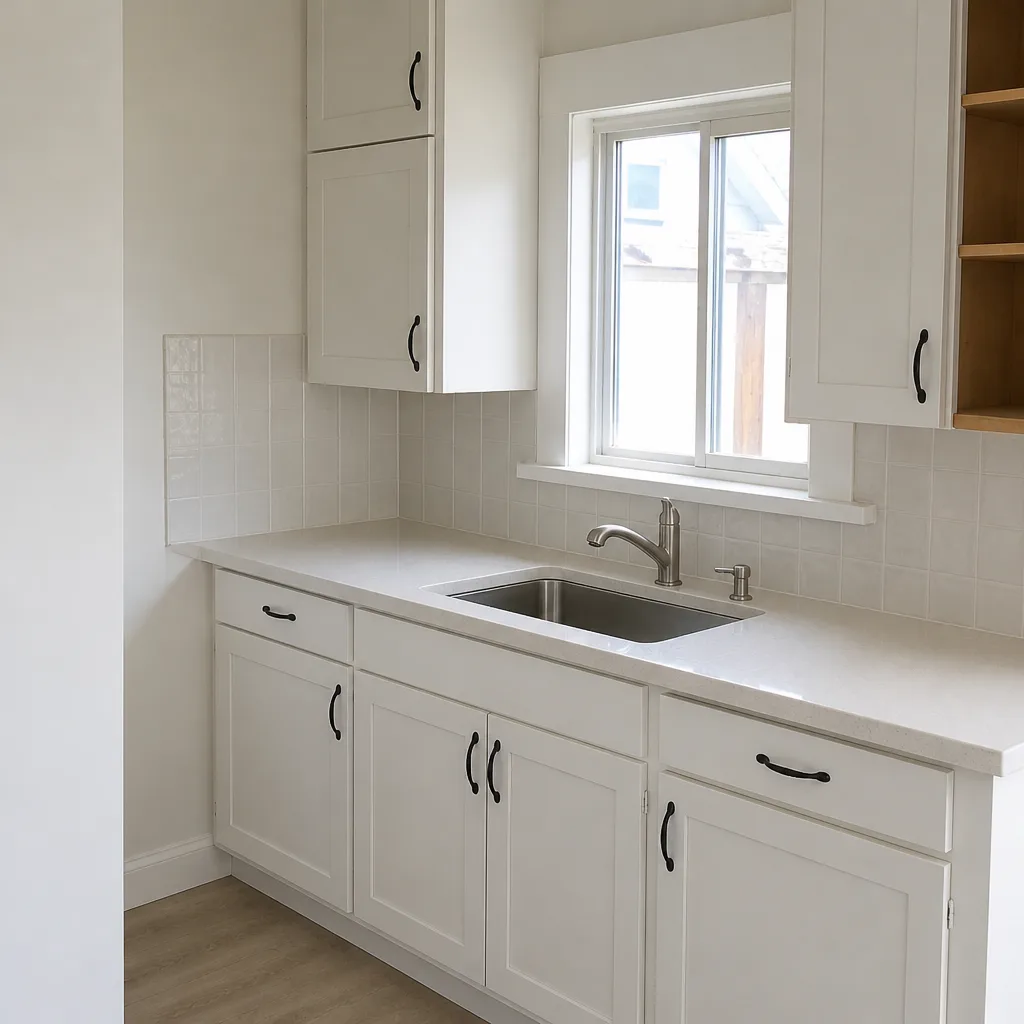
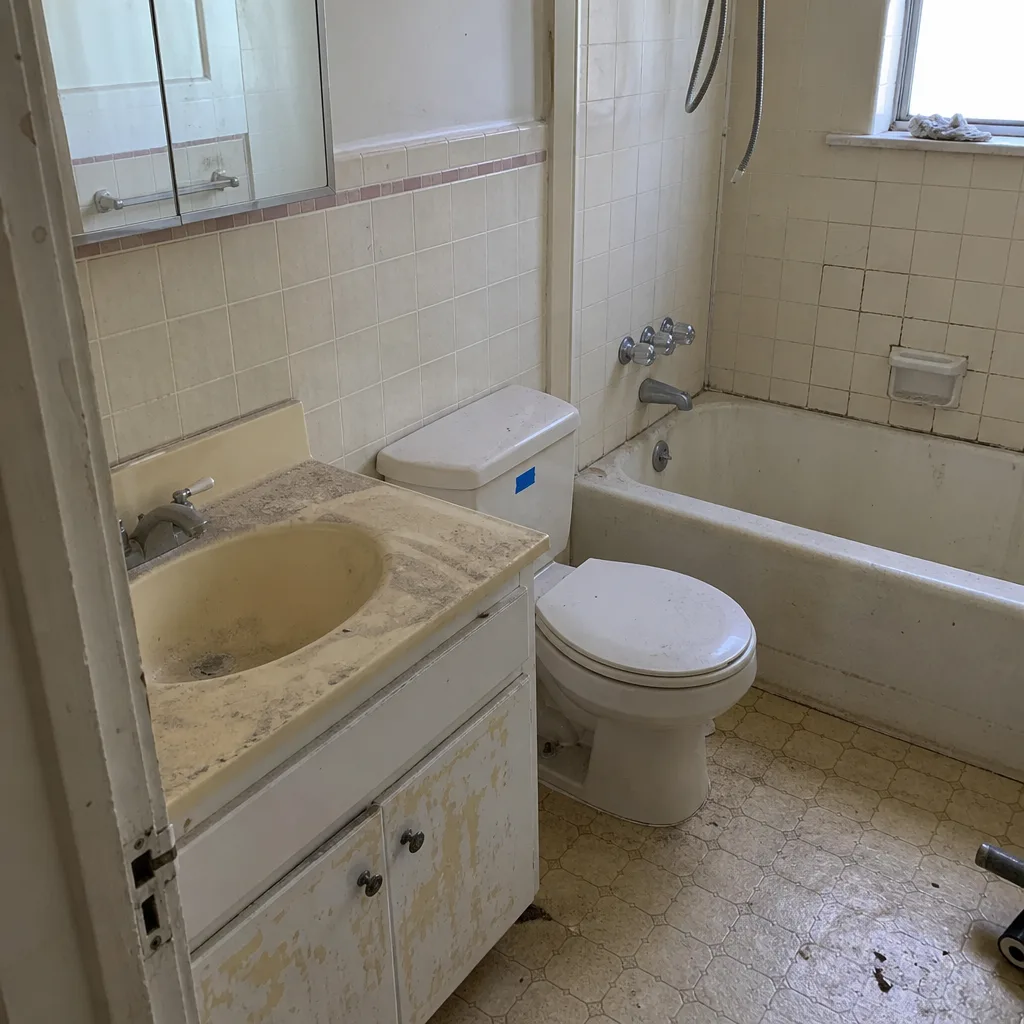
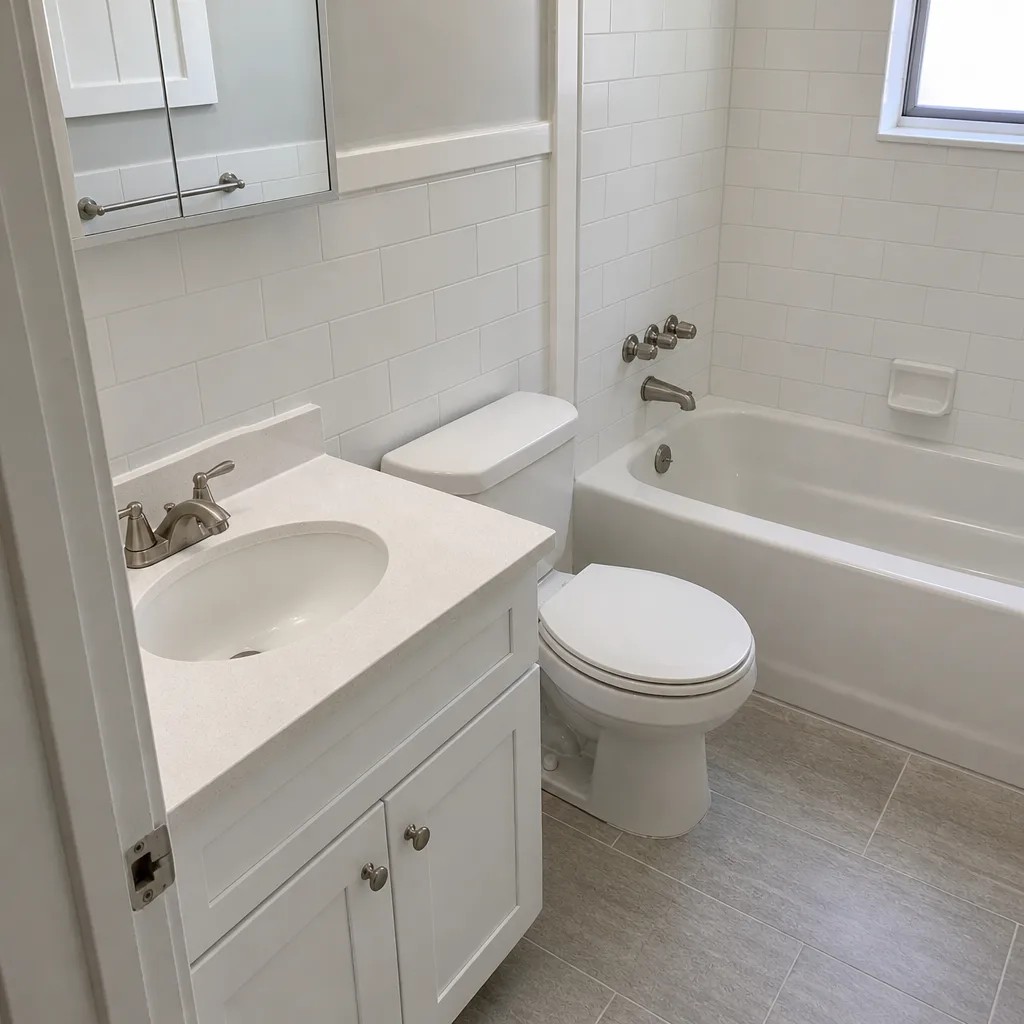
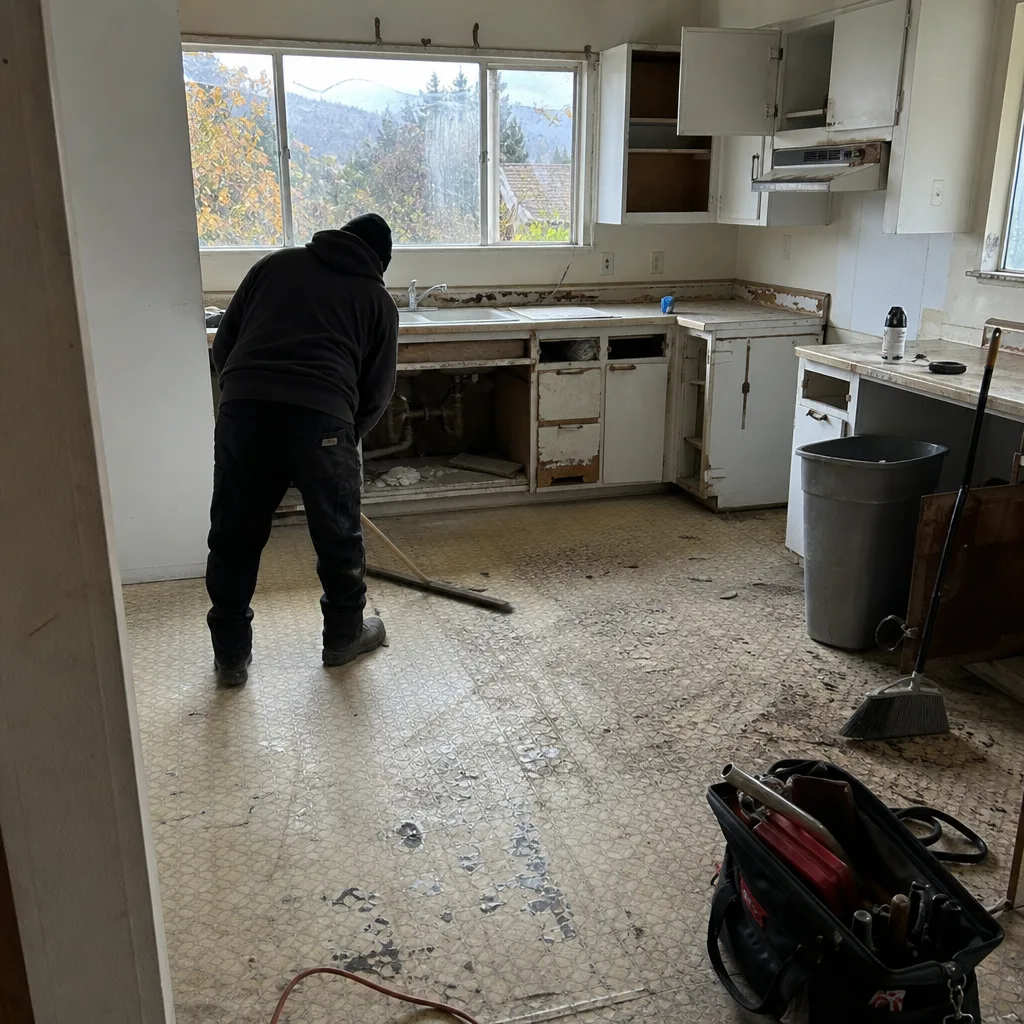
See the difference
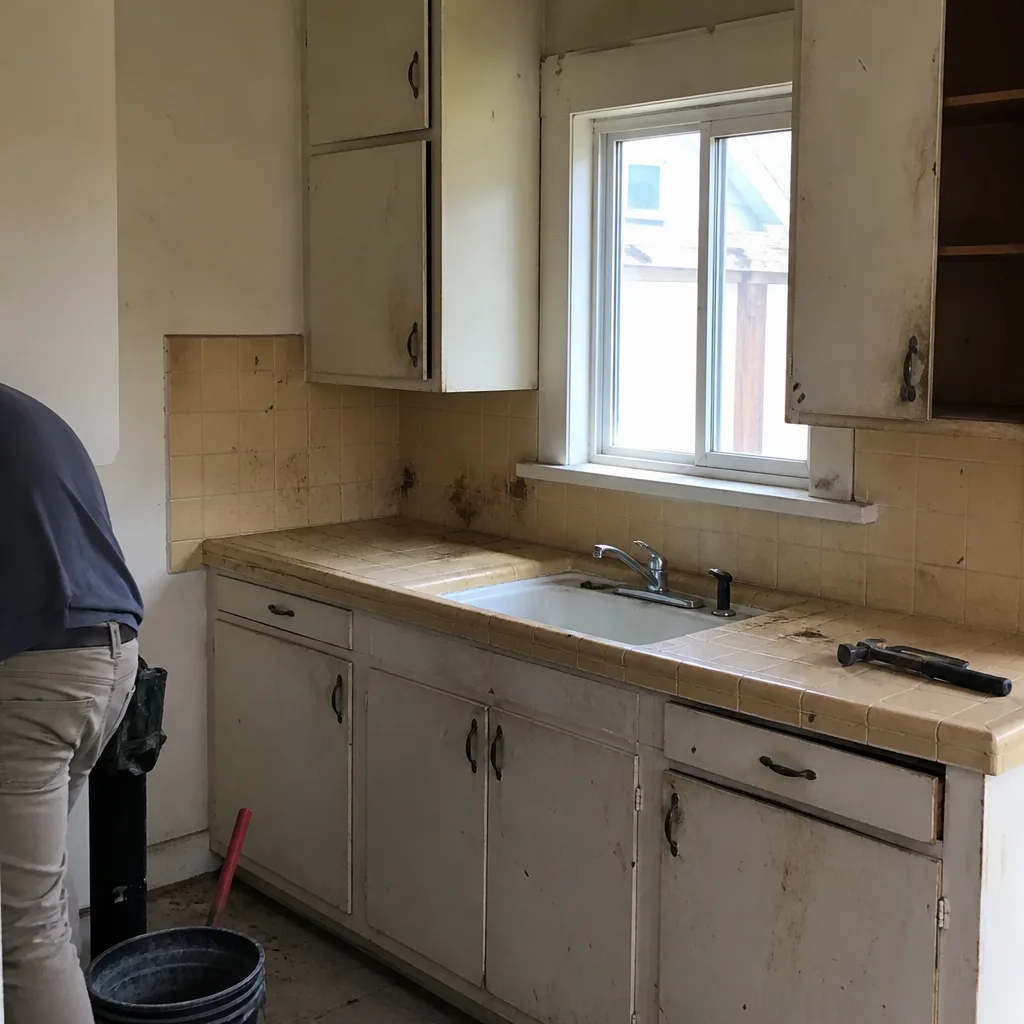 Before
 After
 Before
 After
 Before
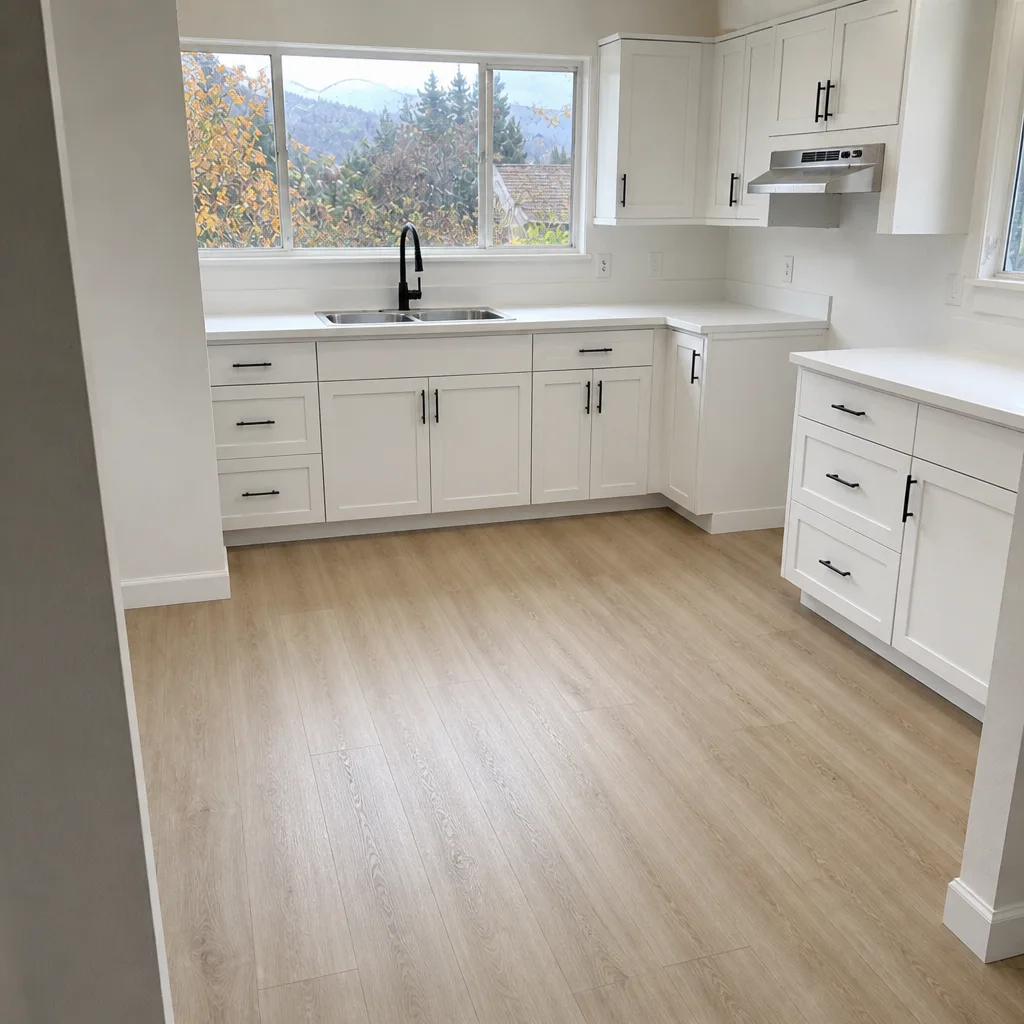 After
When to Call a Professional
Some jobs are homeowner territory – replacing a screen, touching up paint on a sash, swapping interior door hardware. Others belong to a licensed contractor, no exceptions. Call a professional when: the fogging between your panes is permanent (that’s a seal failure, not a cleaning issue), an exterior door has stopped latching or shows daylight around the frame, water is showing up on the sill or interior trim after rain, the window trim is pulling away from the wall, or you’re considering any replacement that requires a permit. Window and door replacement in Oakland requires Title 24 documentation, permit pull, and rough opening prep on older homes – all of which a licensed contractor handles as a standard part of the job.
Groundwork Construction Co. of Oakland offers free estimates in Oakland – call (833) 997-7759. We answer live, every hour of every day, and the estimate is a scope, not a number on a napkin.
Frequently Asked Questions
Window replacement in Oakland typically runs $650 to $1,400 per window installed, depending on frame material, glass package, and rough-opening prep. Doors generally run $900 to $2,500 for a standard exterior entry door installed, with fiberglass and clad wood at the higher end. The biggest variable in older Oakland homes is rough opening repair – a 1926 house can add 30% to the installed cost compared to a newer build because the opening needs real prep. Call (833) 997-7759 for an exact quote – estimates are free.
Yes. Any window or door replacement in Oakland requires a permit and Title 24 compliance documentation. The permit is pulled before work begins, not after – pulling it retroactively means an open permit on record when you sell, which is a negotiable item in a property transaction. If a bidder offers to skip the permit to save time or money, treat that as a declaration of how they’ll handle every other detail on the job.
Fiberglass and aluminum-clad wood hold up best in Oakland’s moisture cycling. Both resist the daily fog-to-dry cycle without warping, and both tolerate the small temperature swings better than vinyl. Fiberglass is the more cost-effective choice for most Oakland applications; clad wood is worth the premium on character homes where the interior wood finish matters. Vinyl is acceptable on shaded elevations but breaks down faster on sun-exposed walls in the warmer Oakland pockets.
Earthquakes do, and so does the ground movement between them – Oakland’s expansive clay soils swell and shrink with the seasons, which is what causes the door-that-sticks-in-October pattern. You can’t prevent ground movement, but you can spec for it: framing anchors, flexible sealant at the frame-to-wall joint, adjustable strike plates, and proper sill pans. Any contractor who tells you seismic movement is “not really a window and door problem” hasn’t worked an Oakland hillside job.
Yes. We pull the permit before the job begins, we prepare and submit the Title 24 compliance documentation for your address, and we deliver the paperwork to you at completion. Inspection is a scheduled milestone in the project, not a hope. That’s part of what lives inside the 730-Day Done Right Promise – if it isn’t right, we make it right, and that includes the paperwork trail.
A typical single-family window replacement in Oakland takes one to three days of on-site work, once product has arrived. Product lead times on selected window and door lines run four to ten weeks, occasionally longer on custom doors or specific clad wood configurations. Larger projects – whole-house replacement, windows as part of a home addition, or a door package that includes sliders – run longer, and we schedule to match. Plan for the product order as the long pole; installation moves quickly once it starts.
The Bottom Line
Window and door decisions in Oakland are decided by the details a national brochure leaves out: which way the walls face, how much marine layer exposure the house gets, what Title 24 actually requires for your address, what seismic movement will do to the frame in year three, and what your 1920s or 1950s rough opening actually looks like when the old unit comes out. Get the specification right and the installation detail right, and the window performs for 20-plus years. Get it wrong, and you’ll replace it in seven. Read the bid for scope, not just price. Get the workmanship warranty in writing. Then let the right contractor handle the rest. Groundwork Construction Co. of Oakland is here when you’re ready to put the spec sheet together.
Groundwork Construction Co. of Oakland – from foundation to finish line. Built to last, backed in writing. Calls answered live, 24/7. Call (833) 997-7759 for a free project estimate and design consult. $1,000 off projects over $10,000. 0% financing for 18 months available.
Written by the team at Groundwork Construction Co. of Oakland.